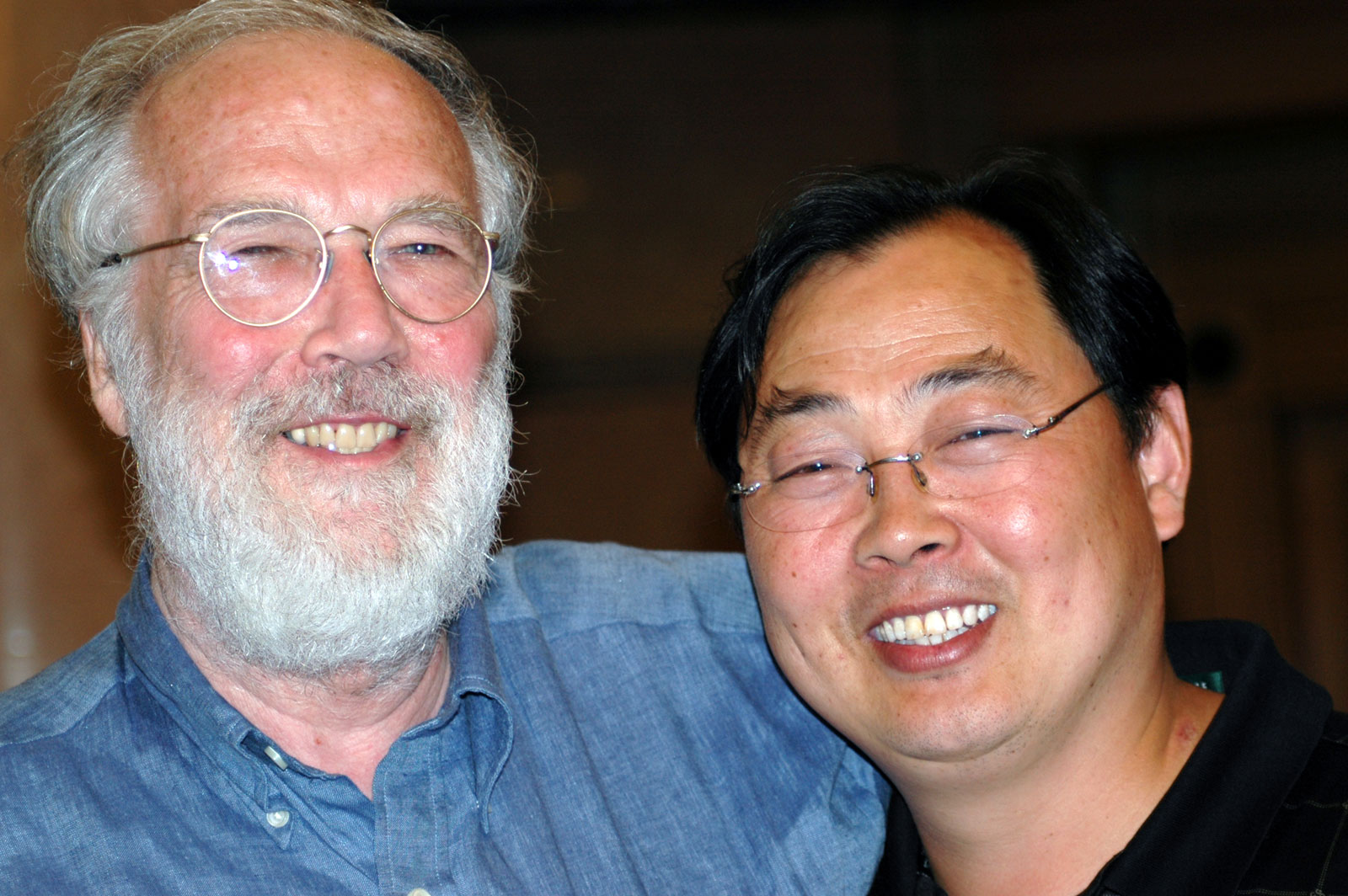
On August 17, 2005, the city of Weifang (formerly Weihsien), in Shandong
Province, China, celebrated the 60th anniversary of the liberation by U.S.
paratroopers of the Japanese concentration camp located there from 1943 to
1945. The “enemy nationals” interned there had included my grandparents,
George and Gertrude Wilder, who had been missionary-teachers in China
since 1894. The Weifang municipal government had invited former internees,
their relatives and descendants, to attend the celebration, paying all of their
expenses except airfare. My wife Jane and I were accompanied by my
daughter Rachel Alvelais, her husband Rob and their three daughters –
Rachel, Teresa and Gabriella – and Jane’s grandson Cooper Abedin.
During our visit, Jane took numerous photos, and at the end of each day Don
posted them, along with a running narrative of the day’s events, on Leopold
Pander’s Weihsien website so that those former internees who were unable to
attend could share in the celebration.
The text of these daily postings and “thumbnails” of each day’s photos appear
below. Higher resolution photos suitable for downloading and printing may be
found at the following web address: http://www.weihsien-paintings.org/DonMenzi/index.php
Clicking on the name under my photo will bring up our original report back to
absent Weihsieners, You will also find links to a slide show comparing images
of Weihsien buildings as they appeared 60 years ago with how they look today,
to the animated PowerPoint slide show that was presented as part of the 2005
celebration and to another depicting the 1943 voyage of the prisoner-exchange
ship, Gripsholm, on which the Wilders were repatriated.
DAY ONE ...
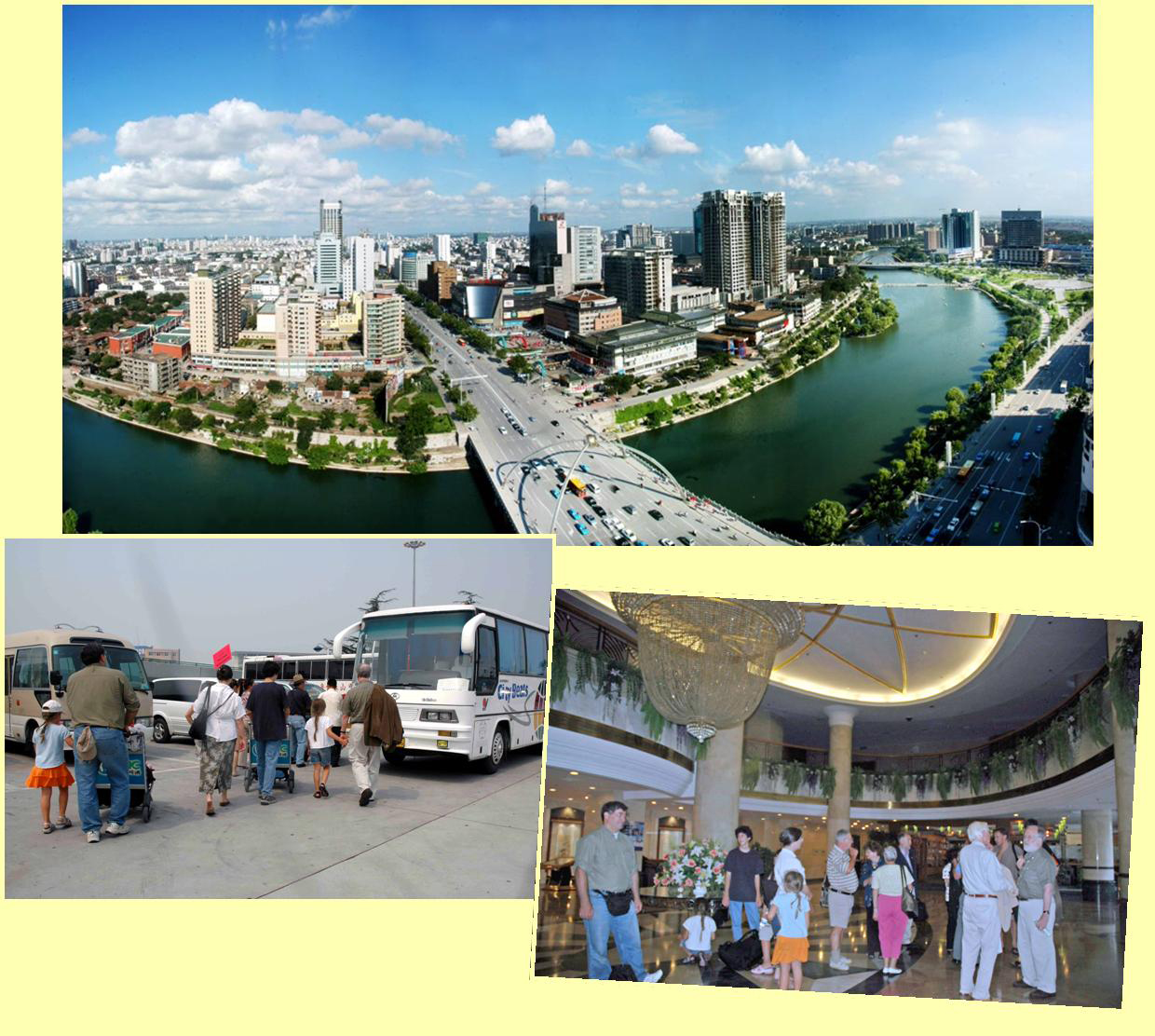
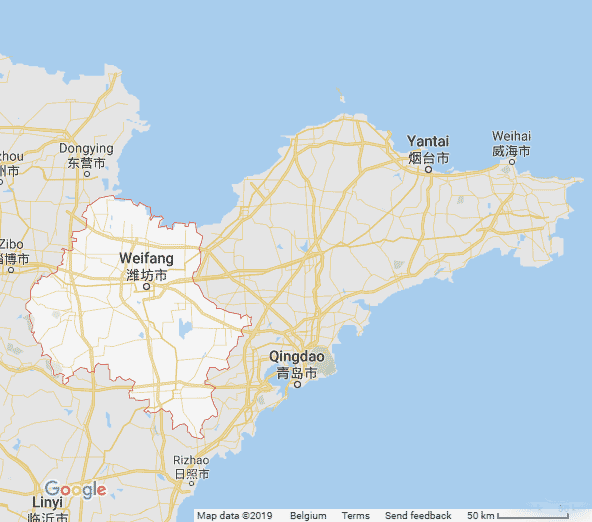
--- Our plane landed at Weifang (formerly Weihsien),
which is now the center of a major metropolitan area in
Shandong Province.
Our own family group (8 of us, spanning 3 generations)
were met at the airport by a number of young volunteers
from Weifang University holding aloft signs proclaiming
"Welcome Weihsieners.” A bus took us on the 1 ½ hour
trip to Weifang. The highway was bordered by farm
lands, many of them with large fields of young trees,
similar to poplars, planted in rows - often with corn (or
more likely kaoliang = sorghum) planted among them.
We were told that the trees were also a crop - their wood
would be used to make furniture. I don't remember the
trees from the time when we traveled the same route
about eight years earlier, and I suspect that they are a
new crop tied to China's new manufacturing industries -
more profitable than foodstuffs.
On the bus we met Bill (I forgot his last name – sorry,
Bill), who is working on a documentary for our Public
Broadcasting System on the experience of children who
were interned in Japanese camps, Weihsien and others.
He says he sees this as the last great untold story of
World War II - and he intends to be the one to tell it. We
hadn't heard from him before because he's a
Weihsien@topica.com "lurker" - following all the emails,
but not sending any of his own. He hopes that the
program will air sometime next year.
Bill Einreinhofer is a three-time Emmy Award winning nonfiction producer/director/writer. A member of the Directors Guild of America (DGA), he has developed and produced programming for PBS, CBS, ABC, Discovery and HBO. His most recent project is the one-hour Public TV documentary "Shanghai 1937: Where World War II Began." Released in 2018, it was broadcast on 200 U.S. Public Television stations. It was also bought by international broadcasters in Europe and Asia. He was Host/Presenter and script consultant for "Century Masters," a multi-part documentary series about great 20th cultural figures in China. He conceived and was Executive Producer of "Innovation," the long-running (1985-2004) PBS health, science and technology series. It included "People in Motion" (1995-1996), the first prime time TV series to deal with disability and disability-related issues. He was also Series Producer of "Beyond Beijing," a four-part documentary series tied to the 2008 Beijing Olympics, which was seen in 43 countries. An experienced educator, he is Chair of the Broadcast Journalism department at the New York Film Academy.
- IMDb Mini Biography By: Bill Einreinhofer
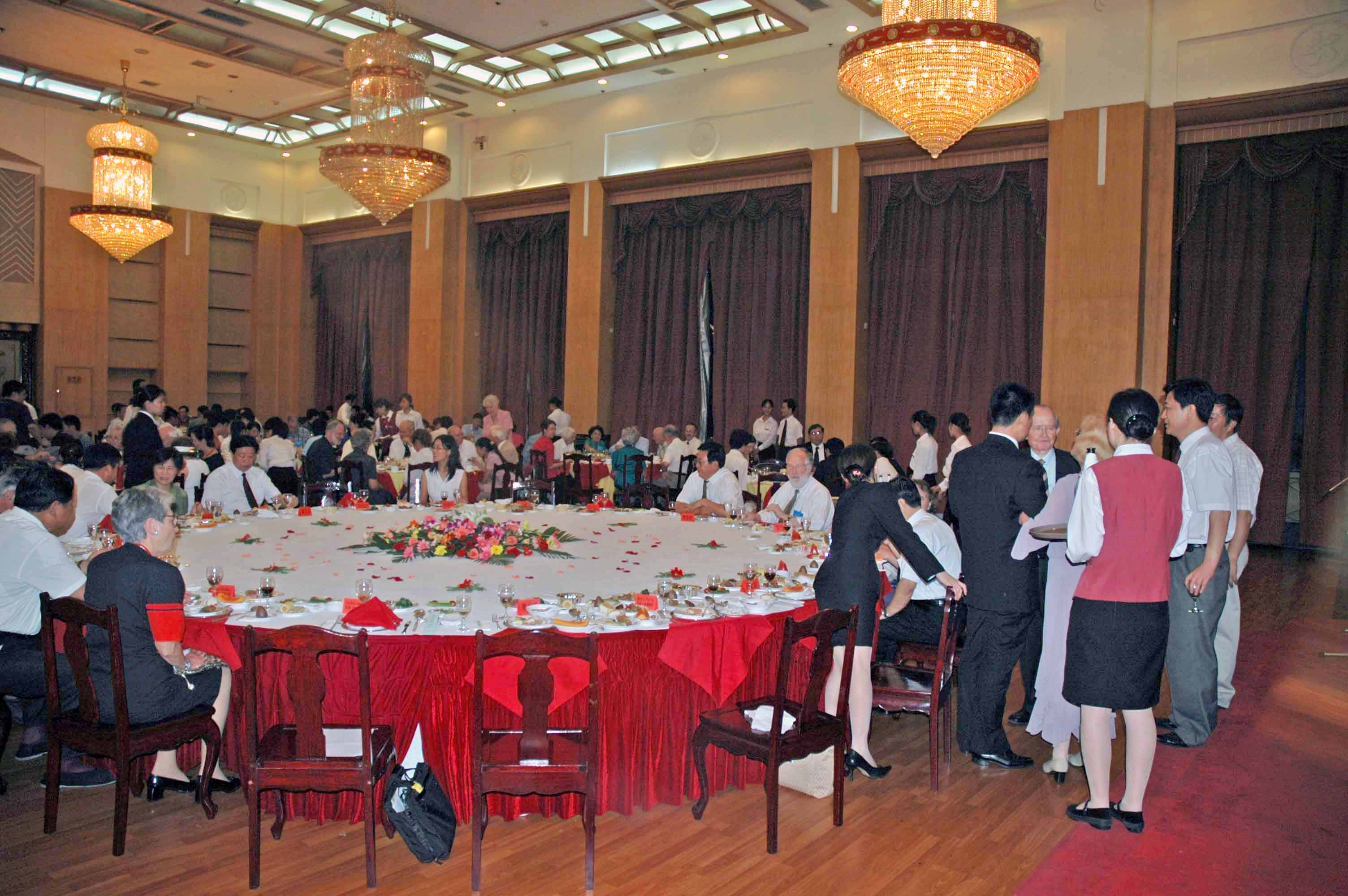
--- The opening banquet followed a brief rest at the
hotel. The dishes were delicious, and all were
identifiable (not always the case with banquets here)
with an emphasis on seafood - Shandong is a
coastal province, after all. Weifang's Mayor Li and
others gave brief welcoming speeches. Personally, I
was especially pleased to meet some of the people
whom I had gotten to know through the topica.com
email group.
After the banquet some of us got to see part 2 of a
four-part TV documentary about the story of
Weihsien on the local television station. (Itt was
later broadcast on China’s national TV.)
A very full day is planned for tomorrow and
Thursday. Stay tuned...
DAY TWO ...
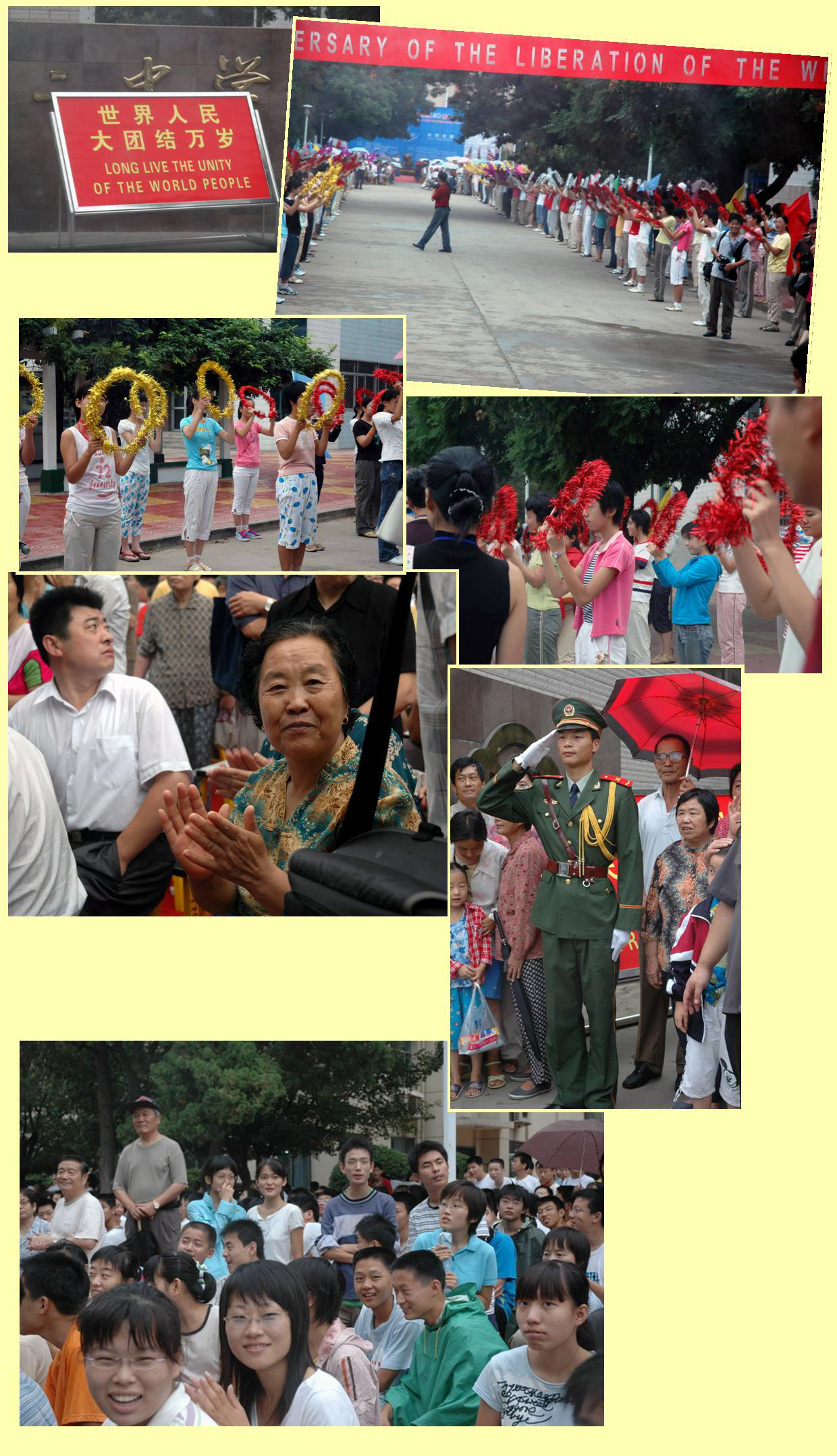
We took a bus from the hotel to the site, now the grounds of Weifang Middle School #2. At the main gate was a welcoming banner ---
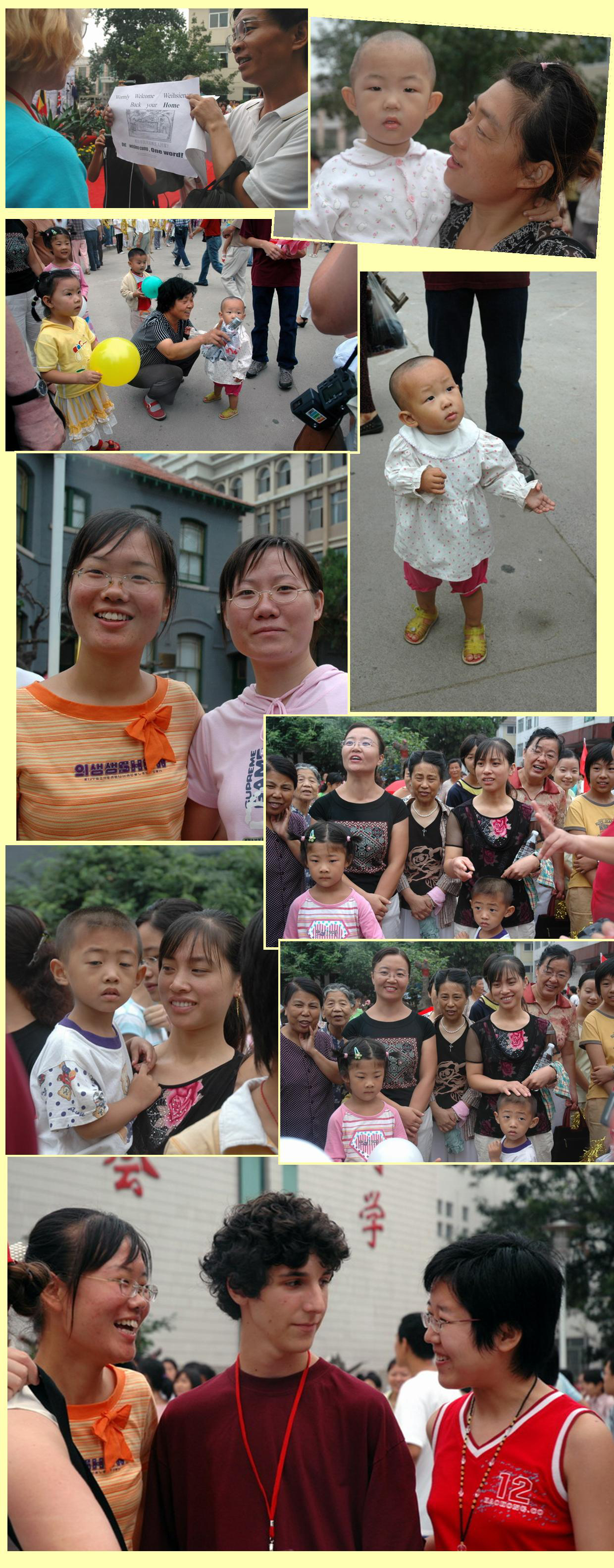
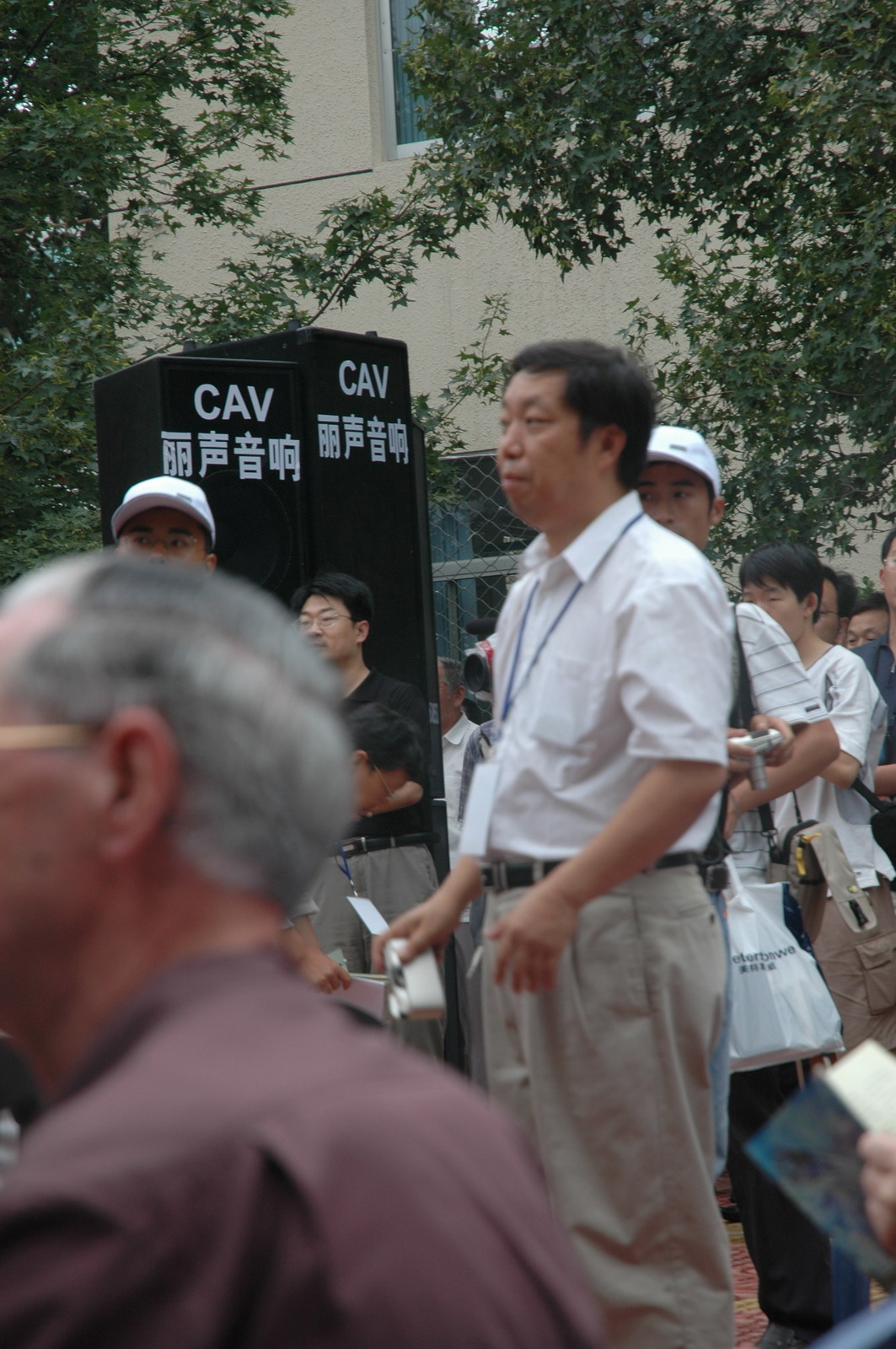
--- A dramatic and exciting beginning to what would be a wonderful day. I would estimate that the crowd surrounding the procession of internees numbered well over 1,000, mostly local citizens of Weifang, of all ages, all with smiling faces.
--- a clear aisle between two rows of students, rhythmically waving colorful wreaths ---
--- down which we processed to our seats ---
--- past a young soldier’s welcoming salute. ---
--- and happy crowds with welcoming smiles ---
--- accompanied by stirring classics of western orchestral music.
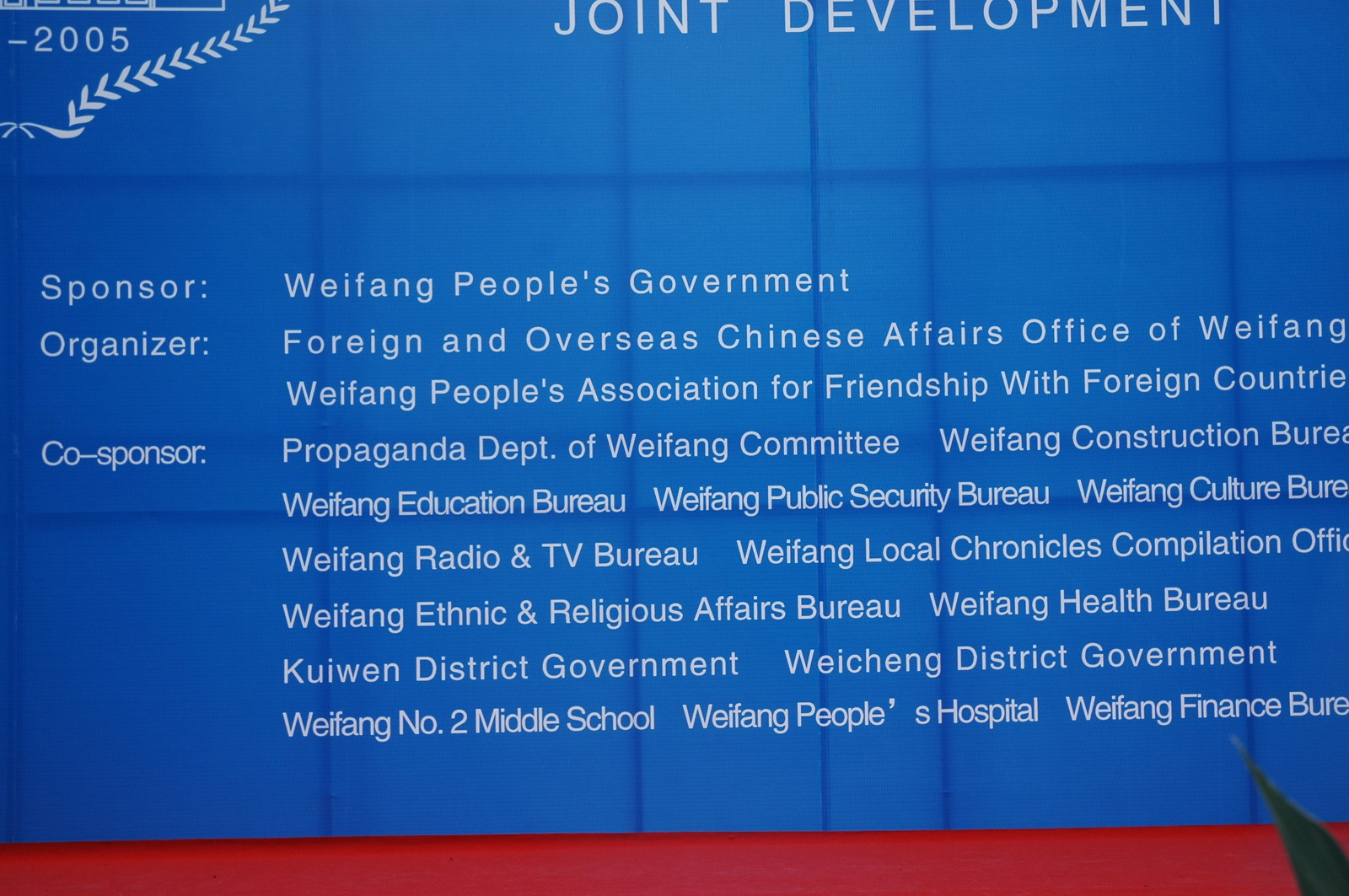
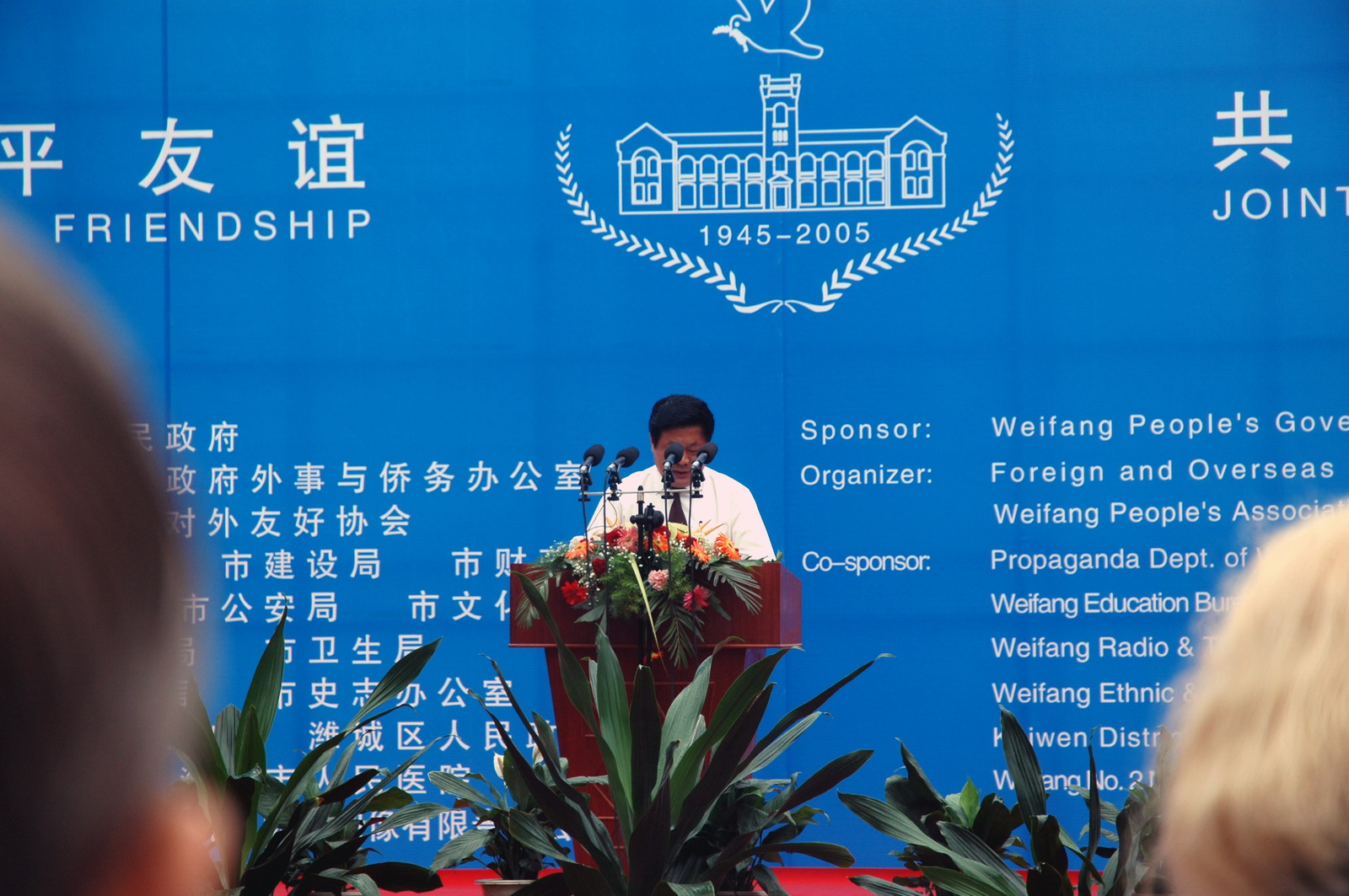
--- A total of 10 organizations were listed as sponsors, co-sponsors, or organizers of the event ---
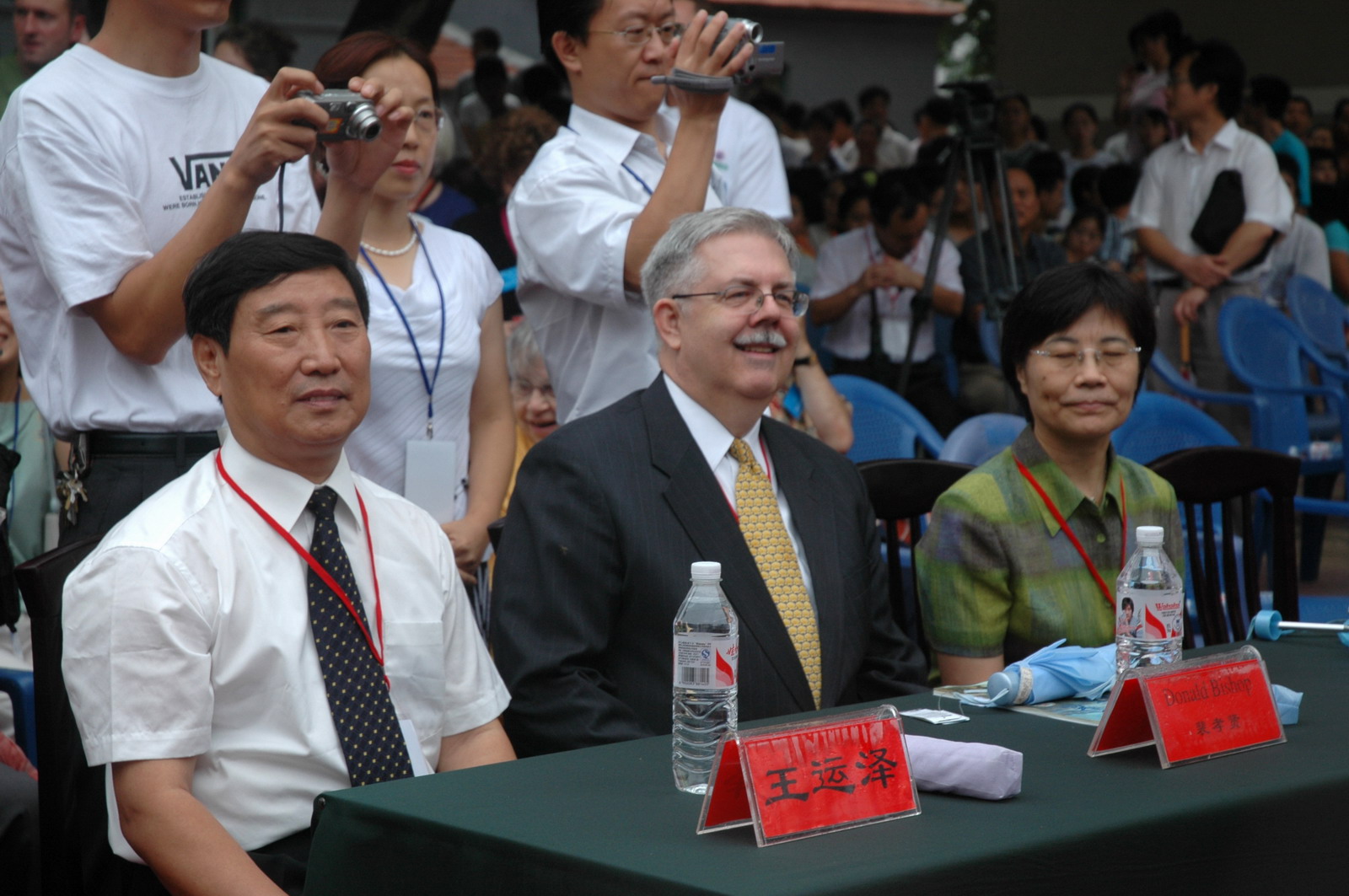
--- Donald Bishop, a member of the U.S. diplomatic corps, represented the U.S. government at the ceremony.
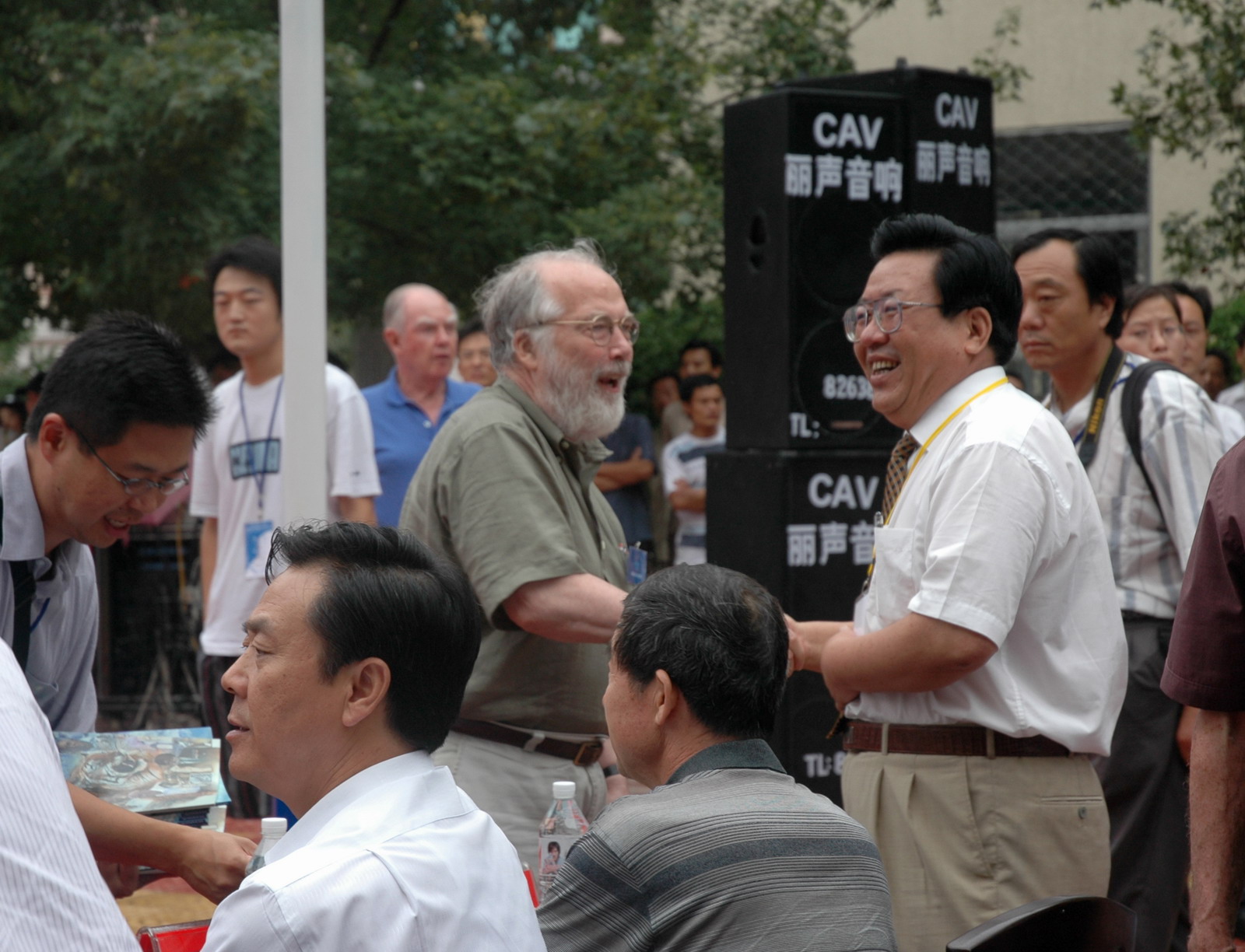
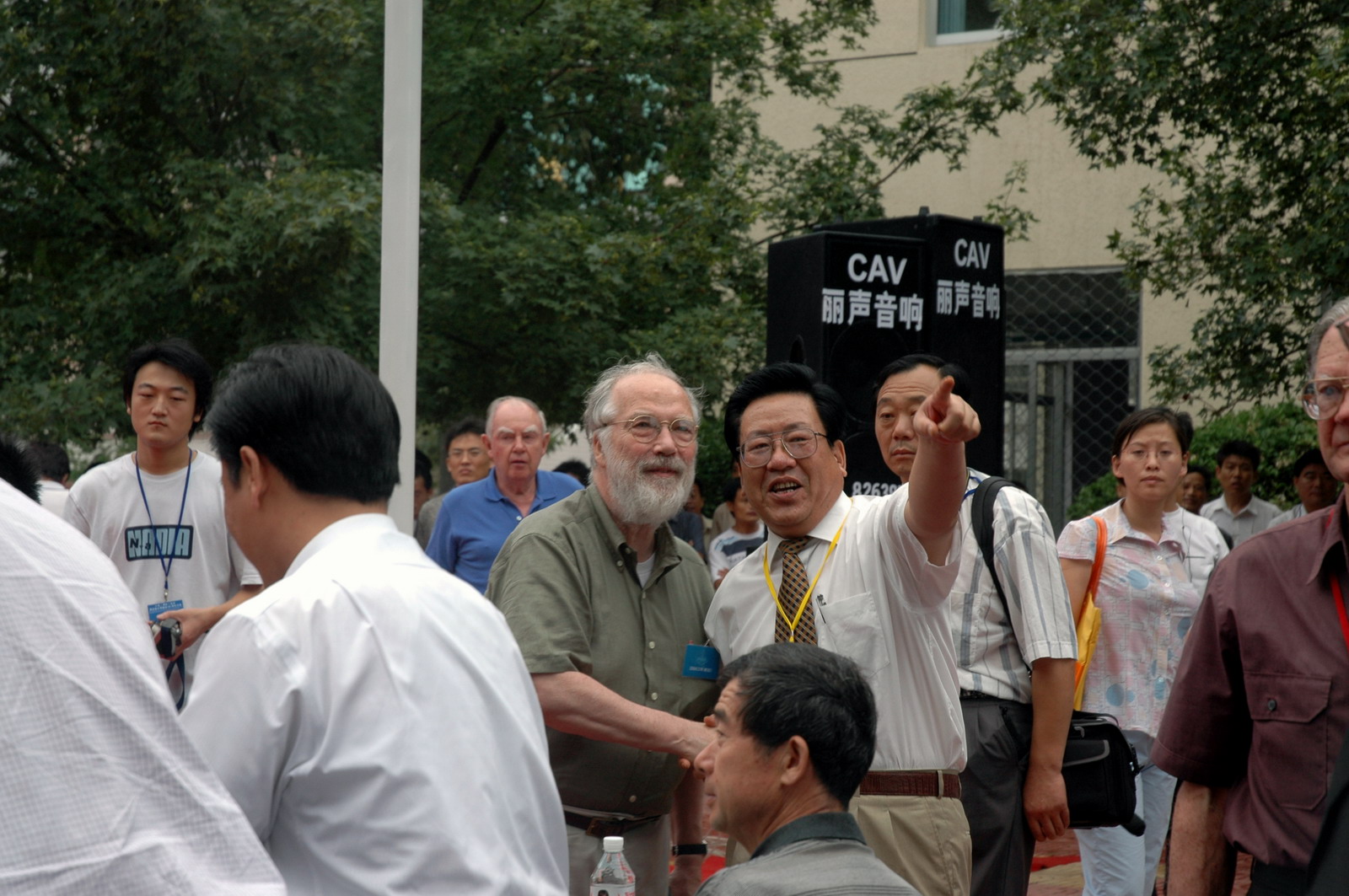
--- Weifang’s Vice-Mayor Li, who had been a member of the delegation that visited the U.S and elsewhere in preparation for the event, acted as chief welcomer and enthusiastic host.
--- assisted by Mr. Sui Shudeh, Director of the Wefang government’s Translation Bureau, who had been our main contact in preparing for the visit.
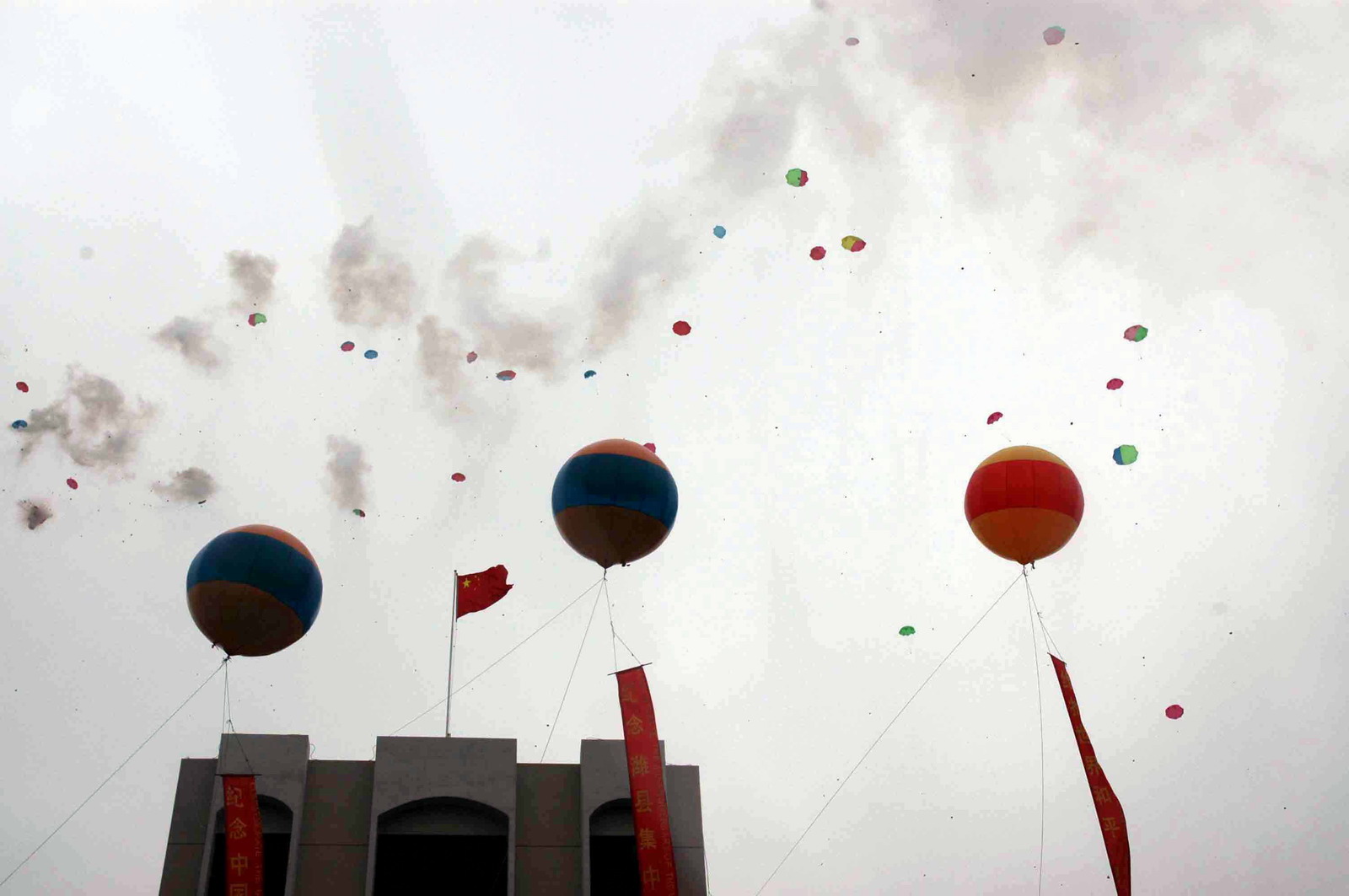
--- The ceremony took place in what once was the semi-circular courtyard in front of Building #23. The ceremony itself opened spectacularly with fireworks (!!!) - each exploding shell releasing a tiny, colorful parachute - seemingly hundreds of them - which floated slowly across the gray sky
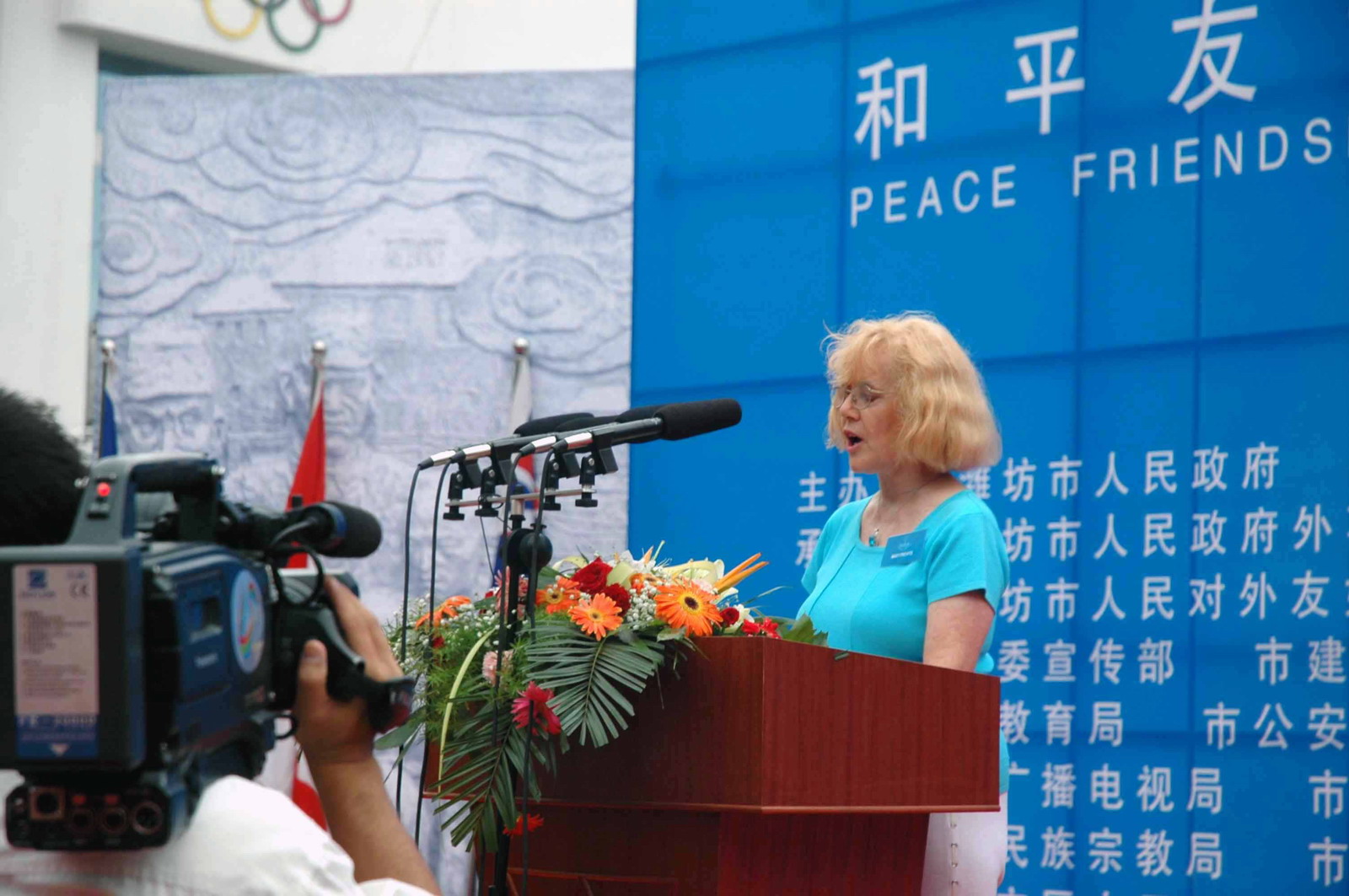
--- Then came speeches by representatives from each of the 7 or 8 sponsoring organizations (206) ---
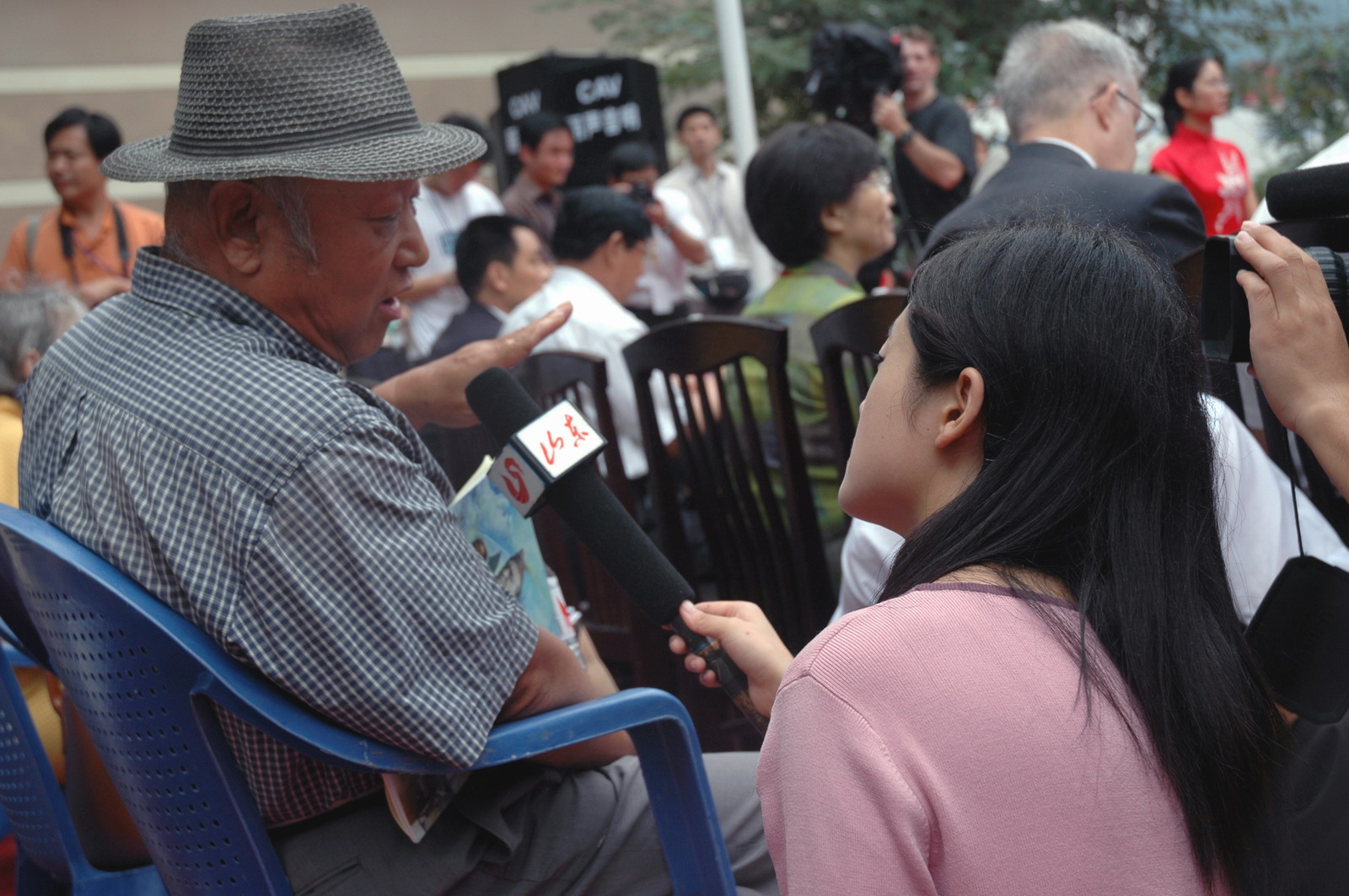
--- The seated (and hatted) Chinese gentleman being interviewed by a reporter (207) we found out later is the youngest son of one of the Chinese "sanitation workers" who carried out the cess-pool and WC contents for use as fertilizer by local farmers. His father had risked his life carrying messages into and out of the camp on slips of paper wadded in his mouth, and he had also helped Tipton and Hummel in their escape, at great danger to himself. Today the son was the official representative of all the local Chinese who had helped Weihsien internees through their difficult years by operating the "black market" and acting as secret go-betweens.[click here] and [click here]
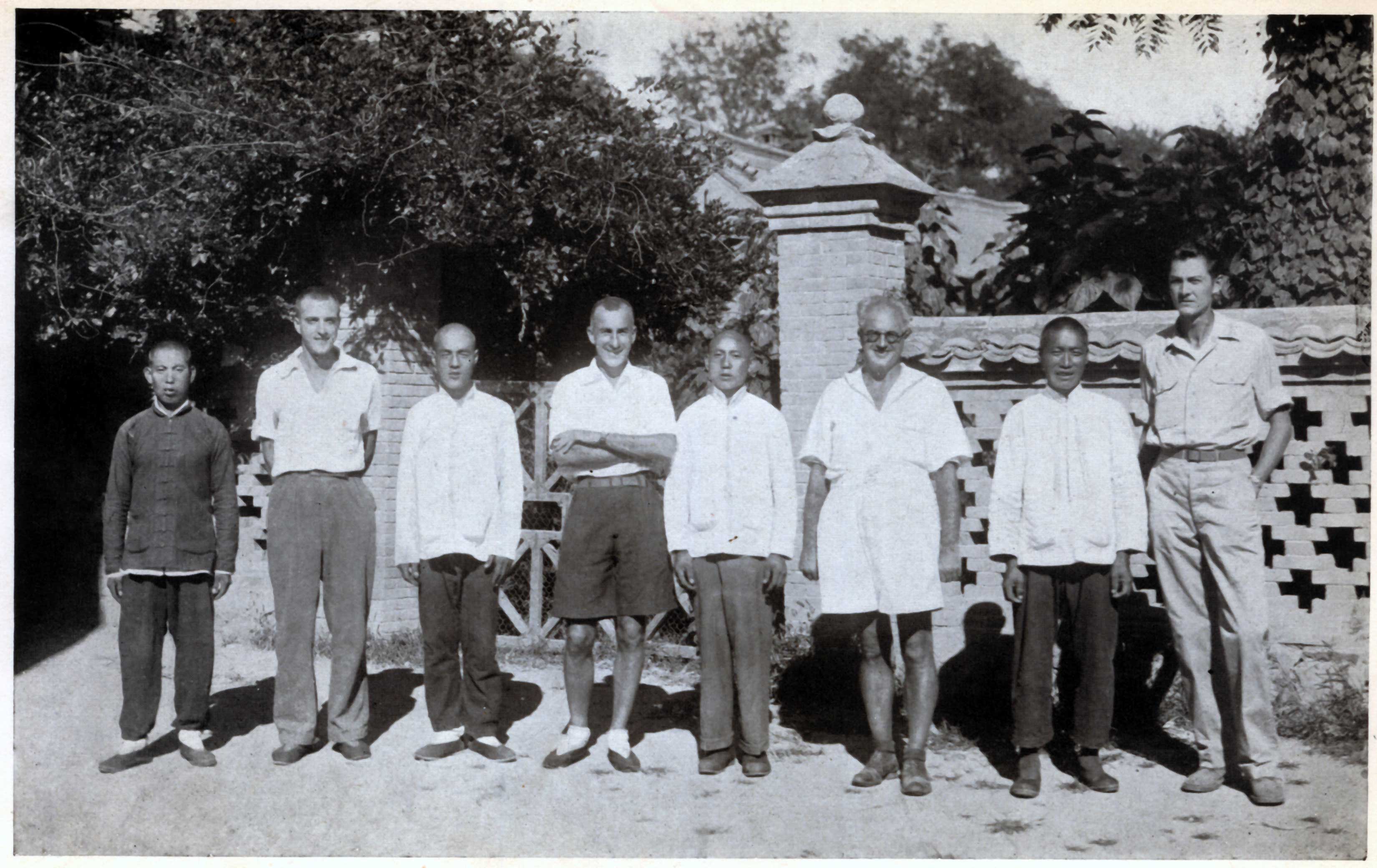
The "Liberation Group" in 1945 ... from left to right ---
-?-, Arthur Hummel, -?-, Laurie Tipton, -?-, Father Raymond deJaegher, Zhang Xihong's father and --- Roy Tchoo.
--- Mary Pevite (211a) representing the "Weihsieners." [click here]
[click above] to start the video ...
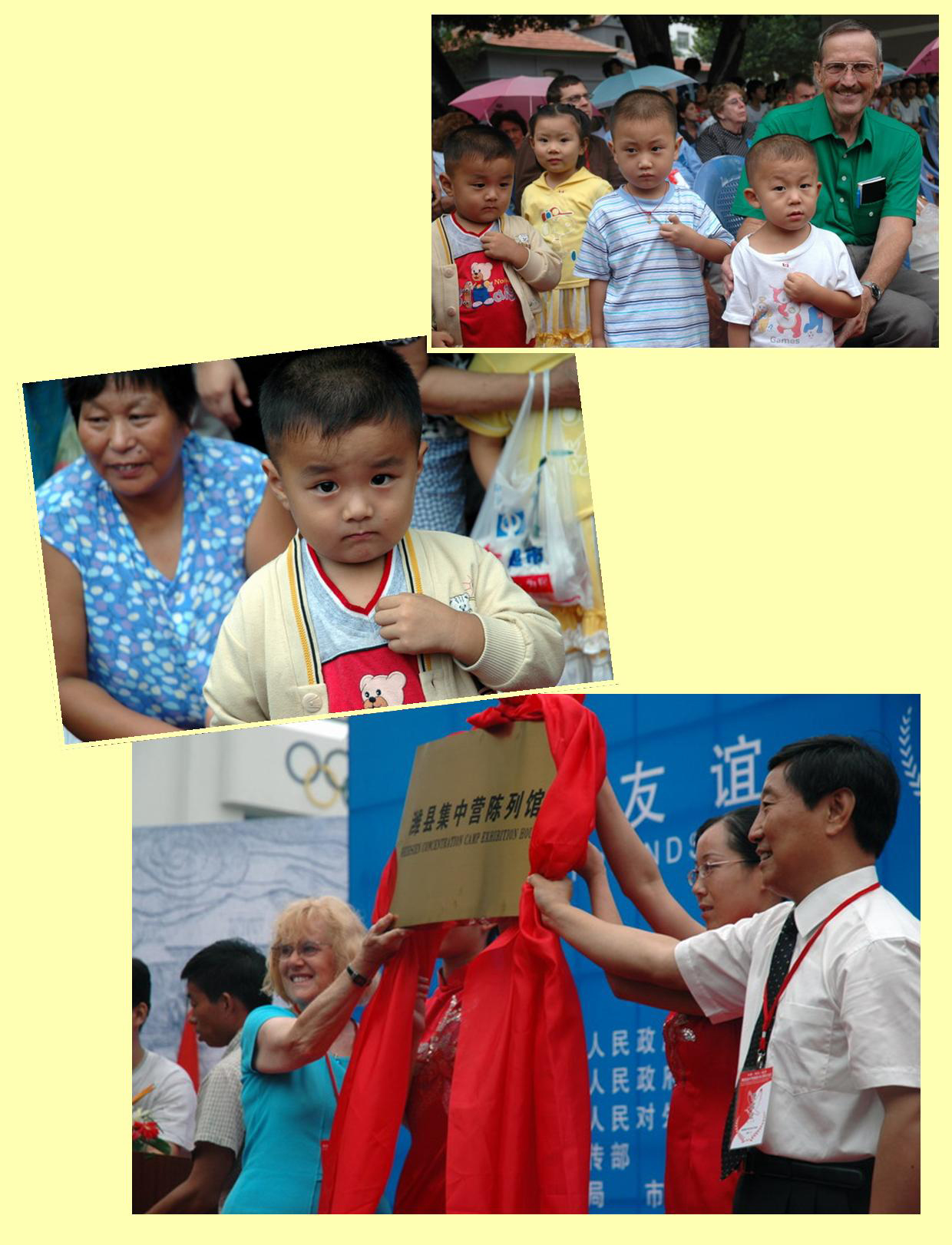
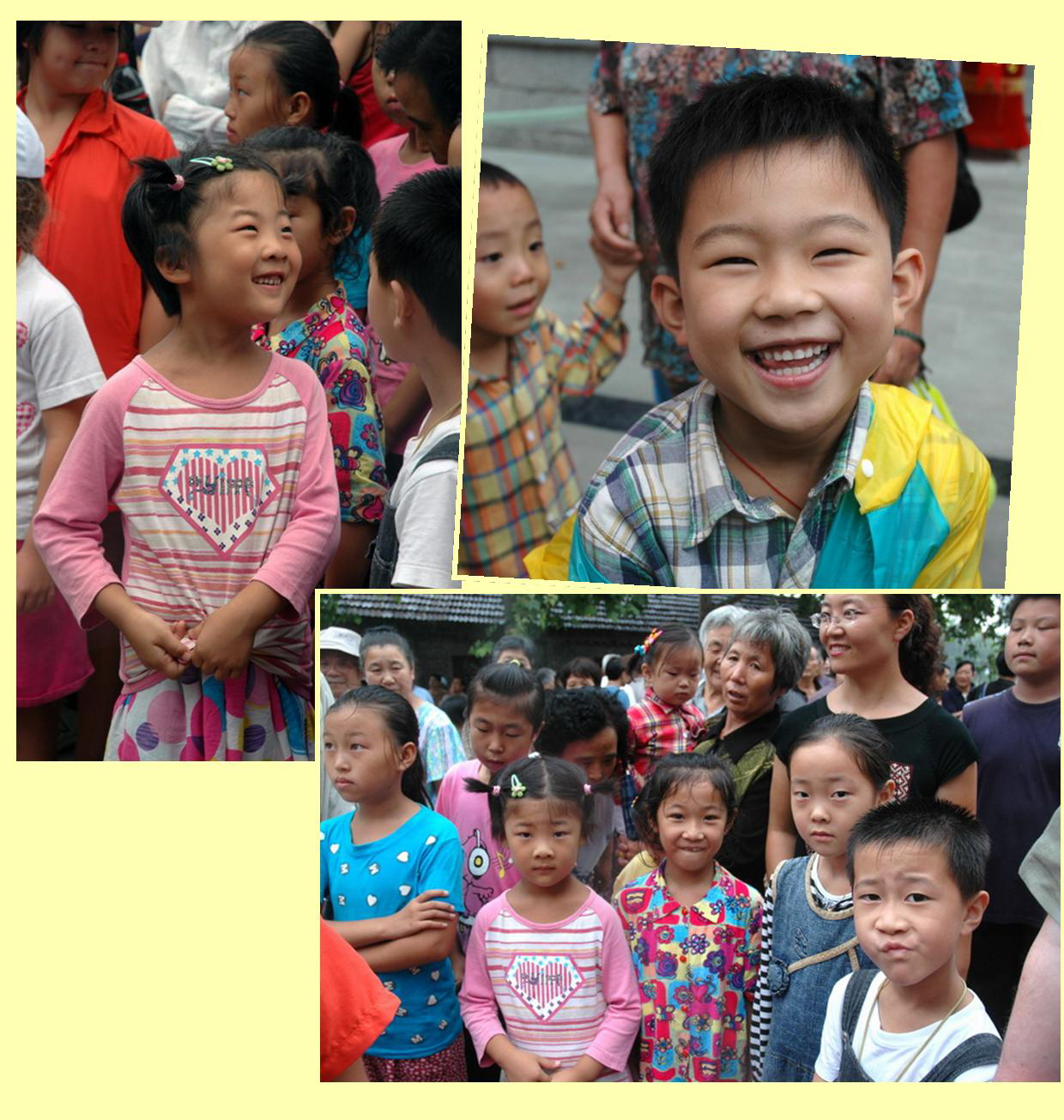
--- Even the many young children in the friendly crowd appeared to be fascinated, both by the foreigners and by the event itself. ---
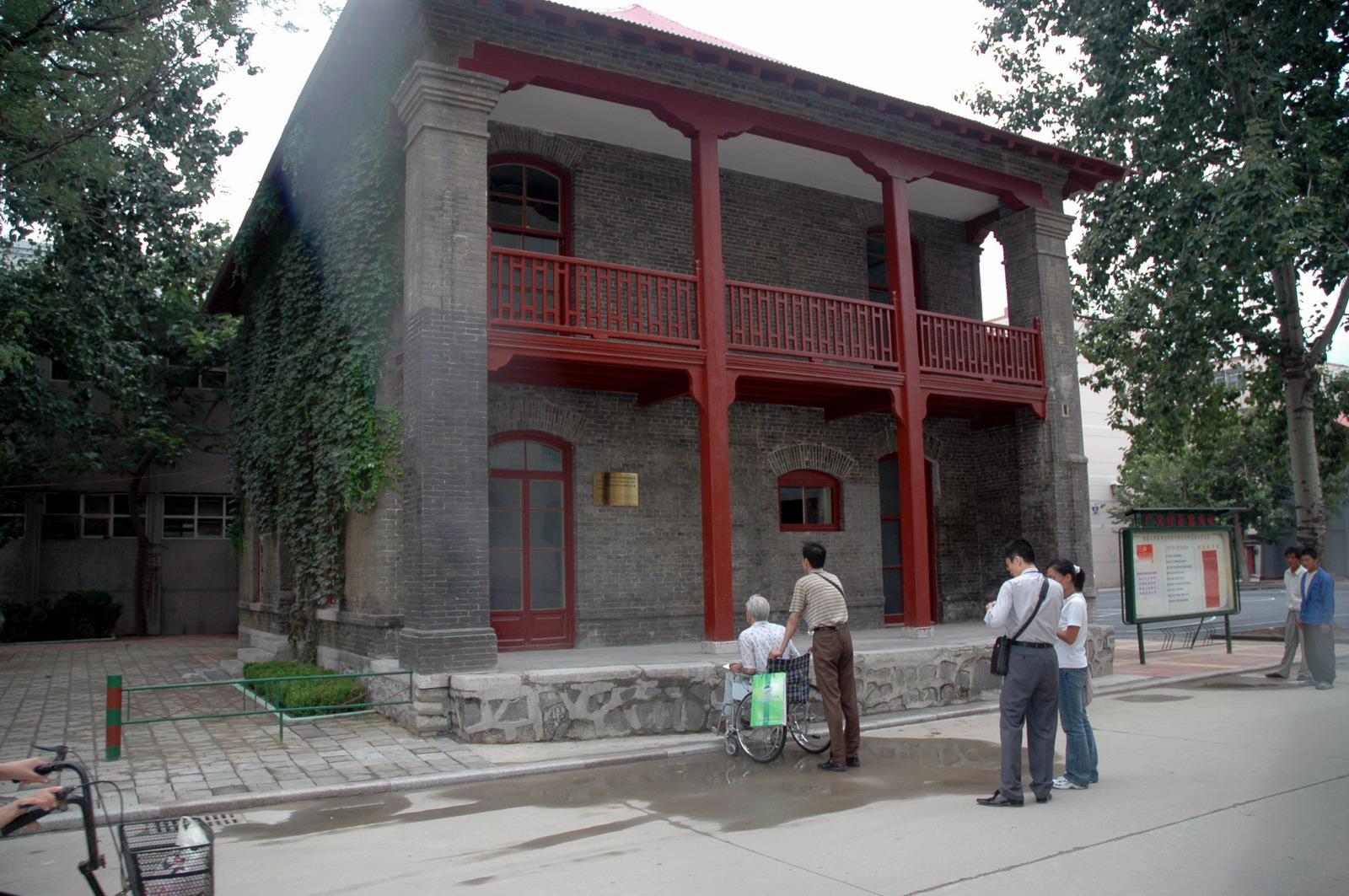
--- The ceremony also included the dedication of plaque for the "Weihsien Concentration Camp Exhibition House" (248), which contans a great many photos and artifacts from the internment camp, all well-displayed around the walls of what had once been the general storeage house for internees' in the "out of bounds" area. ---
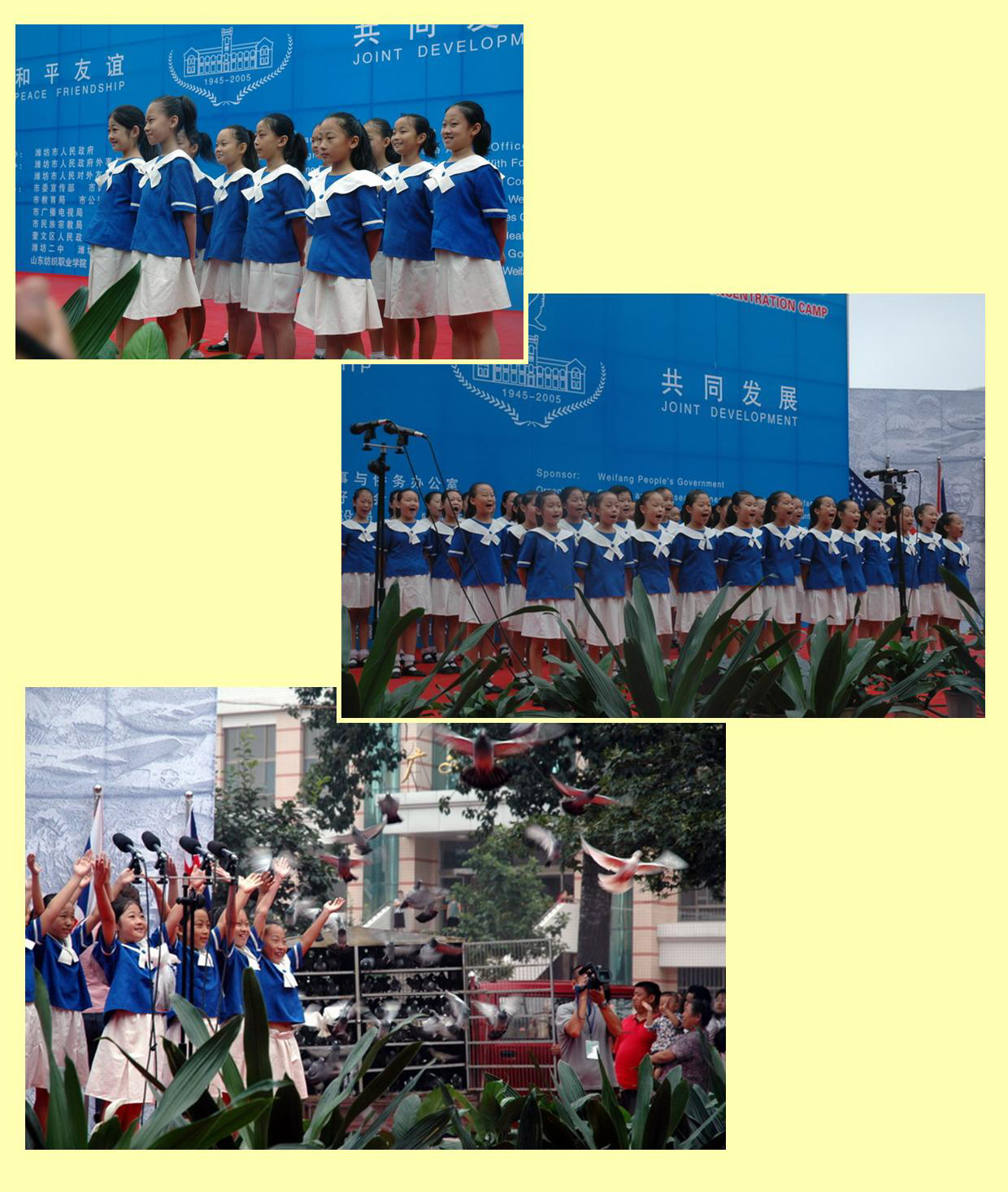
--- A real highlight of the ceremony was the performance by a children's chorus who sang some spirited songs exceedingly well (250). ---
--- The singers also moved about and gestured to the music in perfect unison, showing signs of much practice and many rehearsals.
--- Their performance was climaxed by the release of dozens of "peace doves" (really pigeons - 263), which ending the opening ceremony. I was amused to see my son-in-law Robert wiping some of their droppings off his shoulder, thinking that they could have deliberately targeted him because he is a professional teacher of traditional Japanese martial arts - until my wife, Jane, pointed out that they had hit my own shoulder, as well. ---
The need go walk through the crowd to get to the next scheduled event provided us with an opportunity to be greeted warmly by individual Weifangers of all ages. Attractive young people were especially numerous and very friendly.
The walk to the Exhibition House provided an opportunity for the local "Weifangers" who had gathered to observe the ceremony to informally express their greetings to the former "Weihsieners." These totally spontaneous expressions of heartfelt, warm welcome to the former internees by the local population, (268 - 374) was one of the most touching aspects of the whole day.
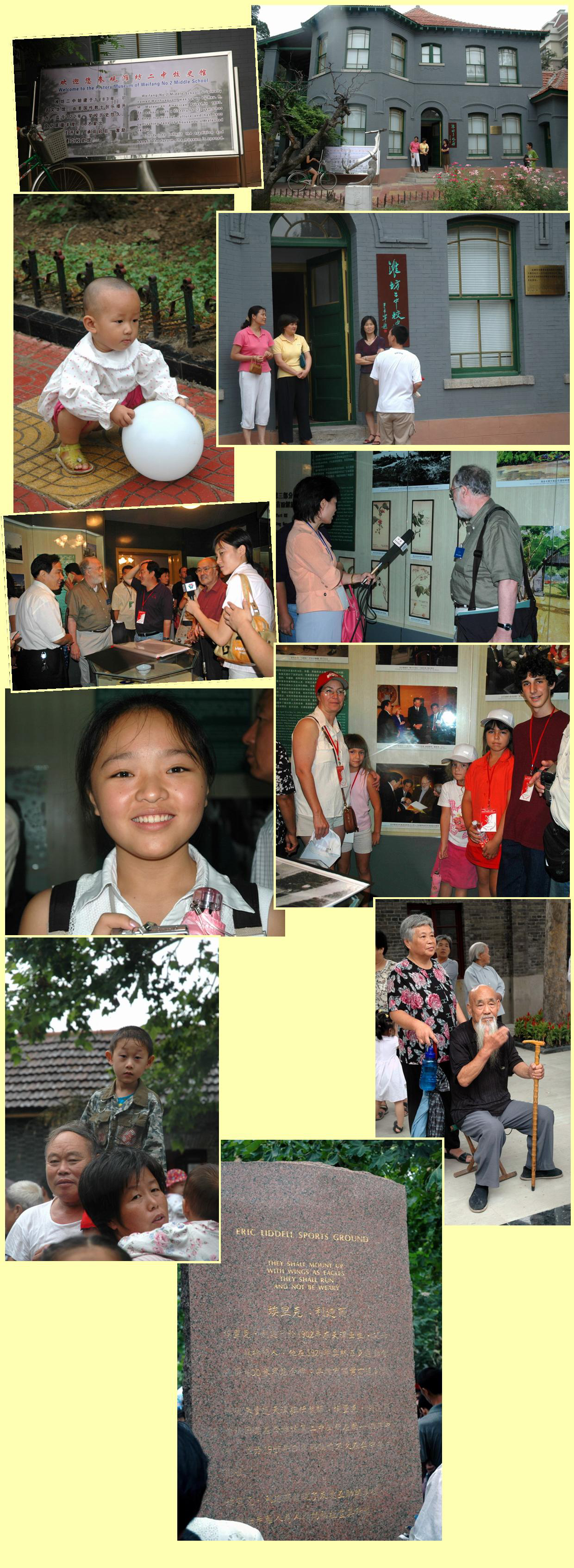
--- The former "general stores" house (out of bounds) is now the Weifang Middle School’s Historical Museum, ---
--- housing many historical texts and mounted enlargements of photos and of internees’ paintings, obtained from the Weihsien web site.
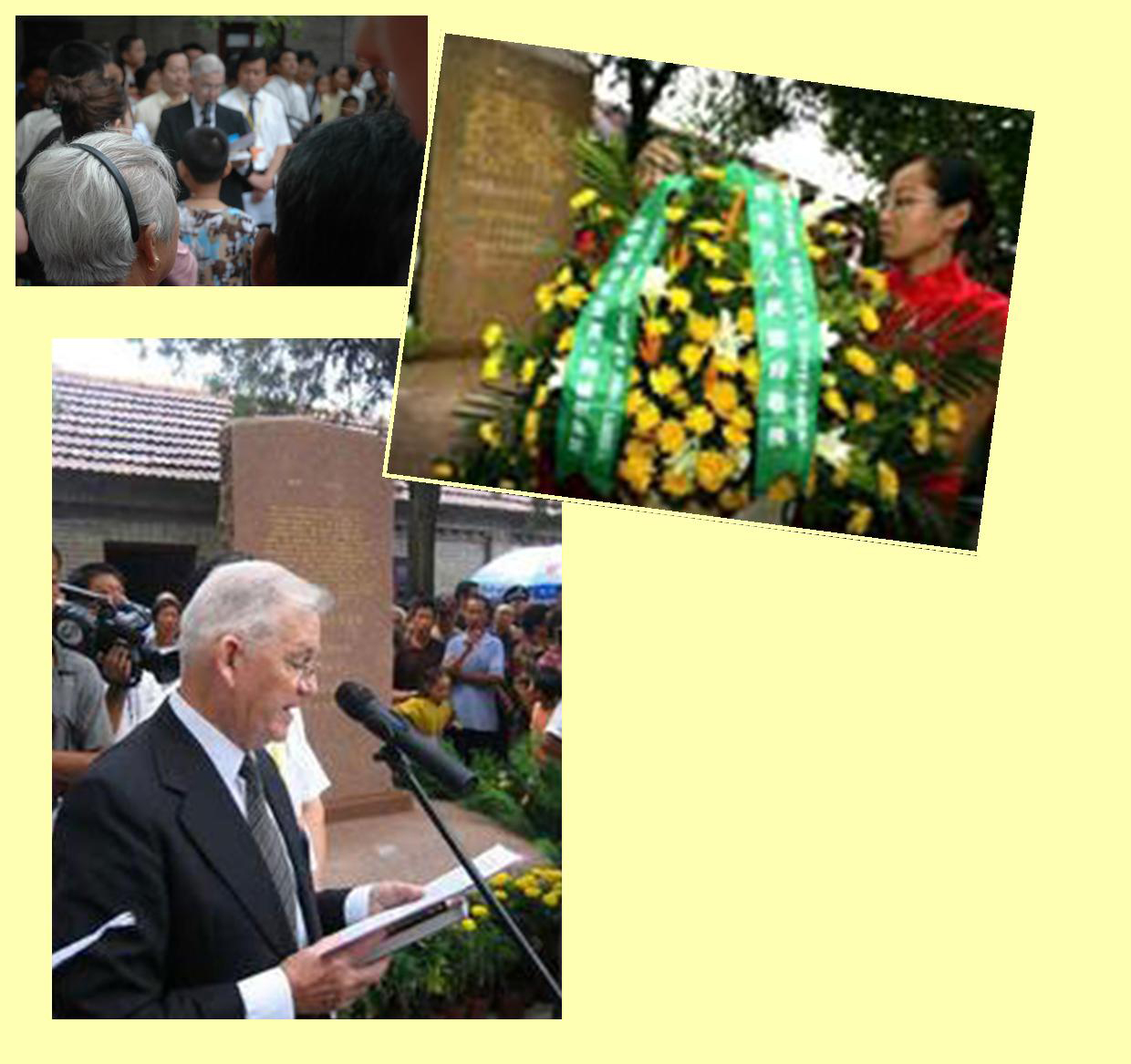
--- The crowd around it prevented Jane from getting any good photos of the laying a memorial wreath at the Eric Liddell monument, but she later got one of the monument itself.
--- Stephen Metcalf spoke movingly about having known Eric Liddell in Weihsien.
Associated Press photographer Elizabeth Dalziel was able to get closer and took these two pictures of Metcalf and the wreath-laying.
click on the picture (above) for the video ... [click here] for the text
--- Walking to yet another location provided another chance to meet and be greeted by Weifangers.
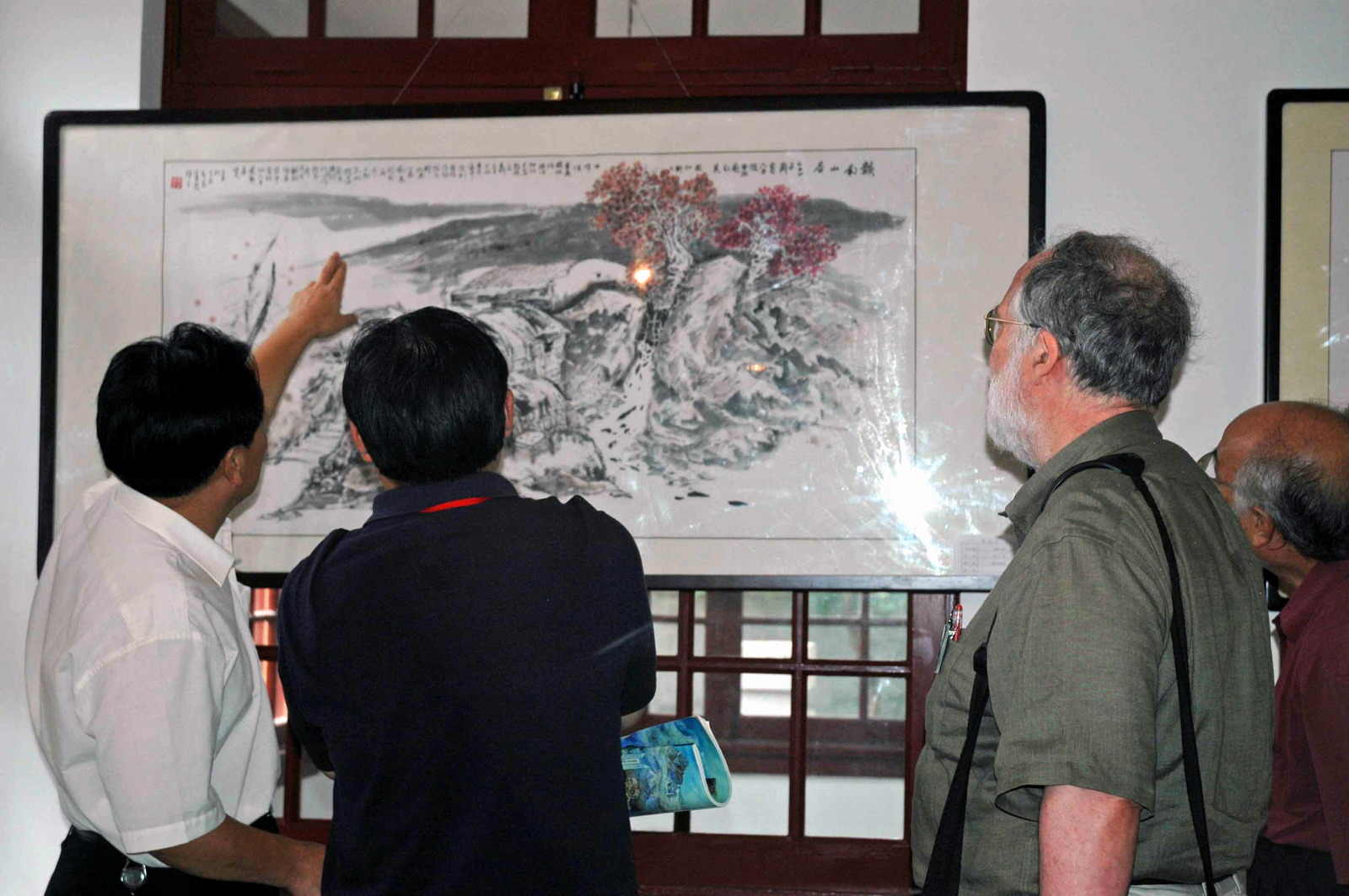
--- The first floor of the old hospital building has been converted into an art gallery for paintings and calligraphy, not necessarily related to the Weihsien camp.
Mr. Han, who was a member of the delegation that came to the U.S. and is himself a gifted artist, points to the dedicatory text in one of his landscape ink drawings, done in a traditional Chinese style. Mr. Han is head of the local TV station, which featured extensive coverage of the celebration and the events which it commemorated.
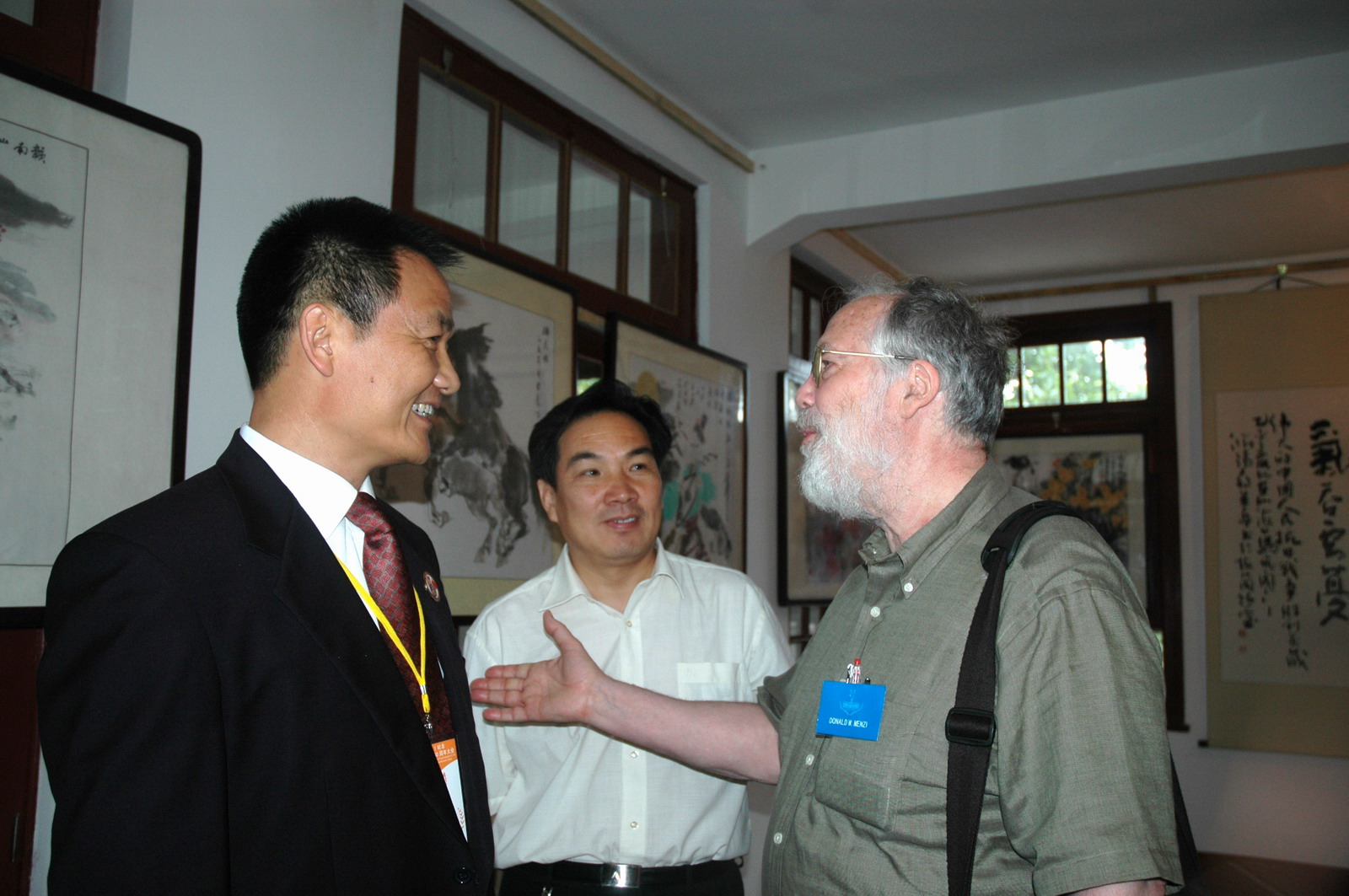
--- Mr. Han introduces us to one of Weifang’s Vice Mayors.
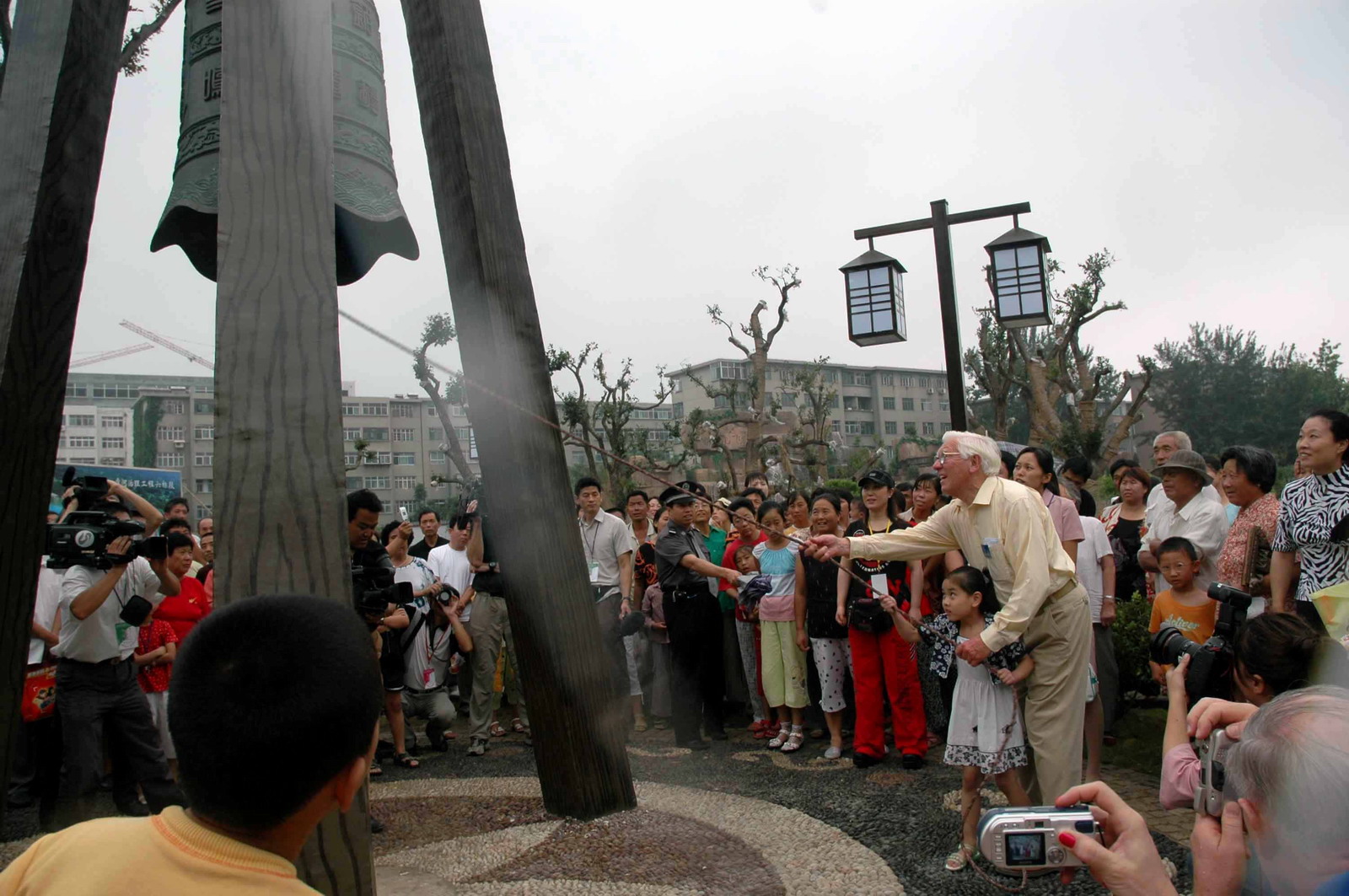
--- Next came the ringing of the enormous "peace bell" by the oldest "Weihsiener" present, together with a little girl from Weifang (412a).
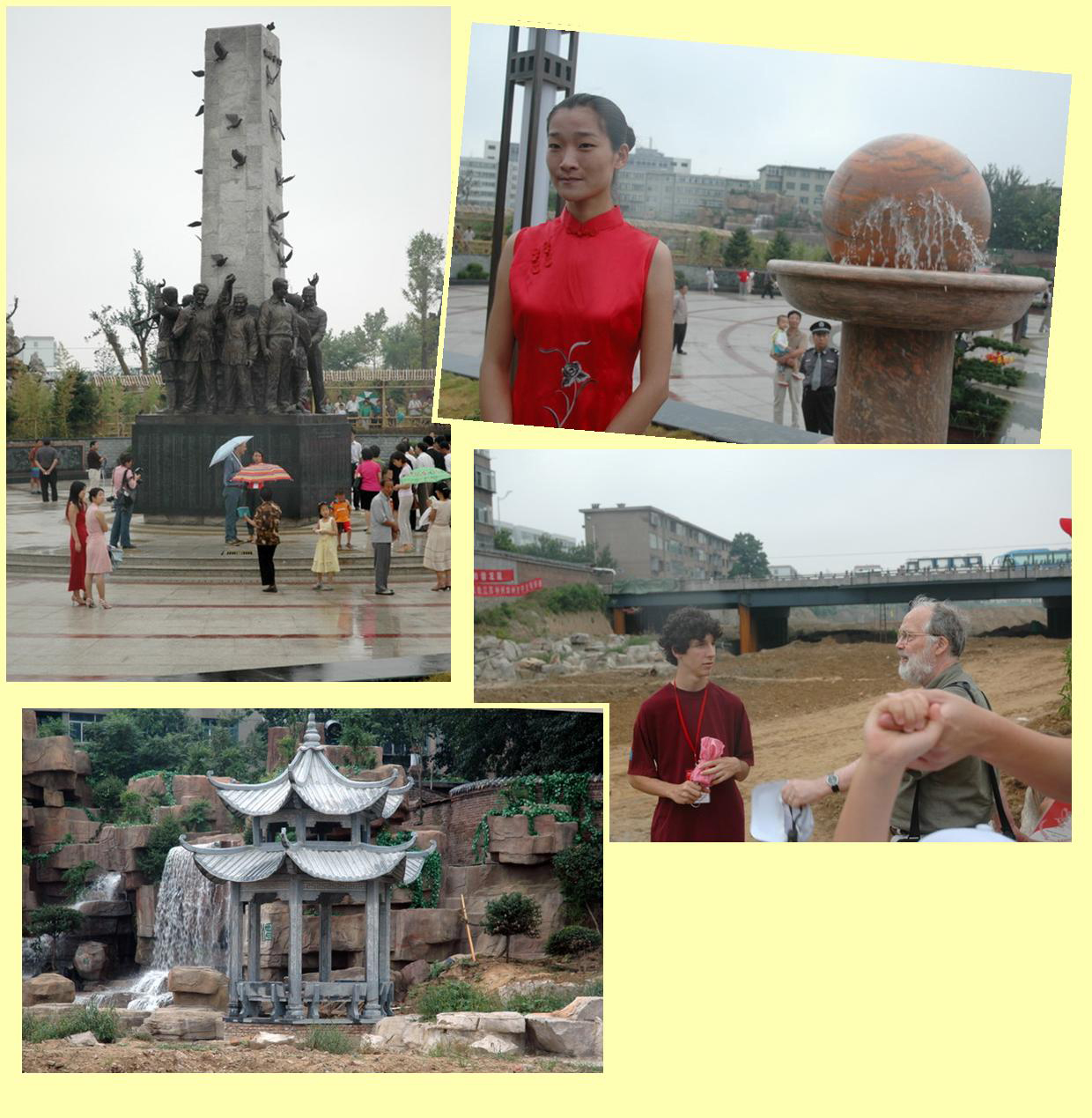
--- The memorial park includes a monument dedicated to people from all nationalities who worked together for peace.
--- A granite ball rotated by flowing water and a small waterfall are just two of the ways that the park’s architects used water imaginatively in their landscape design.
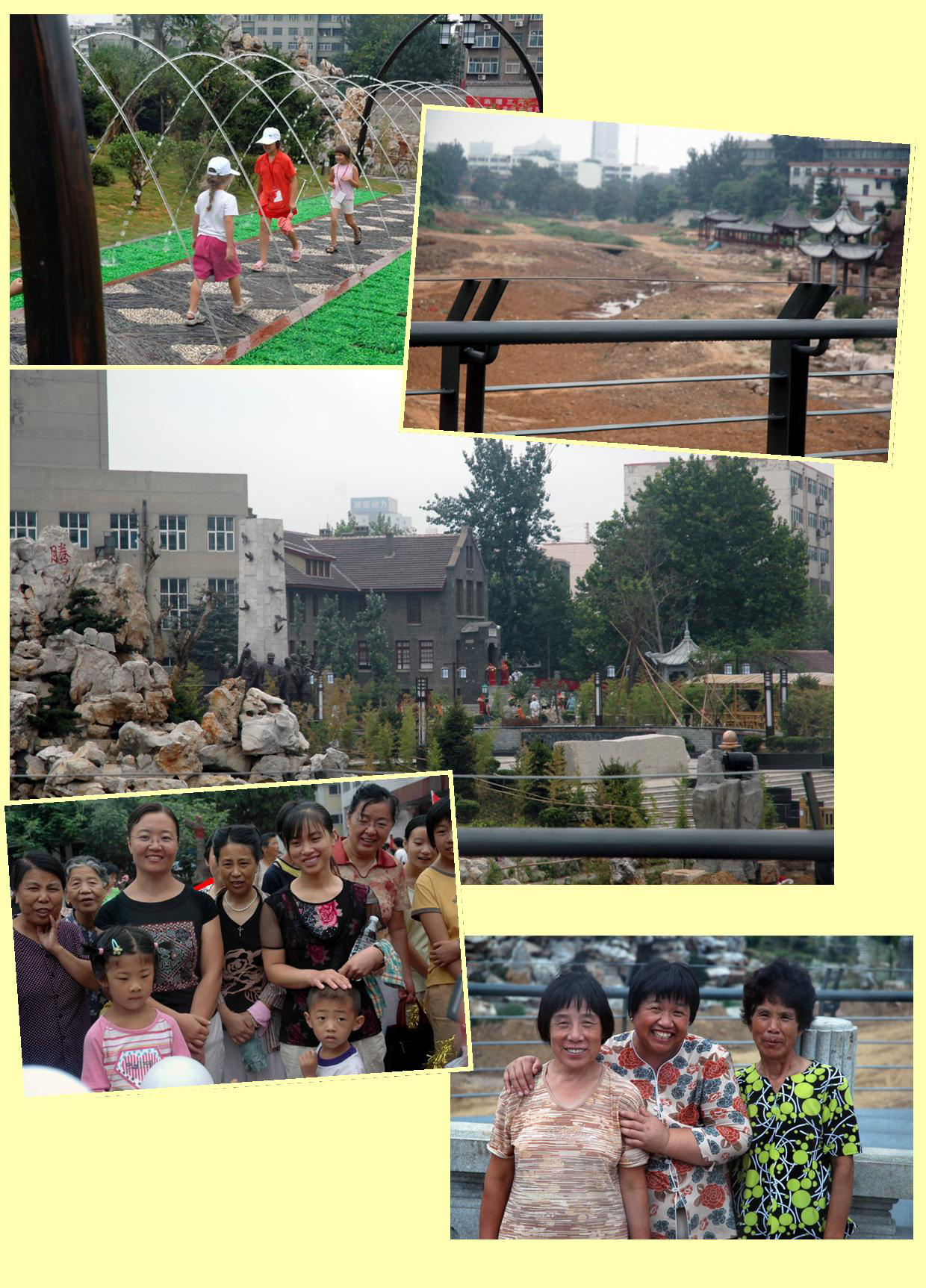
--- The "little stream" shown in some "over the wall" paintings is being widened and deepened to enable small boats to land at the memorial park."
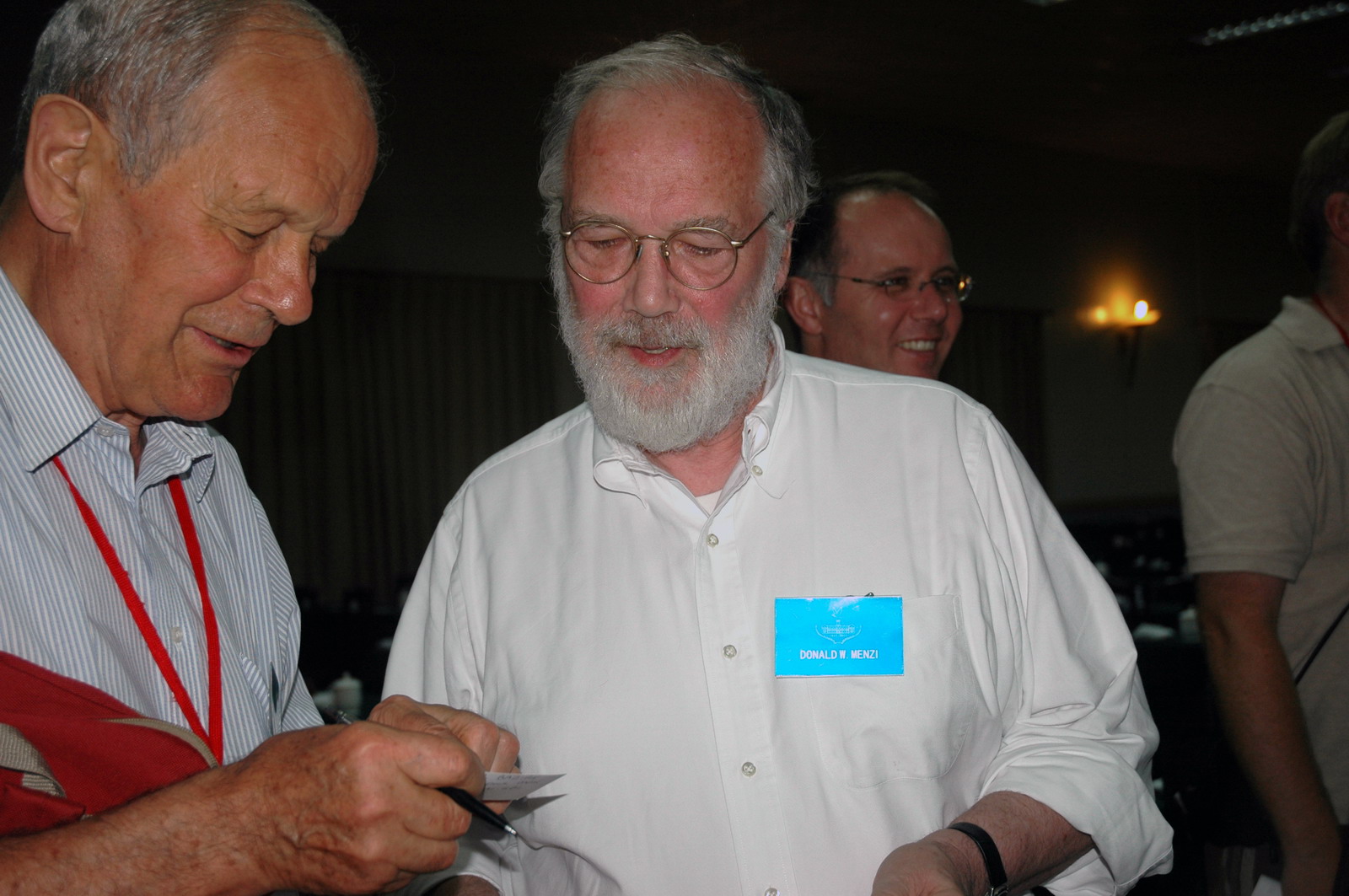
--- The walks through the various parts of the park also provided guests with an opportunity to meet and talk to each other. (Donald Menzi & George Kaposhilin)
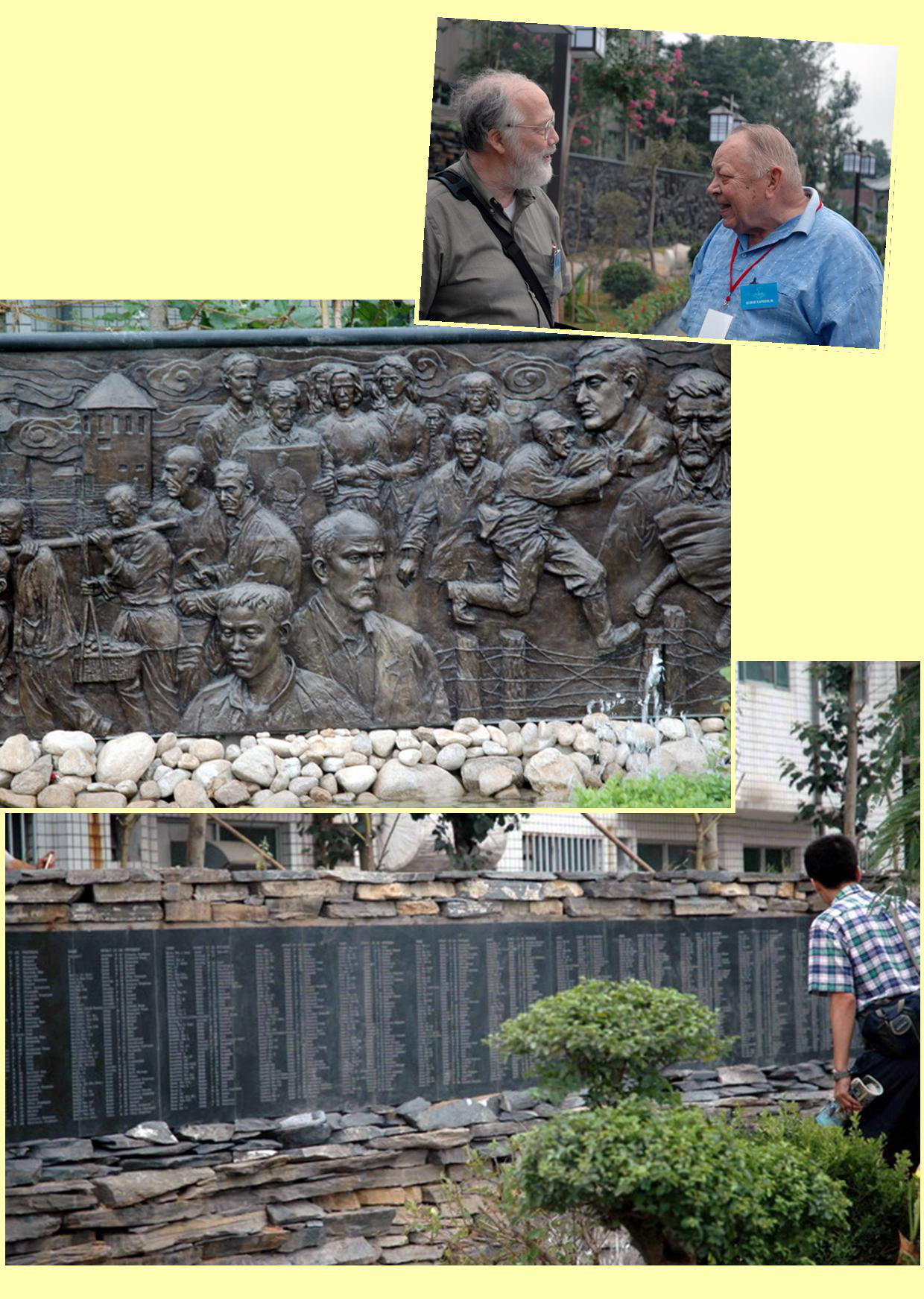
--- A large cast bronze relief depicts the Weihsien internees’ at their work assignments, while maintaining their dignity in the face of oppression.
--- Finding the names of former internees on the memorial wall containing the names, in English and Chinese, of all the inmates who were liberated (437c) was a moving experience for many. [click here] for the complete listing ...
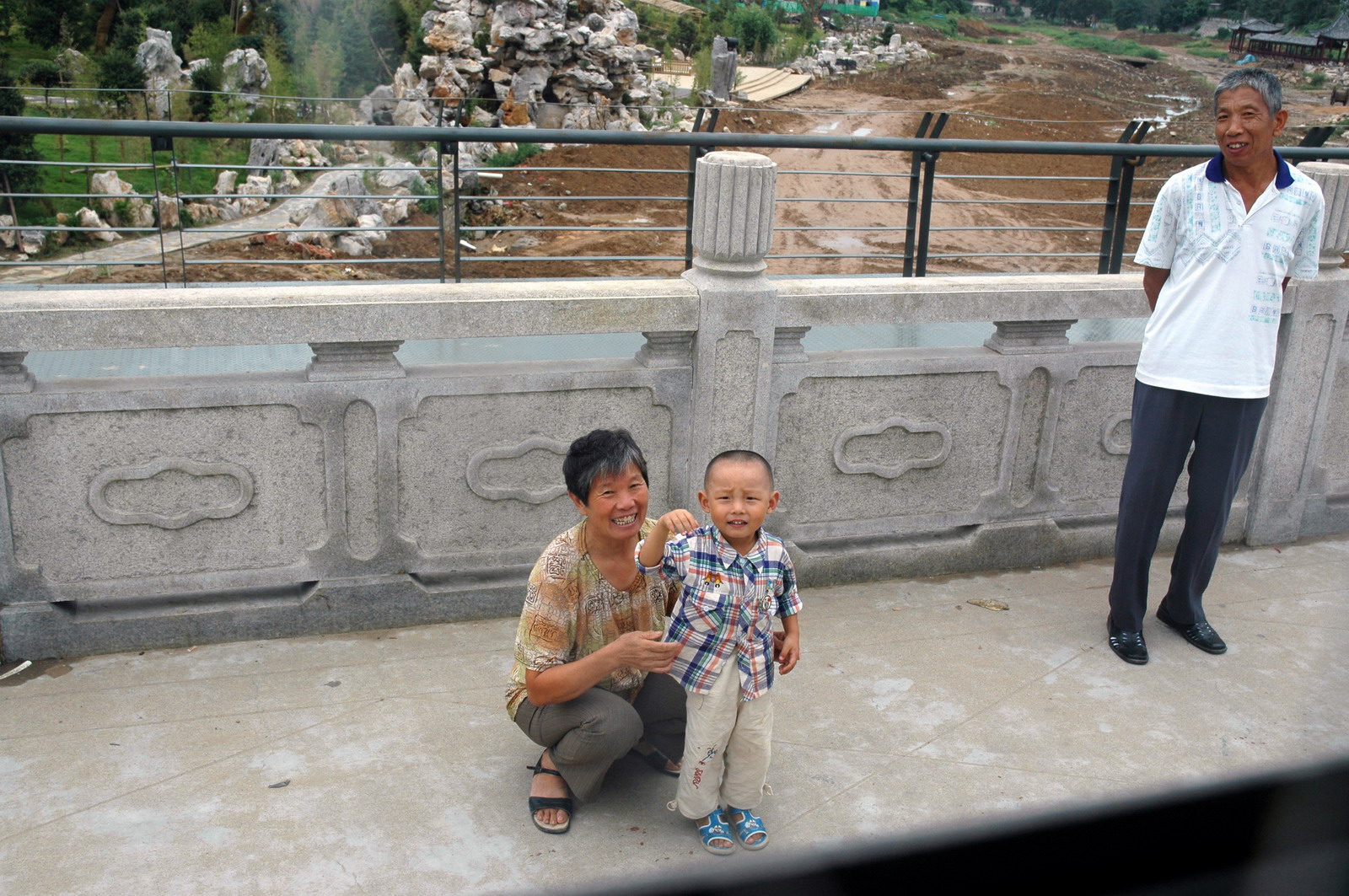
--- We left the compound grounds through a quite elaborate park and recreation area, still under construction, that includes some interesting use of water to form a series of arches, under which my grandchildren enjoyed running (437d).
--- Views looking back from the bridge to the east or northeast of the hospital of the former compound reveal how much major landscaping work is being done to deepen the former small stream and make it large enough to enable small boats to dock at the memorial park. [click here] GoTo: same view in 2002 ...
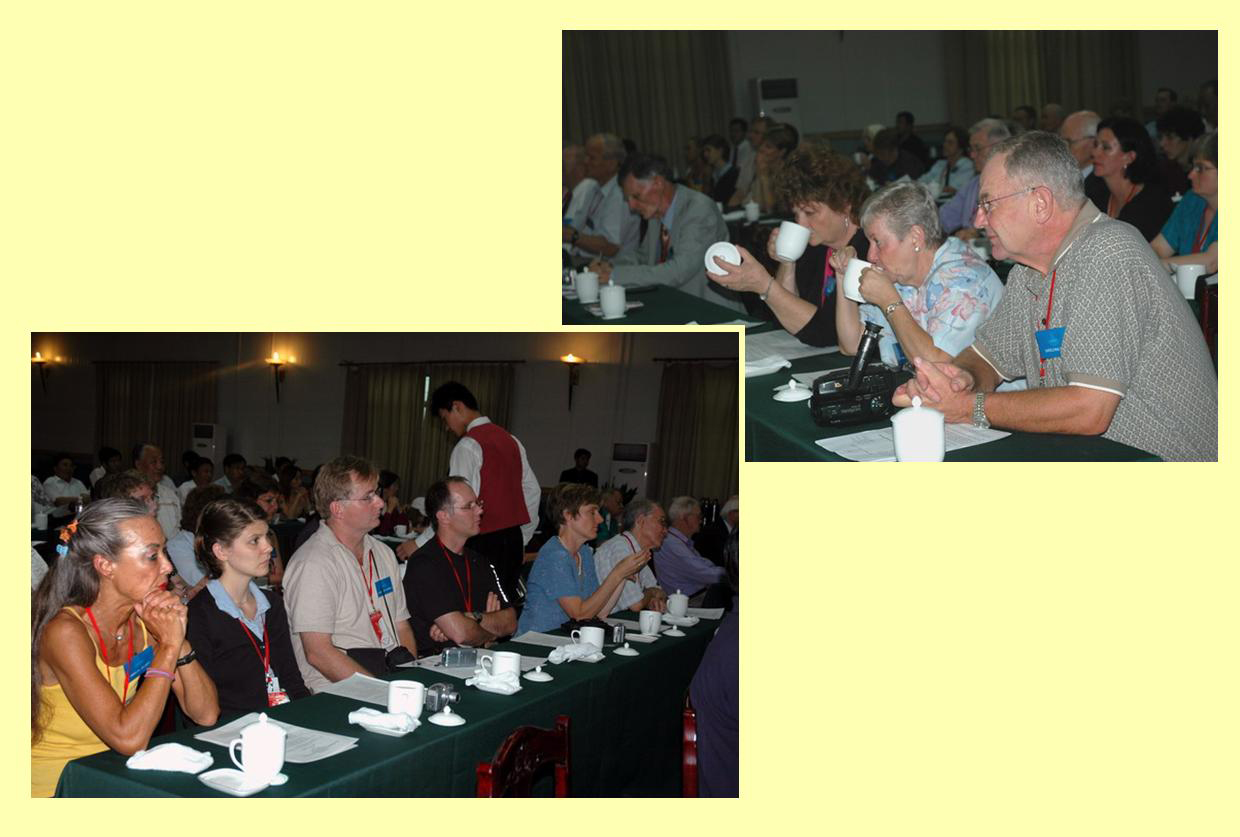
--- After lunch and a brief rest, we reconvened for the "First Meeting of the Council of Friendship Party Between Weifang People and the Former Weihsieners" (469 - 529). This include speeches by the Mayor and other local officials and by internees representing the U.S., U.K, Canada, Australia, New Zealand; and most warmly applauded of all, by the son of the former "sanitation worker." (A translation of his very moving speech will be forwarded to Leopold to be included in the web-site - filling the gap in our memorial collection, which now includes the local Chinese people who were so generously helpful to the internees while they were emprisoned.
--- After the speeches the constitution of the newly formed Party organization was read and adopted unanimously by those present. I'm sure the constitution in its entirety will be added to the web site.
--- Mary Previte talking with Suchi Swift, the great-grand daughter of one Mary’s camp heroes, Hugh Hubbard.
Donald Menzi with Peter Bazire
--- Following the meeting I did the "walking tour" slide show and took the names of anyone present who wanted to be sent a playable copy of the CD (538). [click here] GoTo: "The Walking Tour" ...
After dinner, most of our group went to a Commemorative Theatrical Performance, which I skipped to work on the photos.
It has been a long and wonderful day - far beyond anything that any of us imagined would take place. The Weifang government officials have organized a great event, which we all deeply appreciate, but the real stars for many of us were the ordinary citizens of Weifang, who turned out in great numbers, and whose genuine, open warmth and sincere expressions of welcome transcended any language barriers, making many of us feel like this was truly a homecoming, even for those of us who weren't there 60 years ago.
More about tomorrow, tomorrow.
Donald Menzi
DAY - THREE ...
--- Thursday, August 18, ---
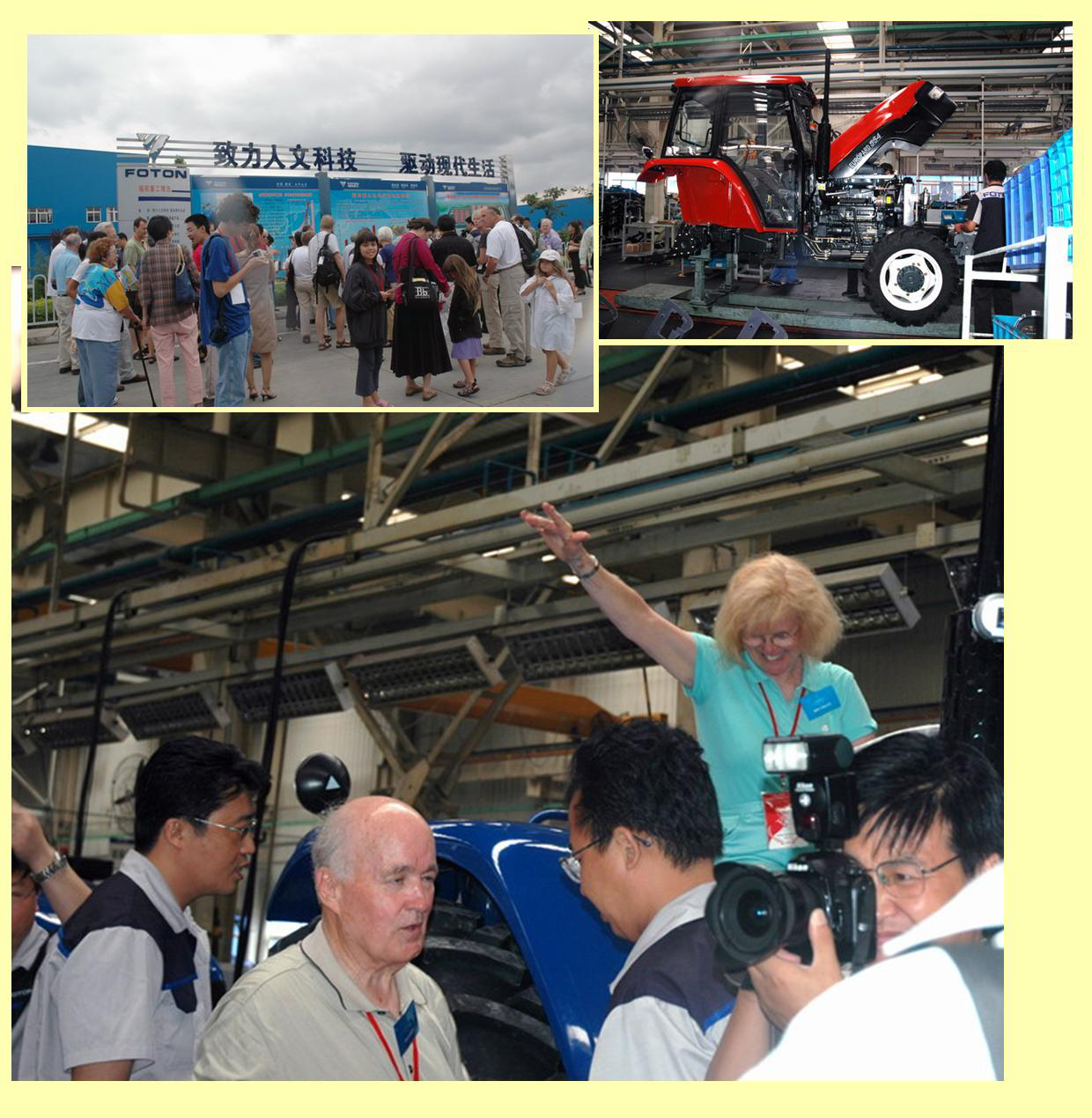
--- Today we visited the Foton Heavy Industry Agricultural Machinery Co., Ltd. (#38) - of special interest to anyone who (like me) likes to know how things are put together. They were making tractors today (47, 58), but a lot of other really cool farm vehicles and machinery were parked on the lot - combines, front-end-loaders, and other things I couldn't name, but to anyone whose kids ever played with "matchbox" toys, these looked like great big toys that would be fun to drive around the sand box.
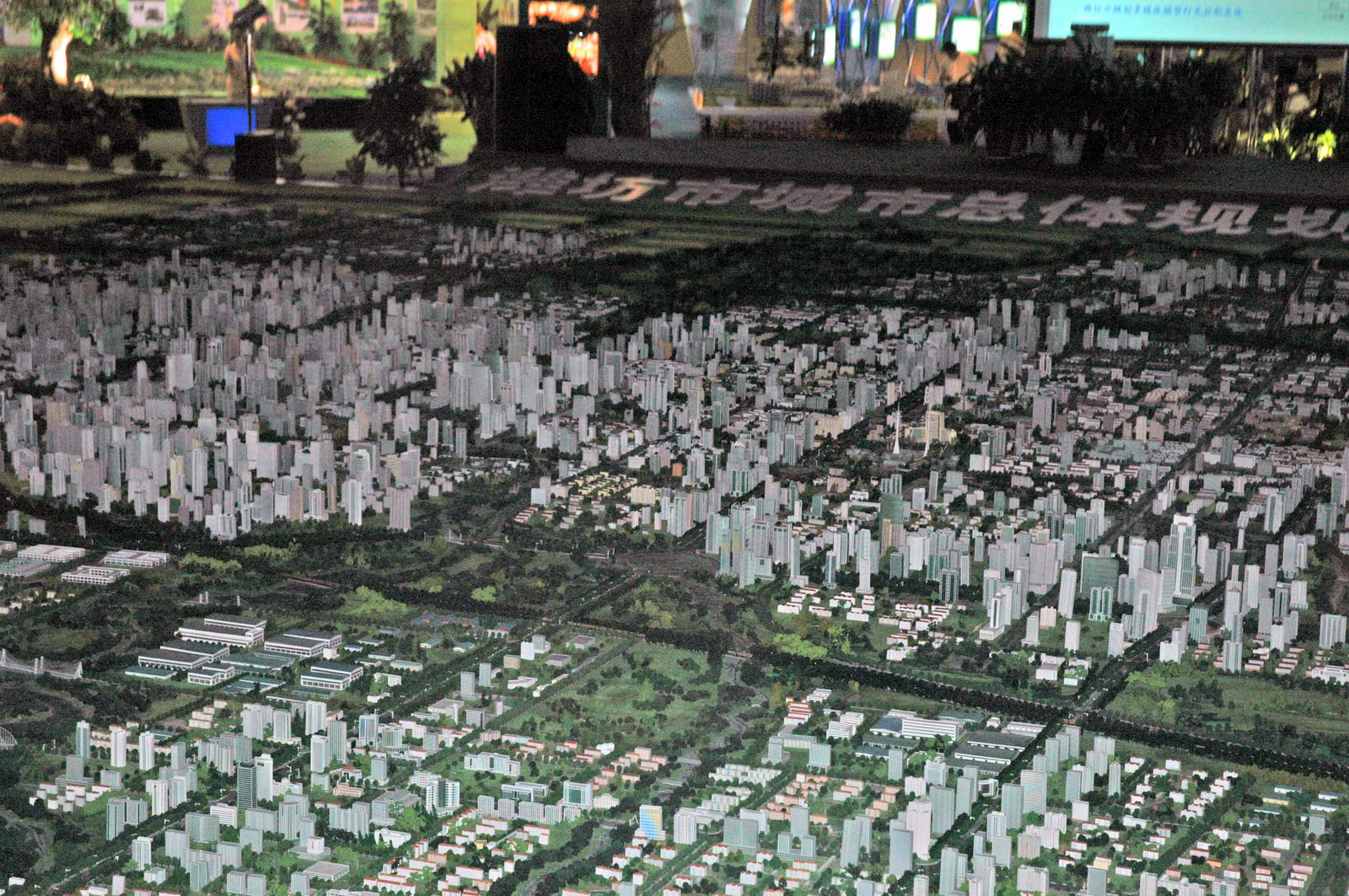
--- Next stop was the Fuwah International Conference & Exhibition Center, where we saw a huge 3-dimensional scale model of the Weifang municipal area's "Ecological City Plan." The rivers lighted up and spotlights from above shifted around to highlight various districts of the urban area as the narrator described the problems being addressed and the plans for each area's future development. The "ecological" aspect to the plan, I was told later, was because the Wei River - from which Weihsien/Weifang gets its name - was extremely sluggish and smelly, and deepening and improving the waterway is one of the key elements of the plan. This is what will enable small boats to dock at the park next to the historical museum (formerly the internment center's hospital building). The only drawback to this elaborate demonstration was that it was entirely in Chinese, partly because the exhibit was completed only a few days before our arrival, and partly because we are not the target audience of this very complex and obviously costly display.
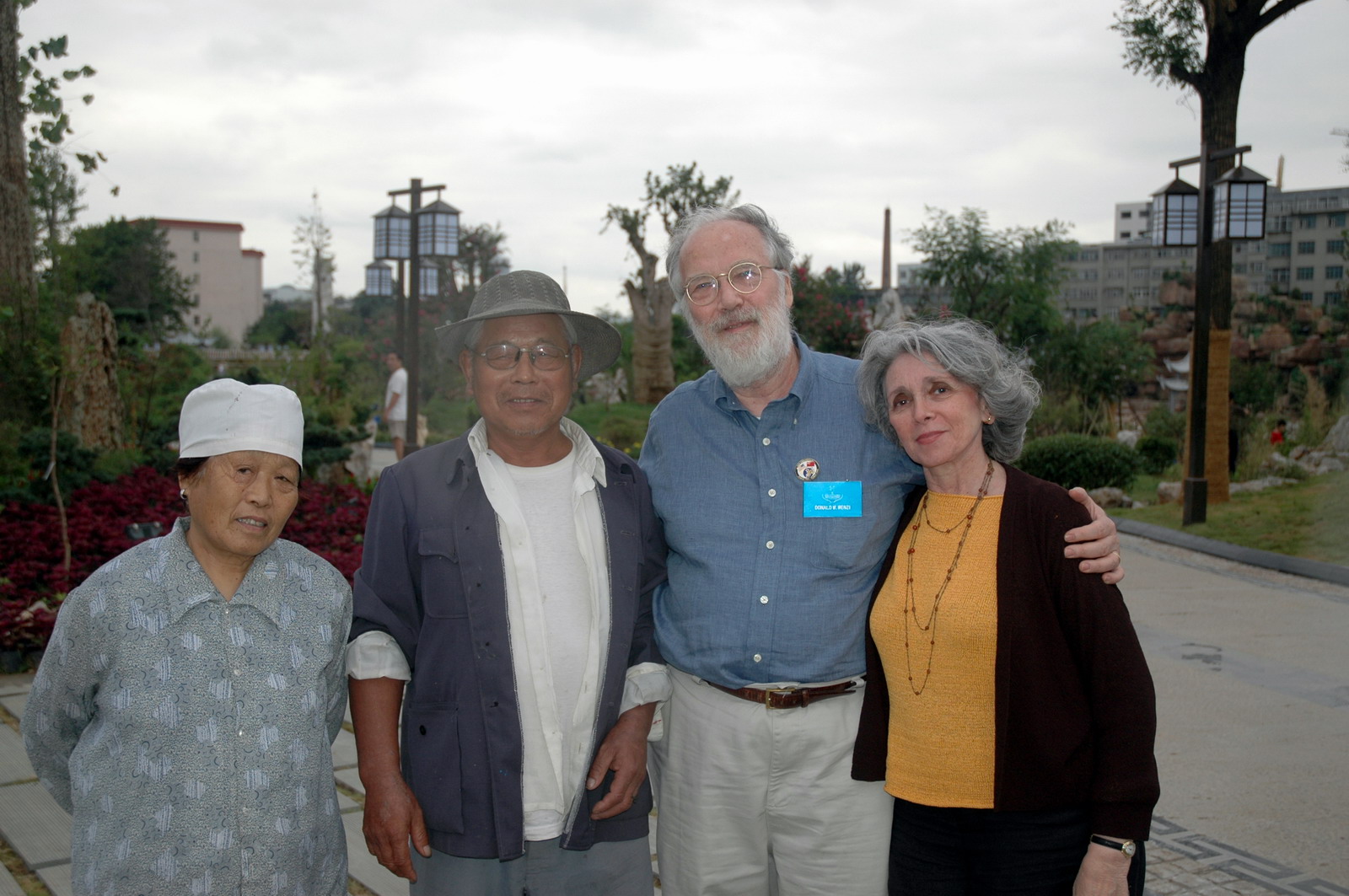
--- A change of schedule allowed us to stop again at the Weihsien Center site where, without the crowds of yesterday, we were able to wander at our own pace around the grounds, swapping stories about what had happened to us where, and getting to know each other better. Jane and I had the good fortune of meeting a Chinese couple whom I might have called elderly once, but wouldn't now because they are close to our own age, who had lived near the camp and remembered that time well (#93). We took their address and plan to send them this photo and copies of some of the paintings of their own village, viewed "over the wall" over 60 years ago.
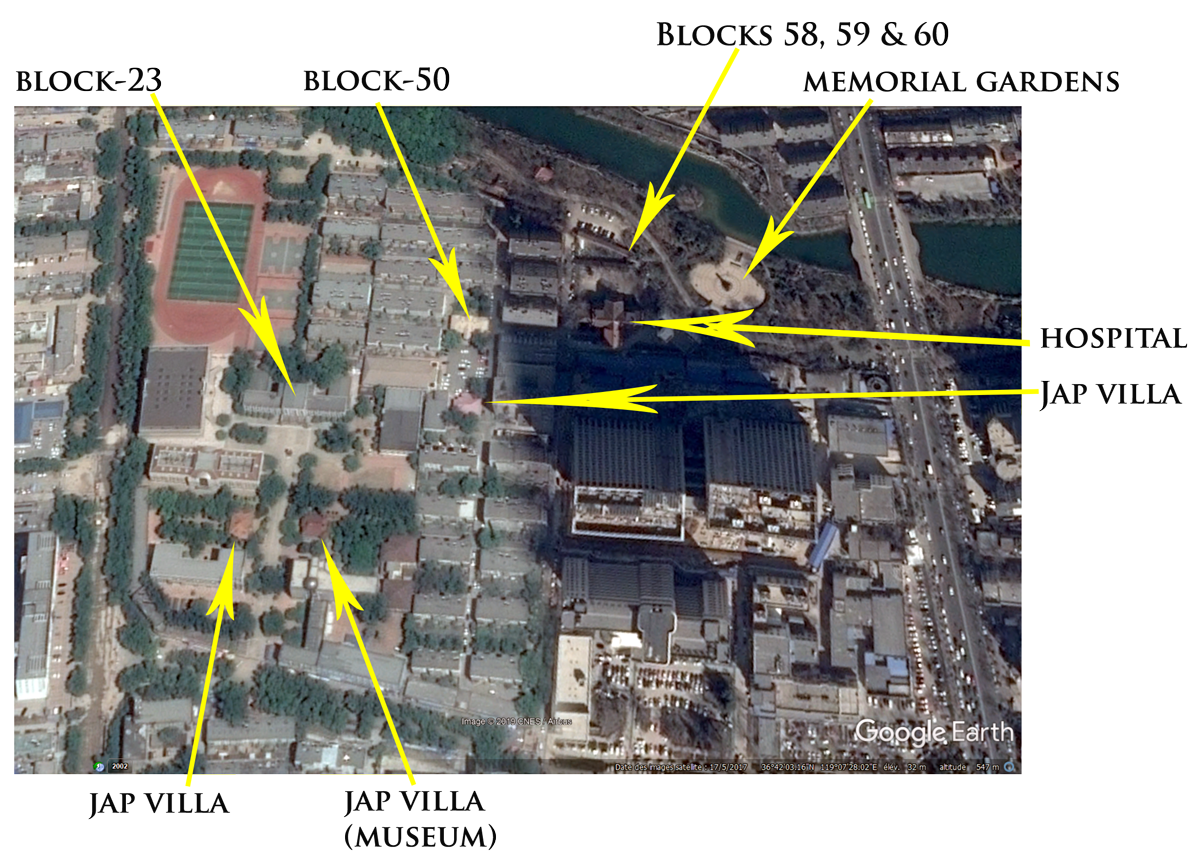
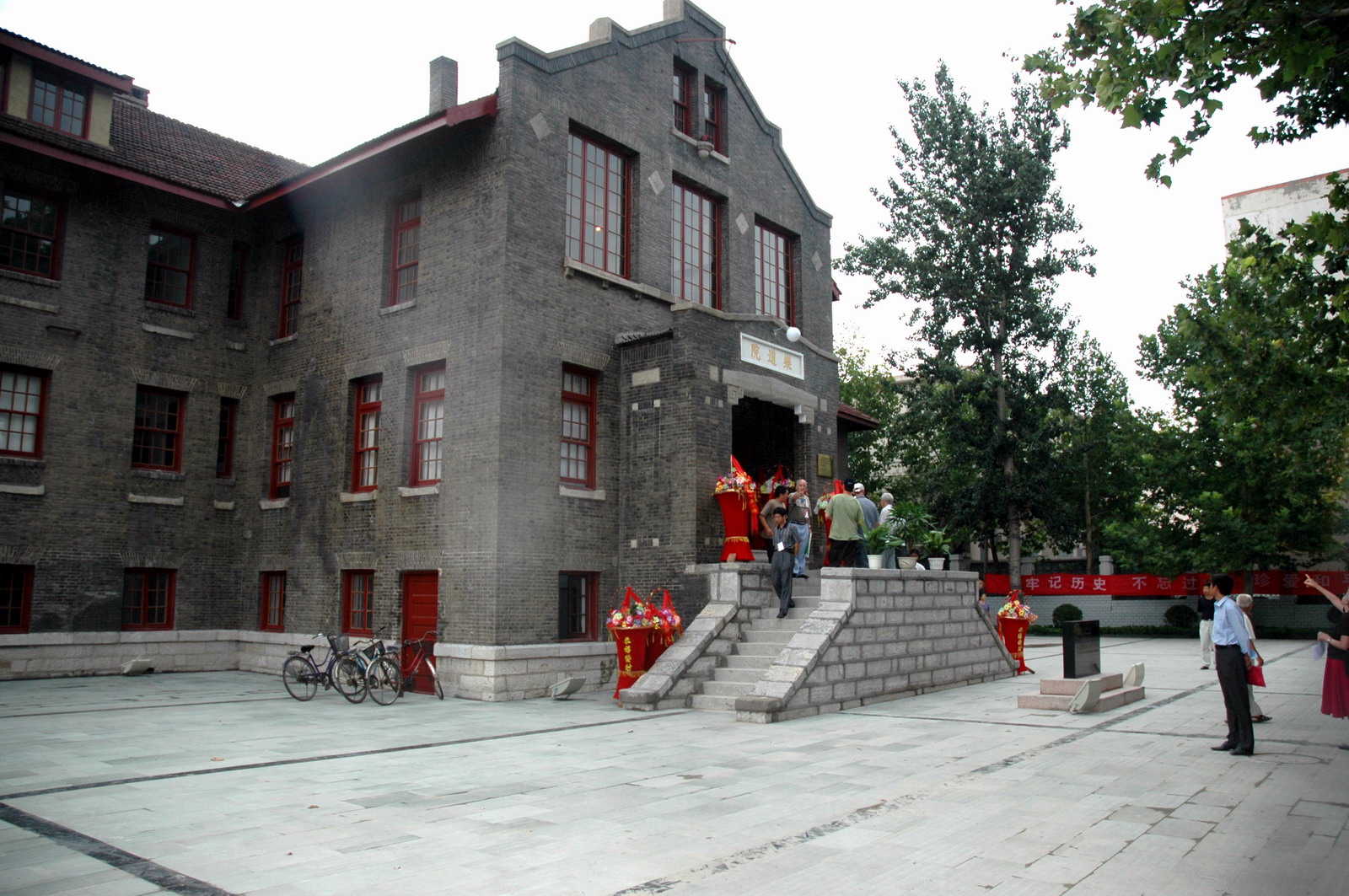
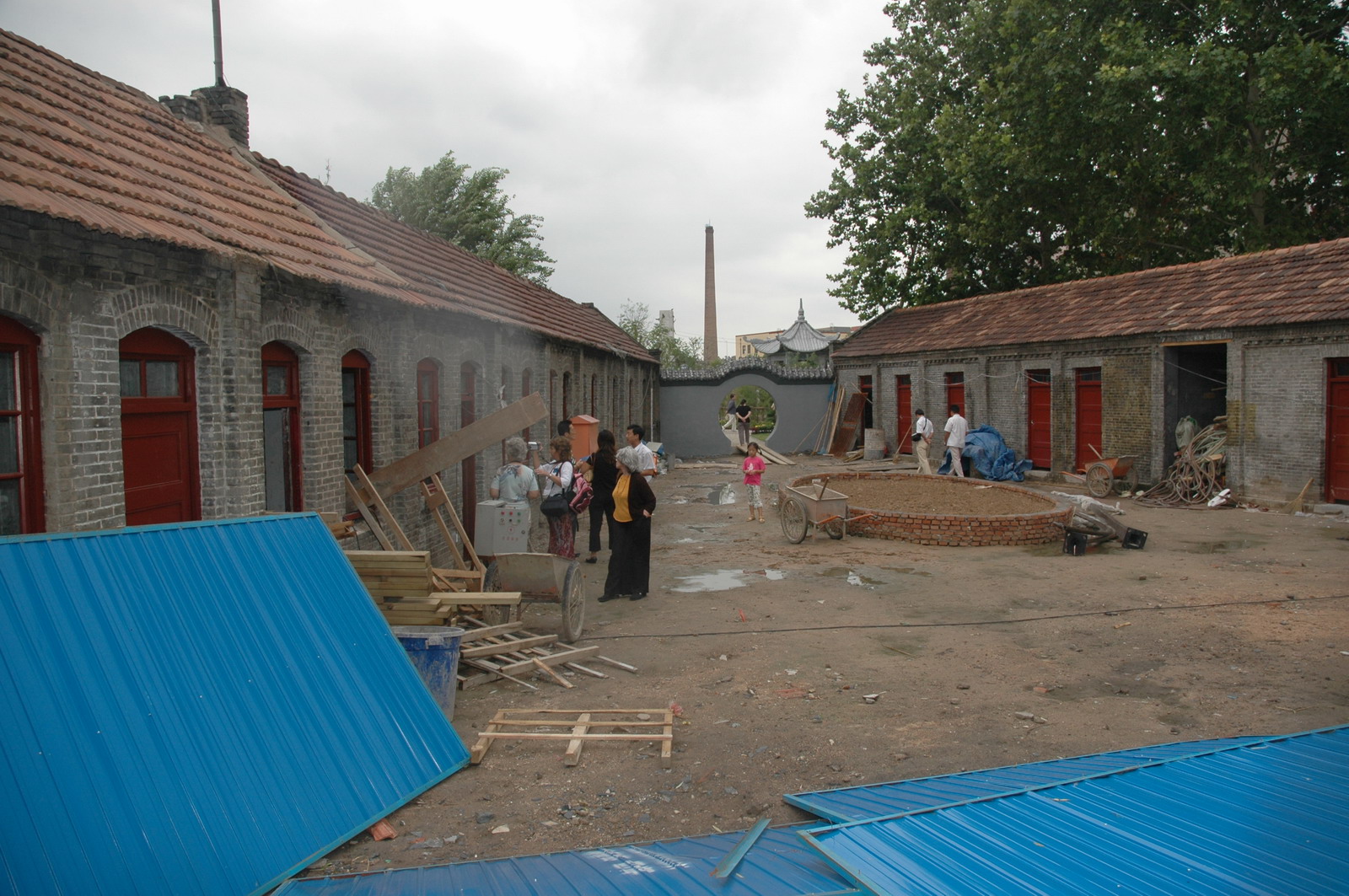
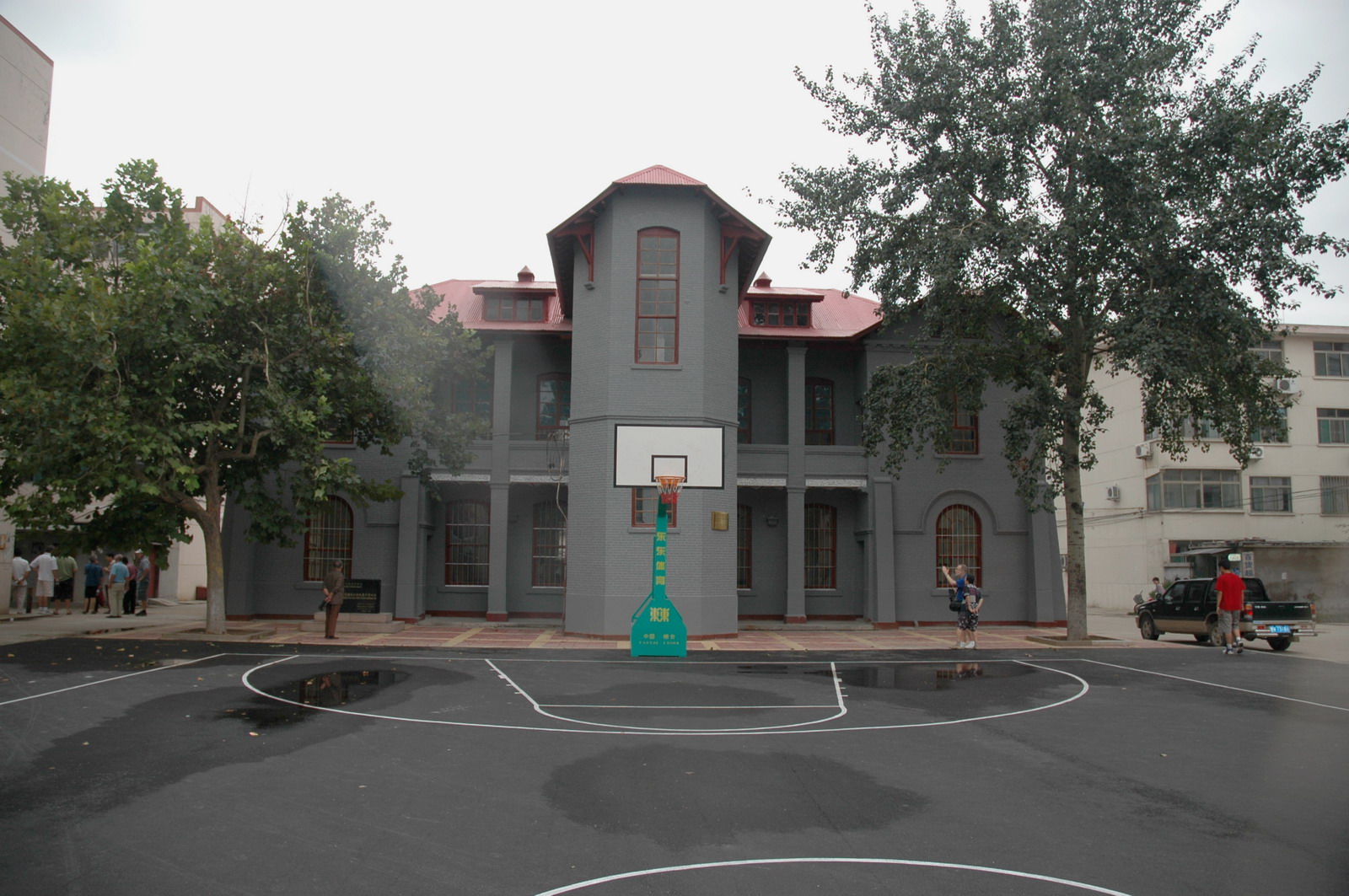
--- It took me a while to get the old buildings that are still standing fitted into the map of the compound that is now embedded in my brain from working on the "walking tour" slide show - a process rather like playing with those toy puzzles that we give to very little children, with five or six cutout shapes into which they are supposed to fit various animal-shaped pieces. I finally "got it" and it was quite moving to be able to visualize where on the map I was standing while looking at the hospital (97),
--- and one of the "out-of-bounds" Japanese-occupied residences. ---
... located at "JAP VILLA" (right of the picture) and Block-50 is just on the other side of the little square.
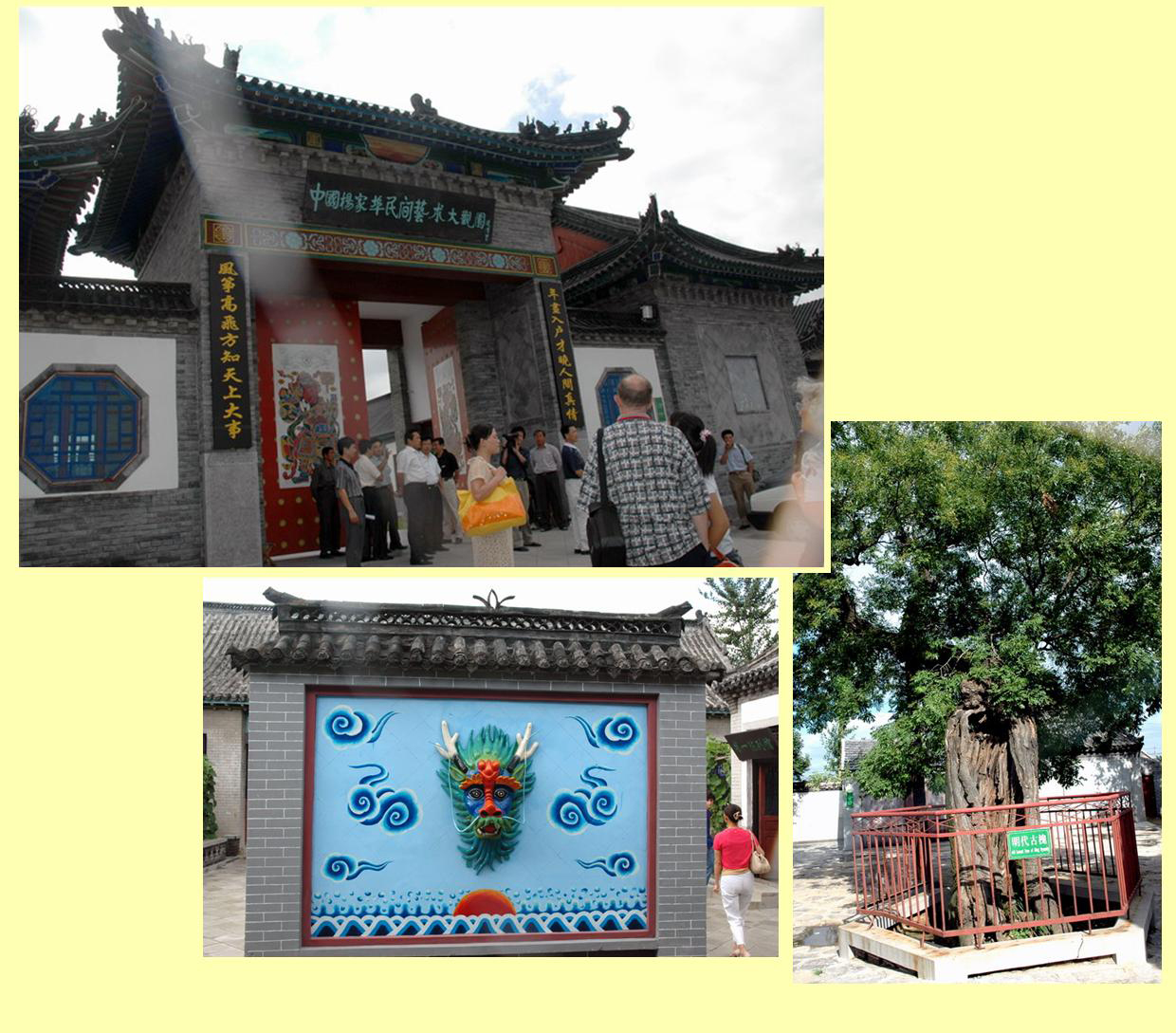
--- After lunch we visited a kite museum and factory - Weifang is the kite-making capital of China, and therefore of the world. We were led through a maze of separate, one-storey buildings, each with a room or two containing historic designs by famous local artisans, including both kites and "New Year" paintings of symbolic figures, traditoinally hung anew each year to bring good fortune during the coming 12 months. ---
--- A 600 year old tree dating from the Ming dynasty.
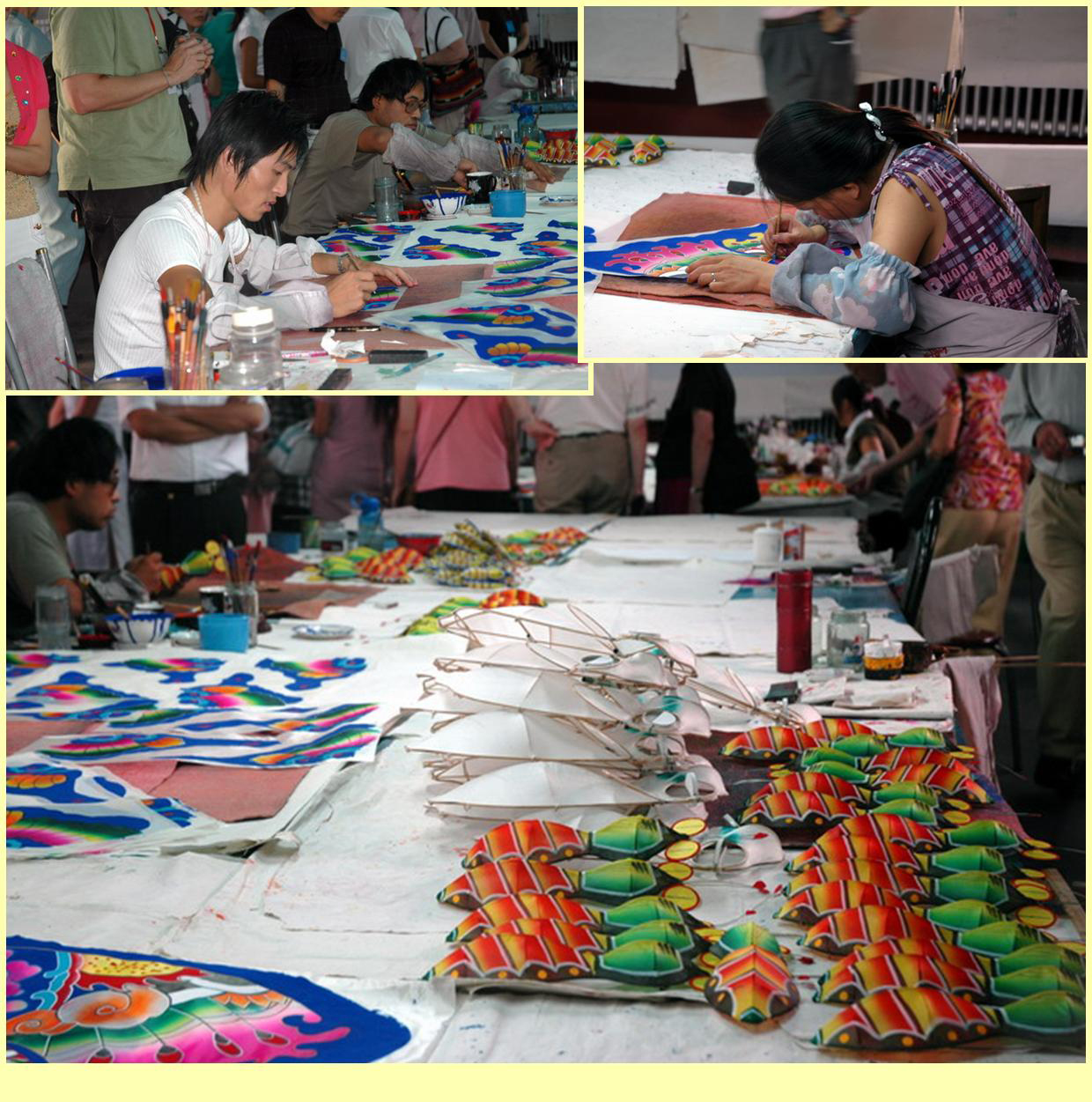
--- Then we were taken through actual workshops where kites were being hand-painted (135 - 162) and where bamboo sticks were being heated and bent into the shapes of birds, fish, dragon-flies, etc. ---
--- This was climaxed by a visit to the compound's store, where many of us bought kites for our children (so we said).
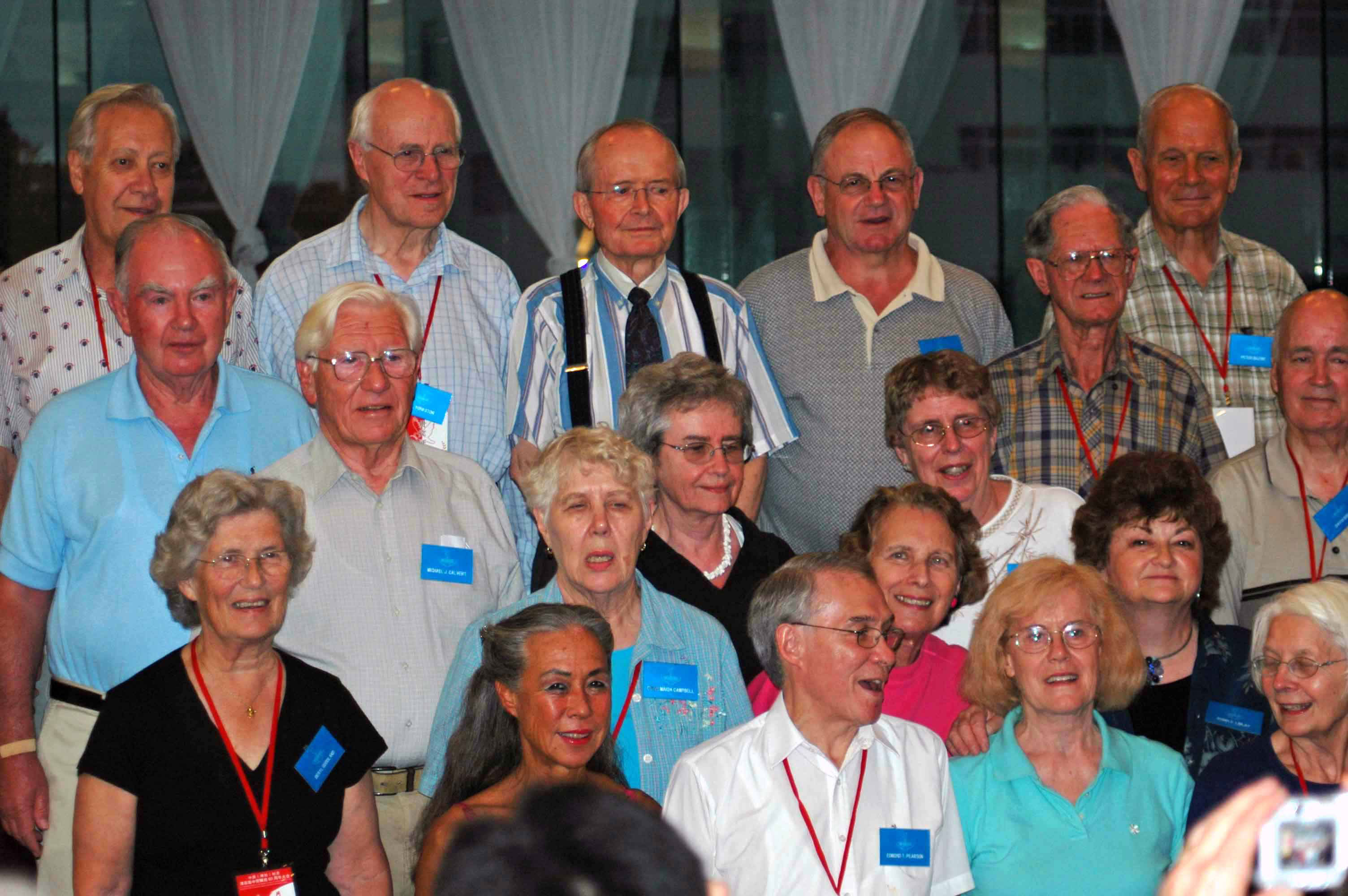
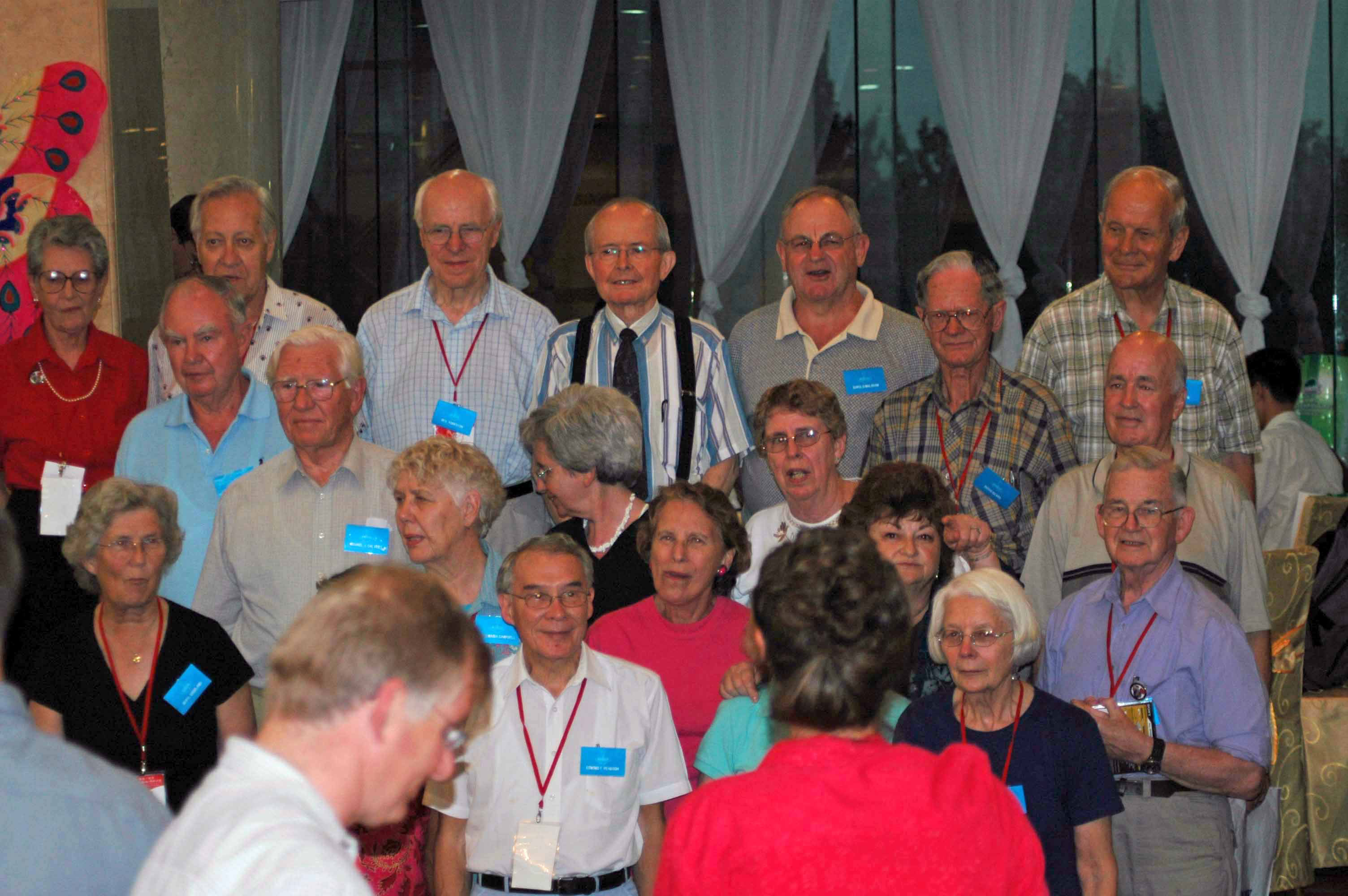
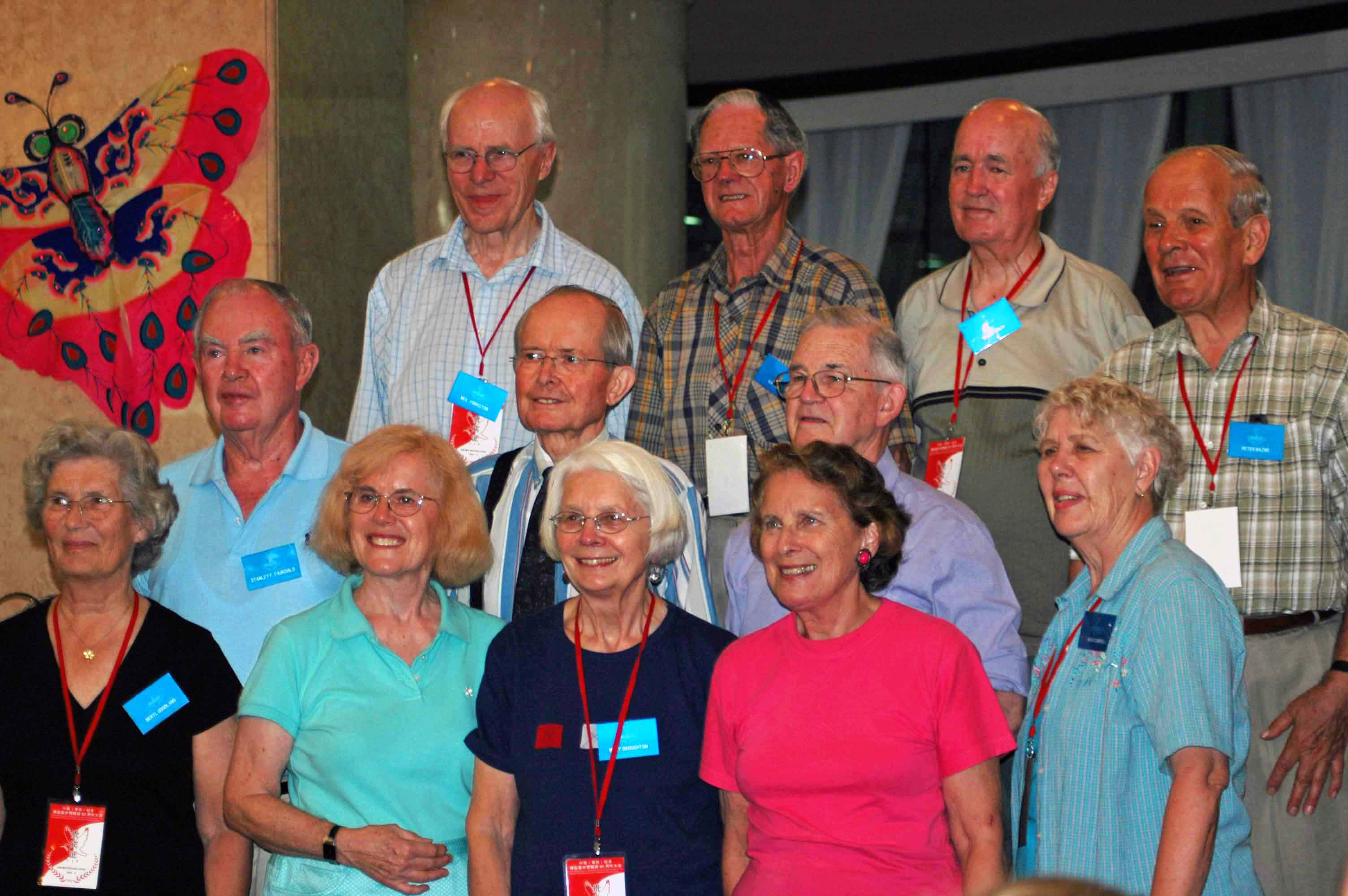
--- That evening after dinner, group pictures were taken of those who were actually interned (190), and of the former Chefoo-ites among them (192).
back row Eddie Cooke - Neil Yorkston - James Taylor III - Gerald Walsham - David Beard - Peter Bazire - David Birch.
middel row Stanley Fairchild - Beryl Welch-Goodland - Michael Calvert - Maida Haris-Campbell - Marian Beavan - Estelle Cliff-Horne - Georgeana Kniseley - Diana Walsham-Linley.
front row: Angela Cox-Elliot - Teddy Pearson - Mary Taylor-Previte - Mary Hoyte-Broughton.
2005 - "Group" photo - ex-Weihsien internees:
... - standing (back row) - from left to right:
Joyce Bradbury-Cooke - Eddie Cooke - Neil Yorkston - James Taylor III - Gerald Walsham - David Beard (just in front) - Peter Bazire.
... - standing (middel row) - from left to right:
Beryl Welch Goodland - Stanley Fairchild - Michael Calvert - Maida Haris Campbell - Marian Bevan - Estelle Cliff Horne - Georgeanna Knisely - Diana (Walsham) Linley - David Beard (just behind) - David Birch and Stephen Metcalf (just in front of him).
... the front row:
Angela Cox Elliot (masked) - Ted Pearson - Mary Taylor Previte (masked) - Mary Hoyte Broughton.
2005 - "Group" photo - ex-Chefoo internees from Weihsien:
... the gentlemen from left to right:
Stanley Fairchild (Tianjin Import) - Neil Yorkston - James Taylor III - David Beard - Stephen Metcalf - David Birch - Peter Bazire.
... the ladies, from left to right:
Beryl Welch Goodland - Mary Taylor Previte - Mary Hoyte Broughton - Estelle Cliff Horne - Maida Harris Campbell.
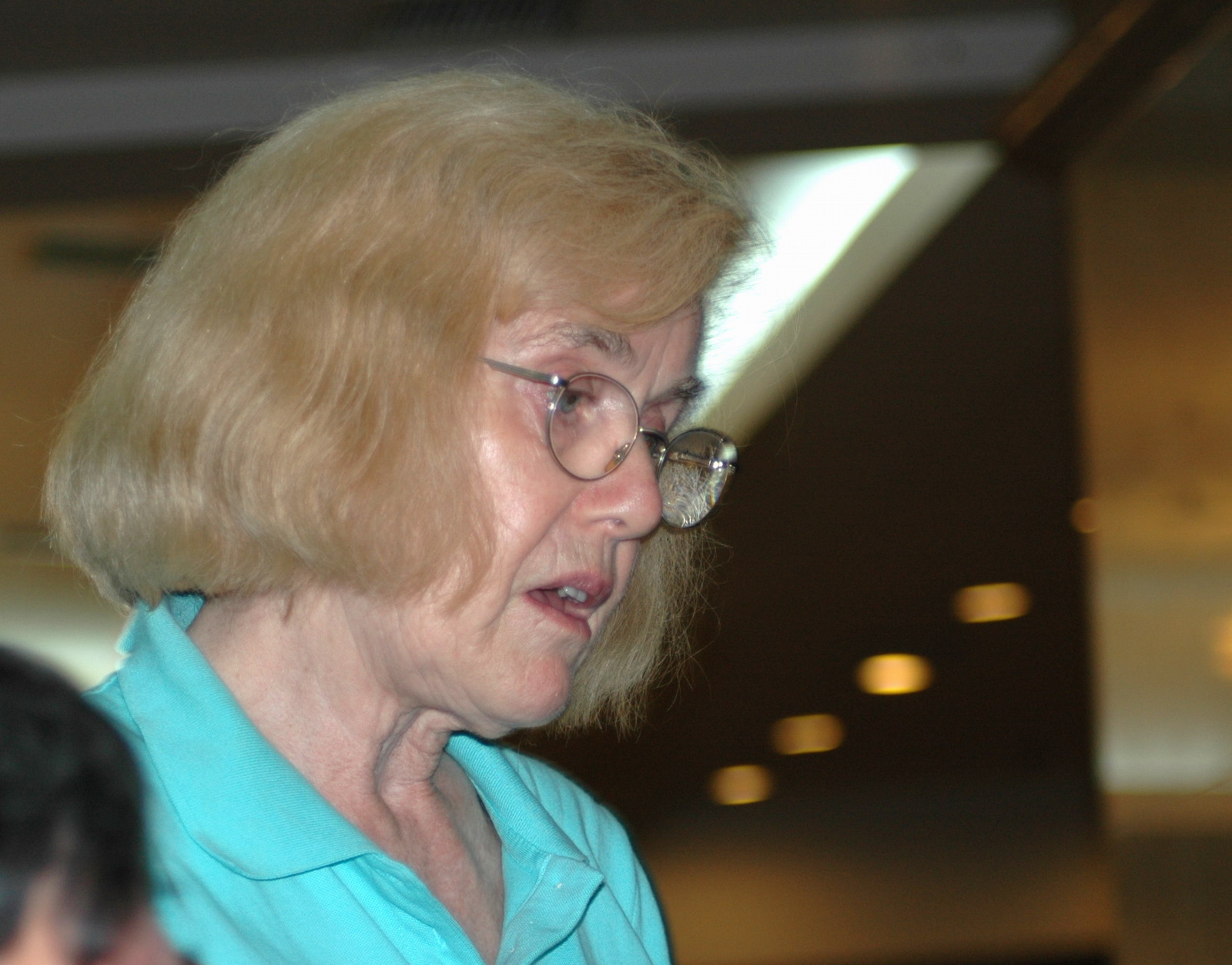
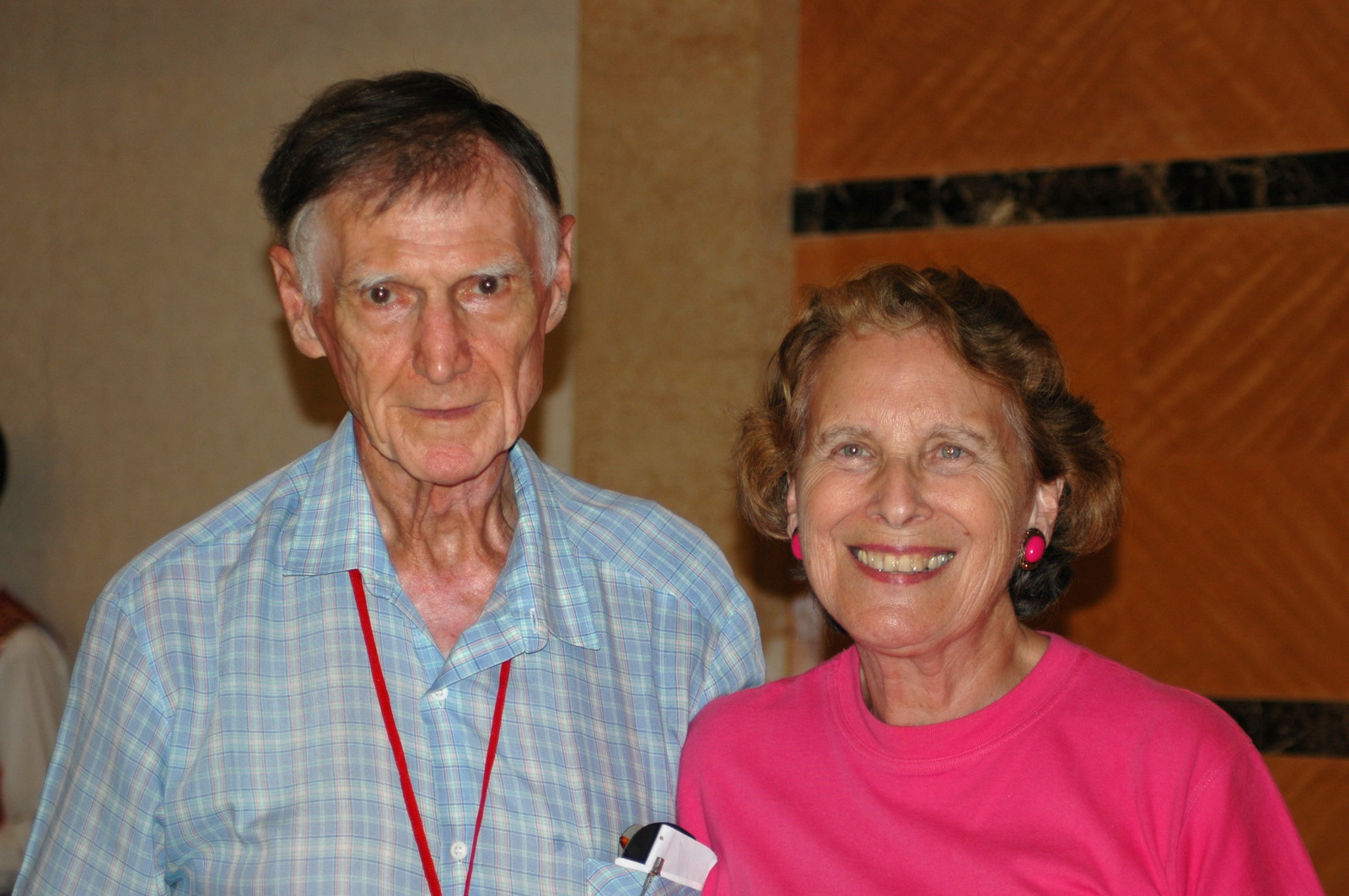
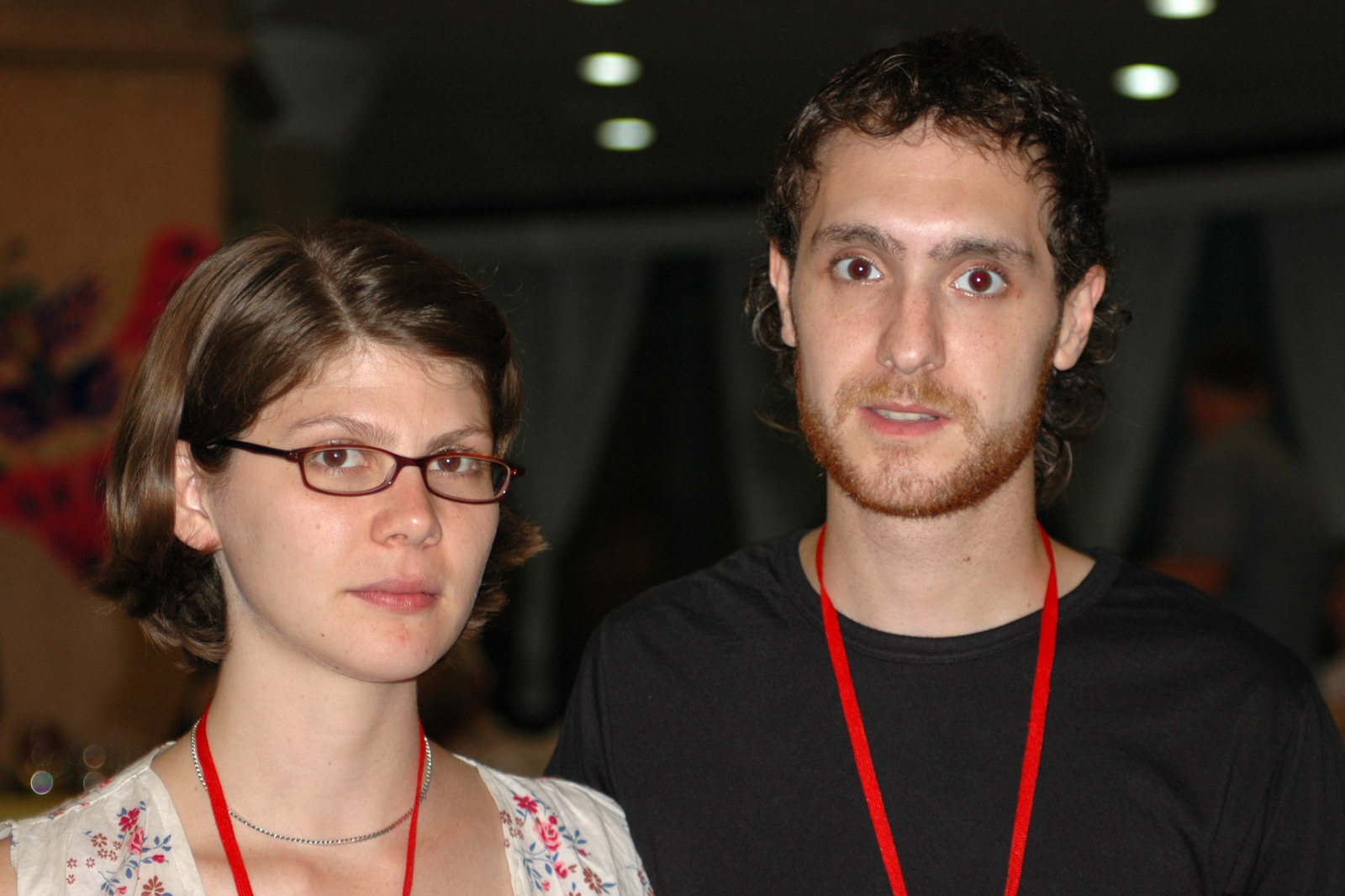
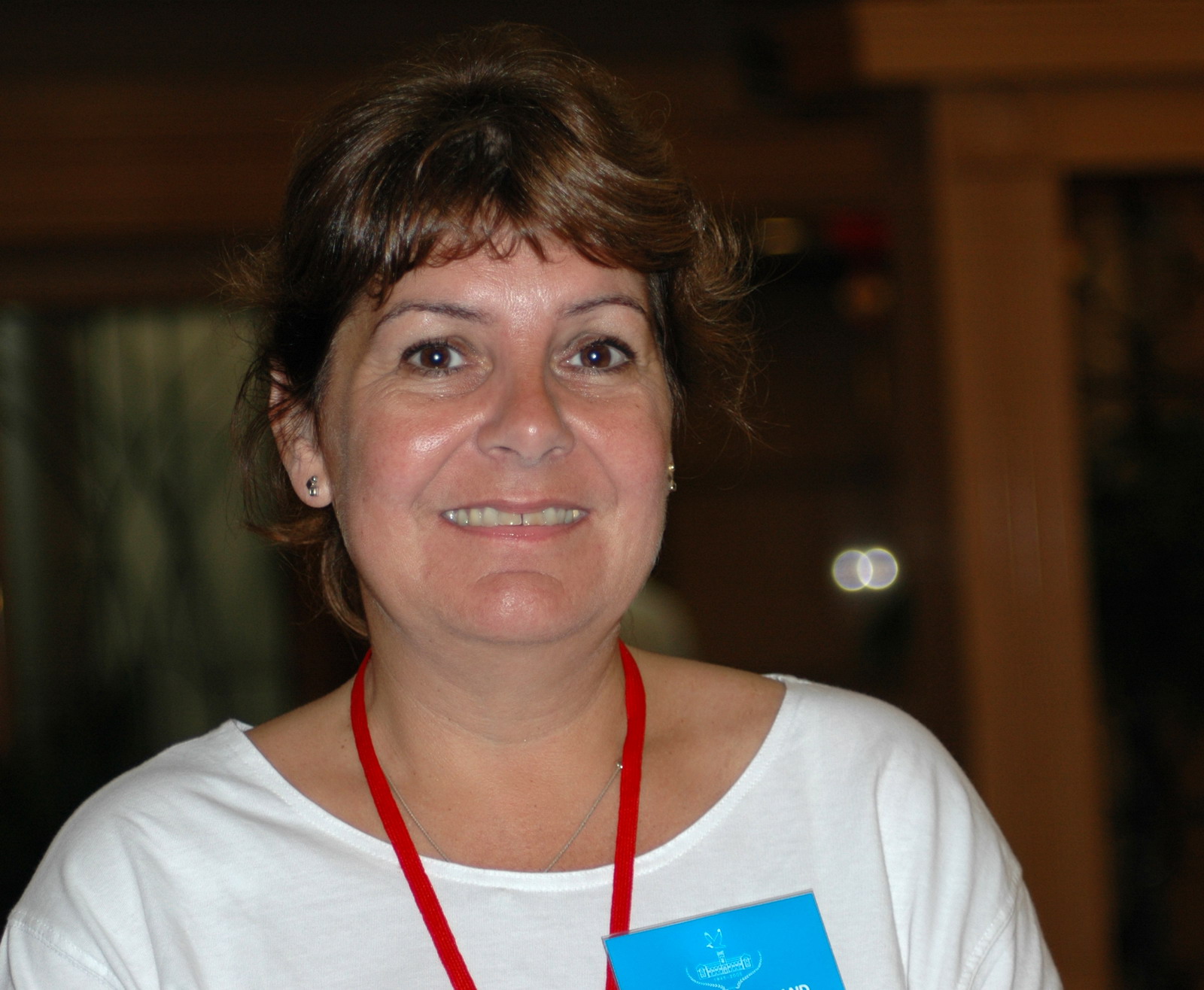
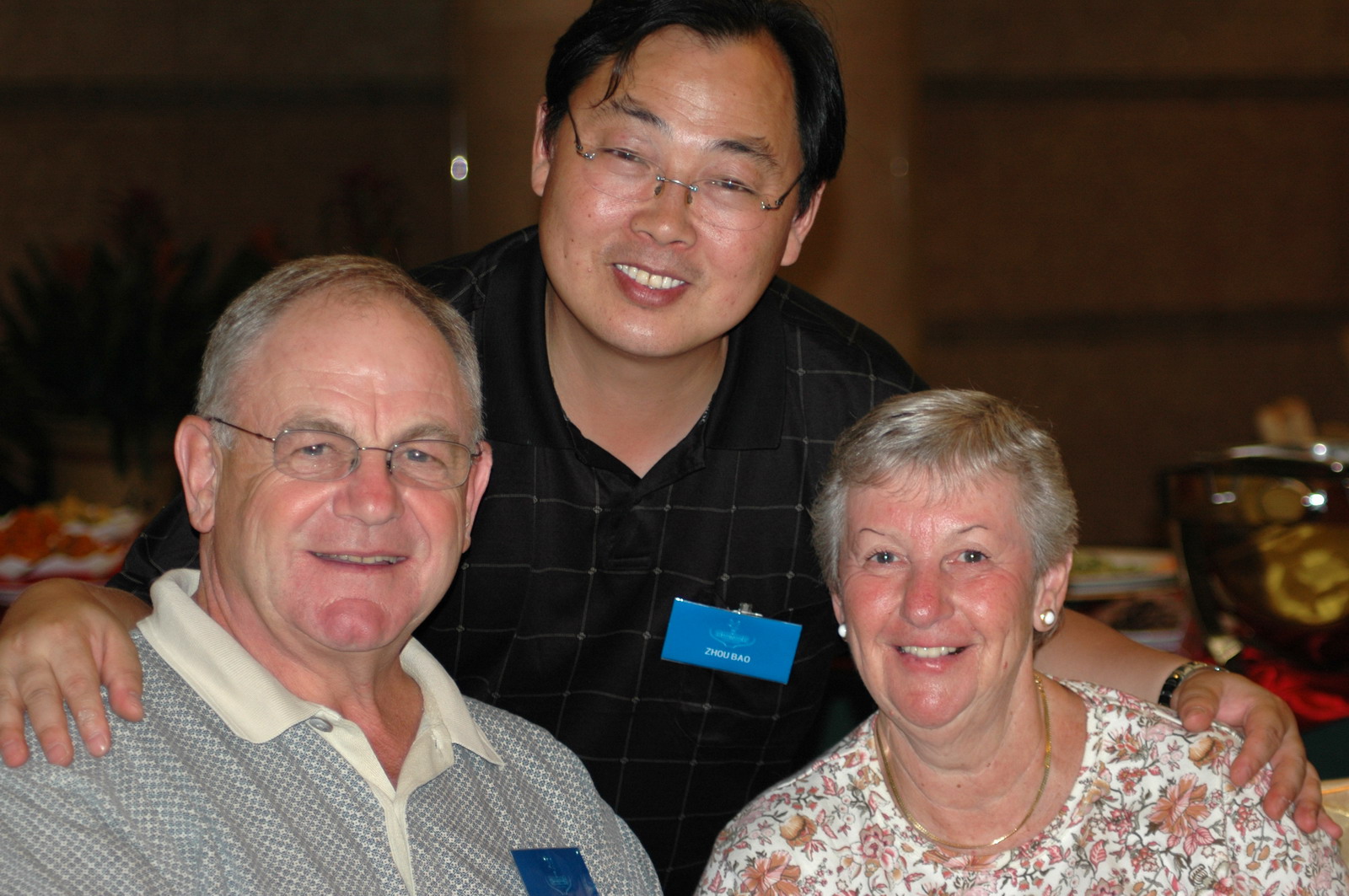
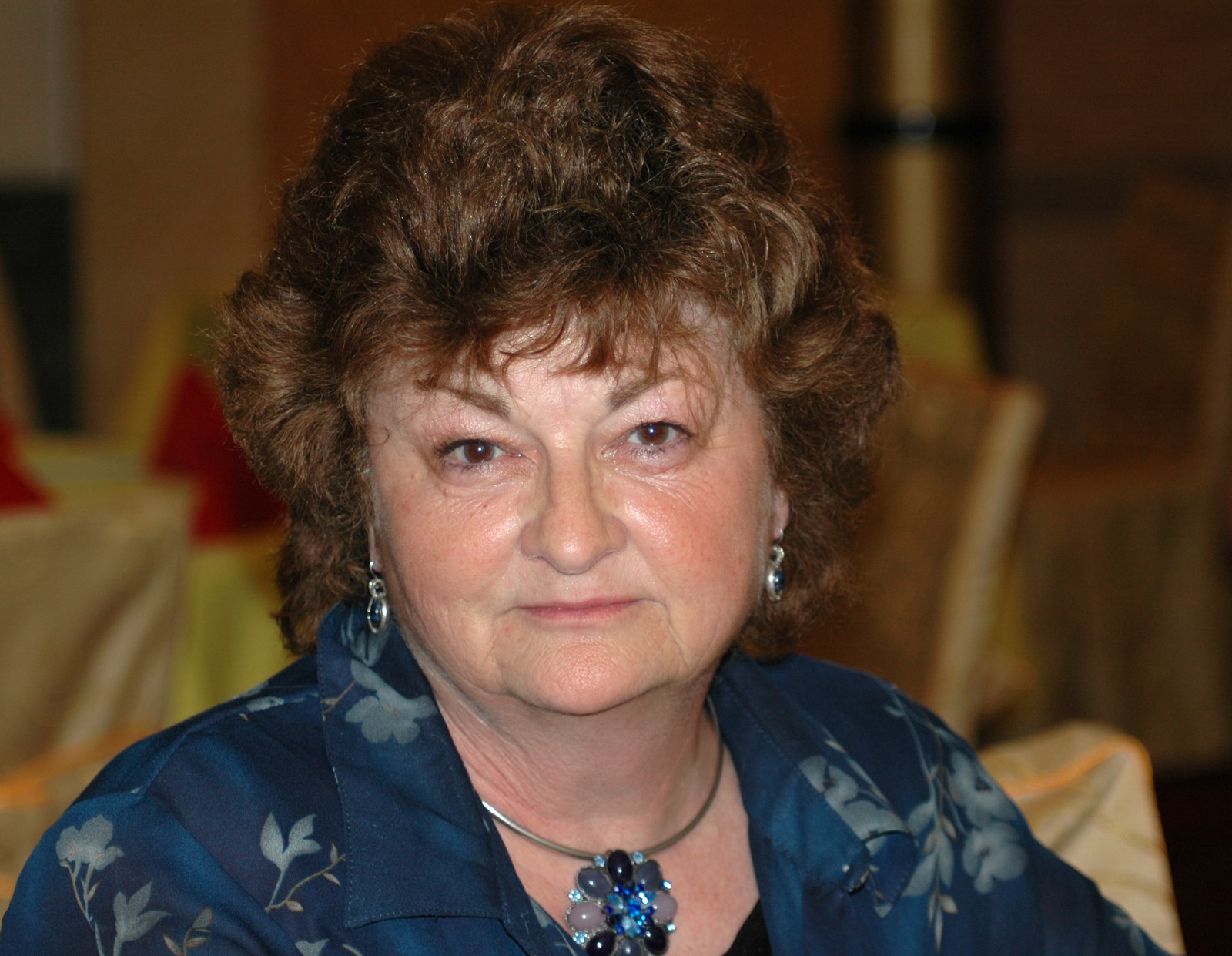
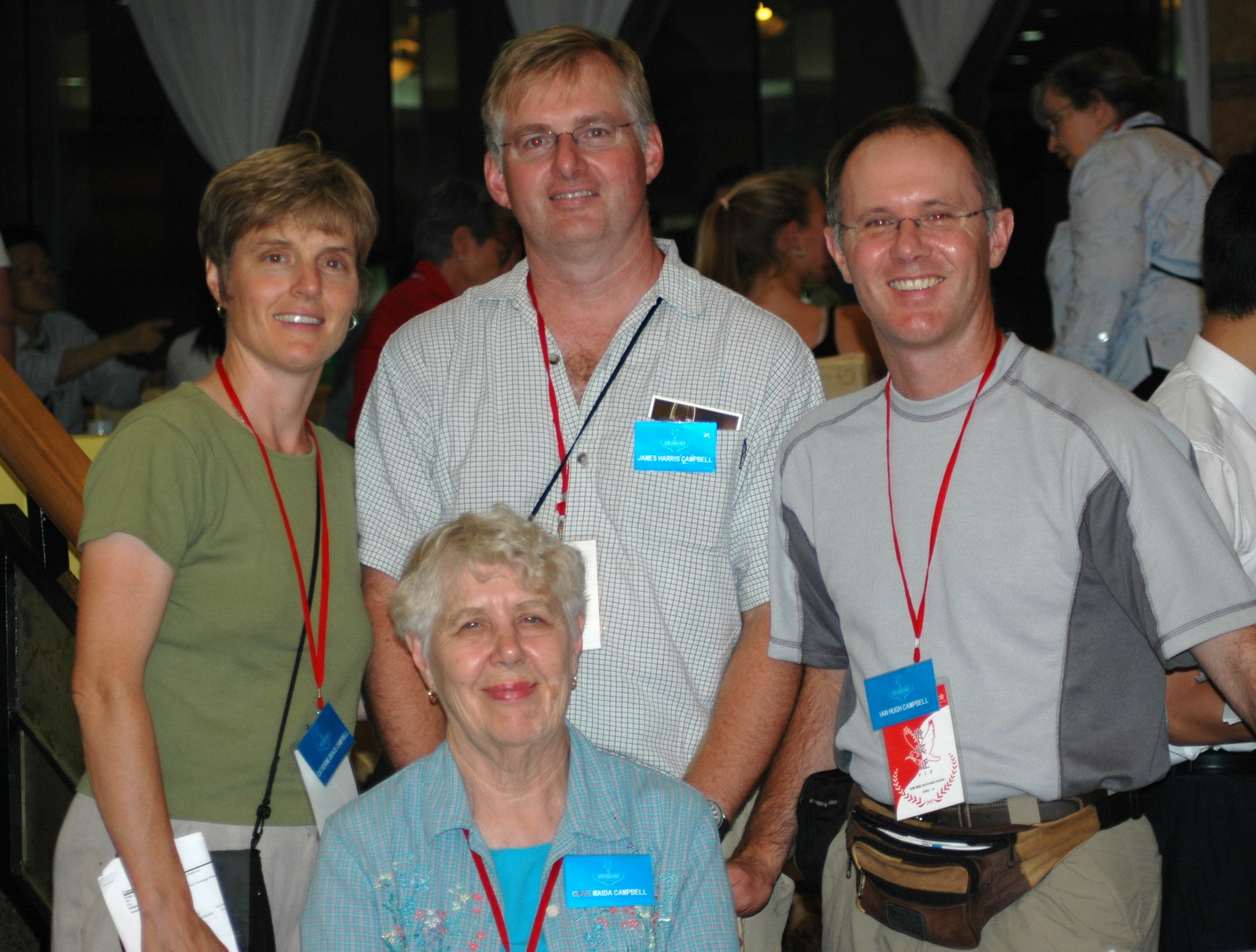
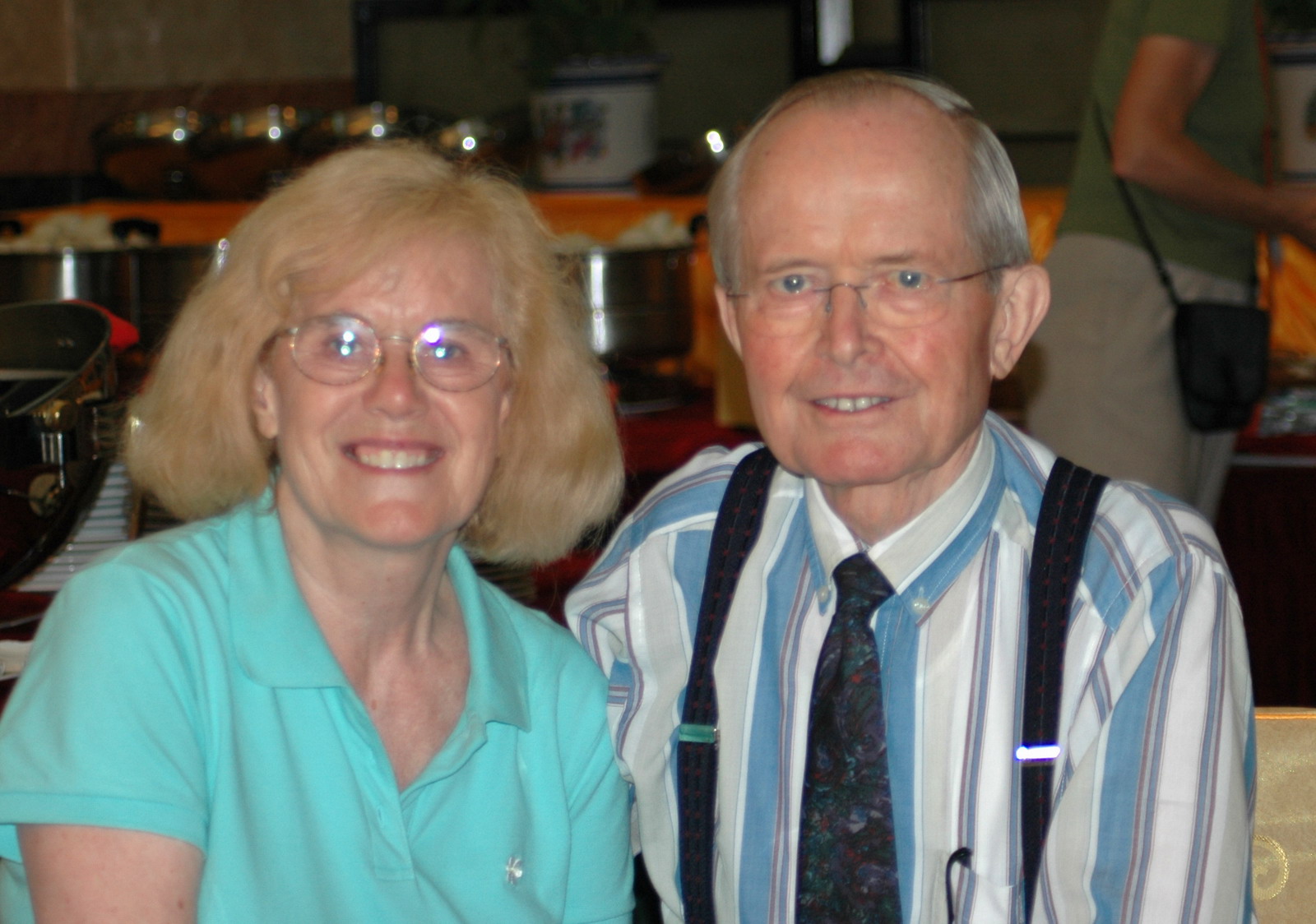
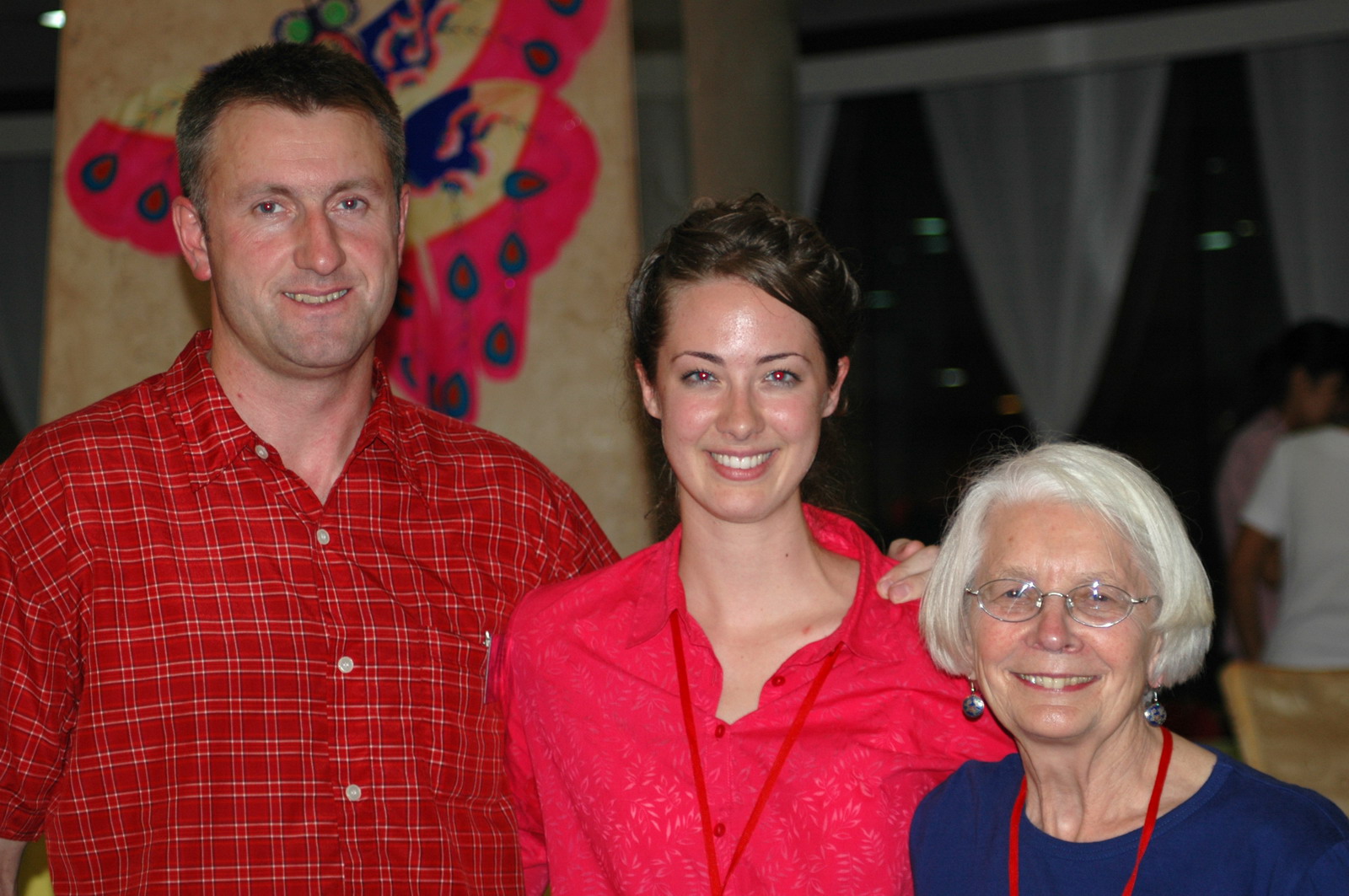
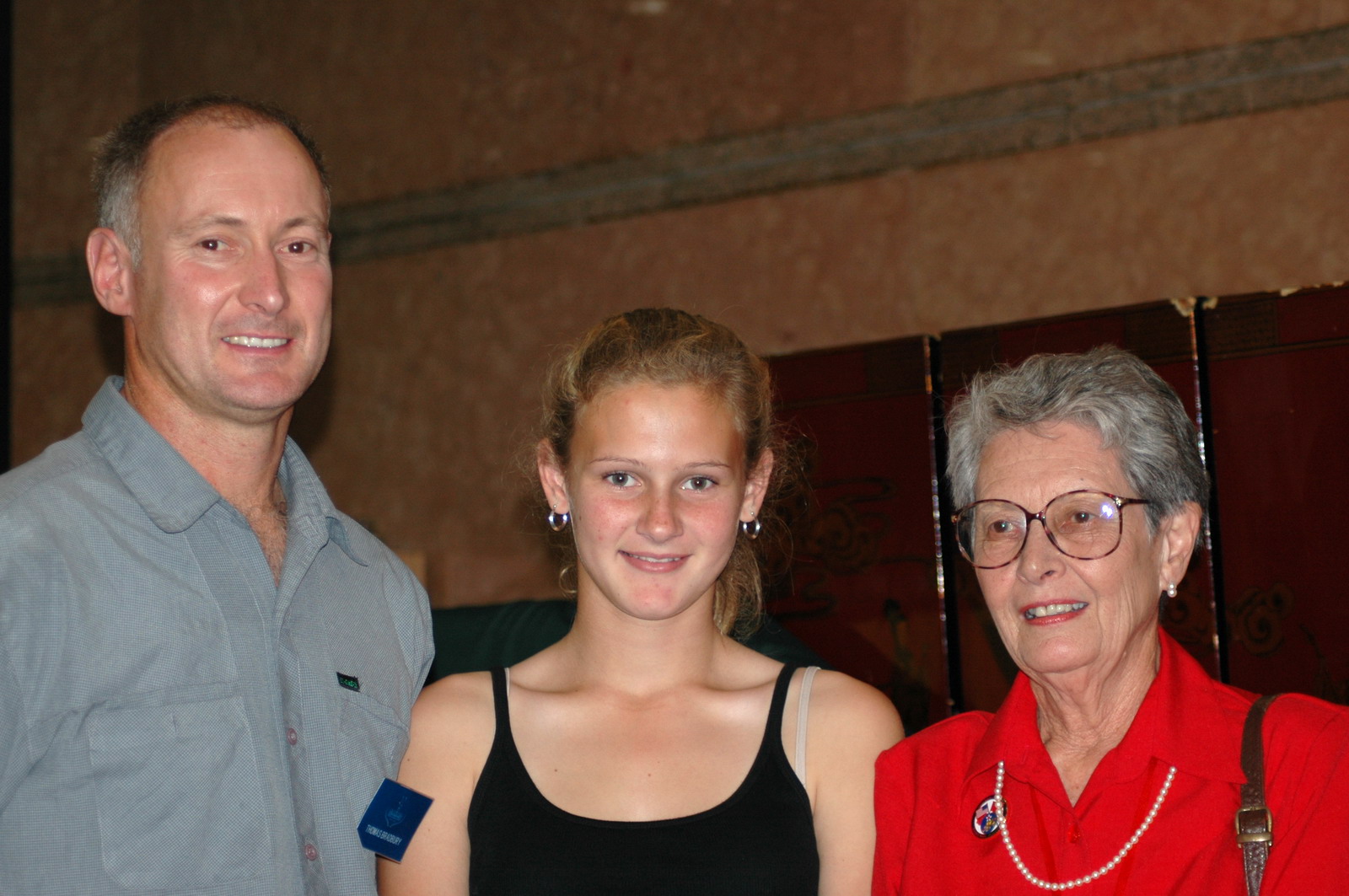
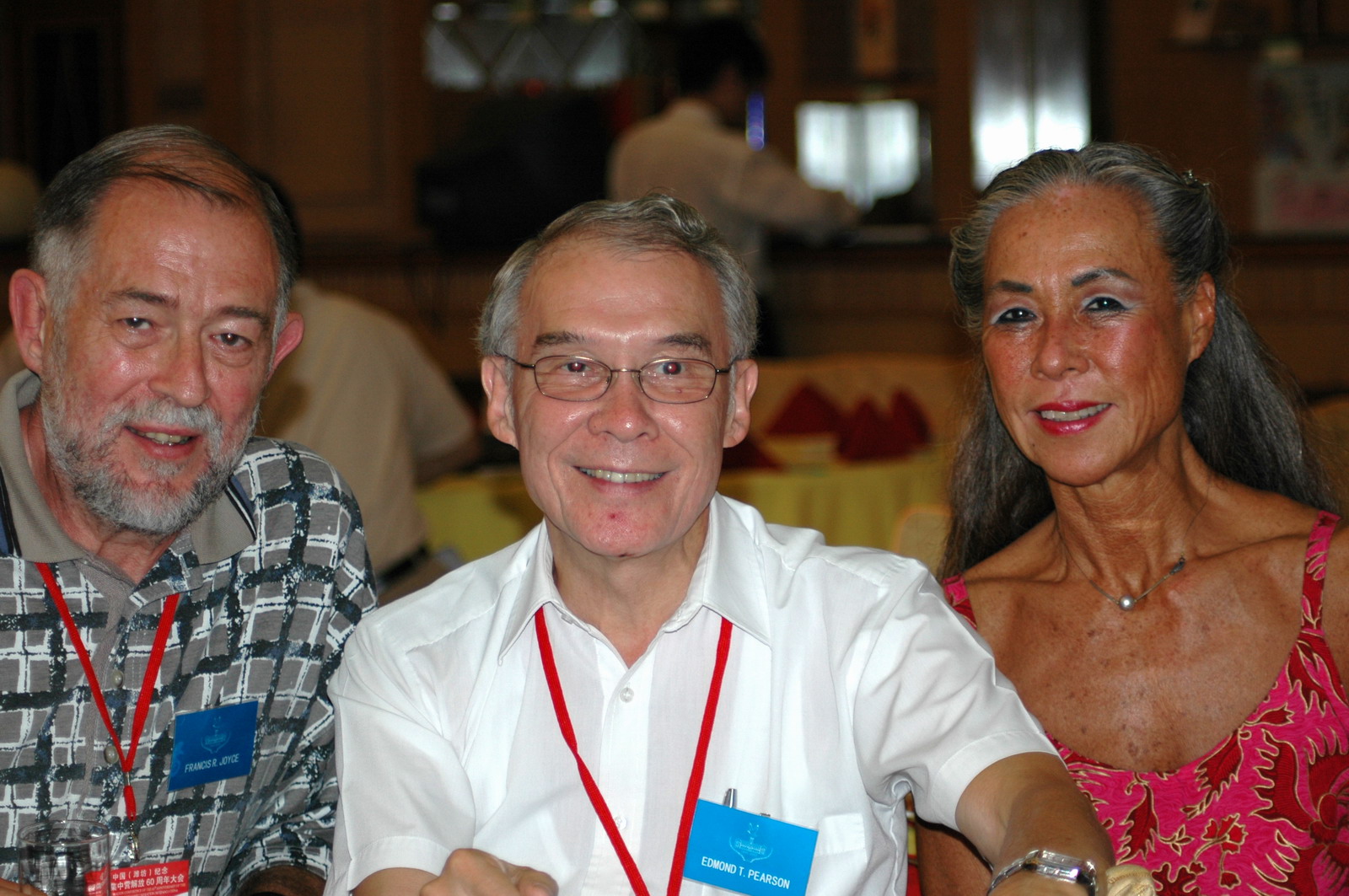
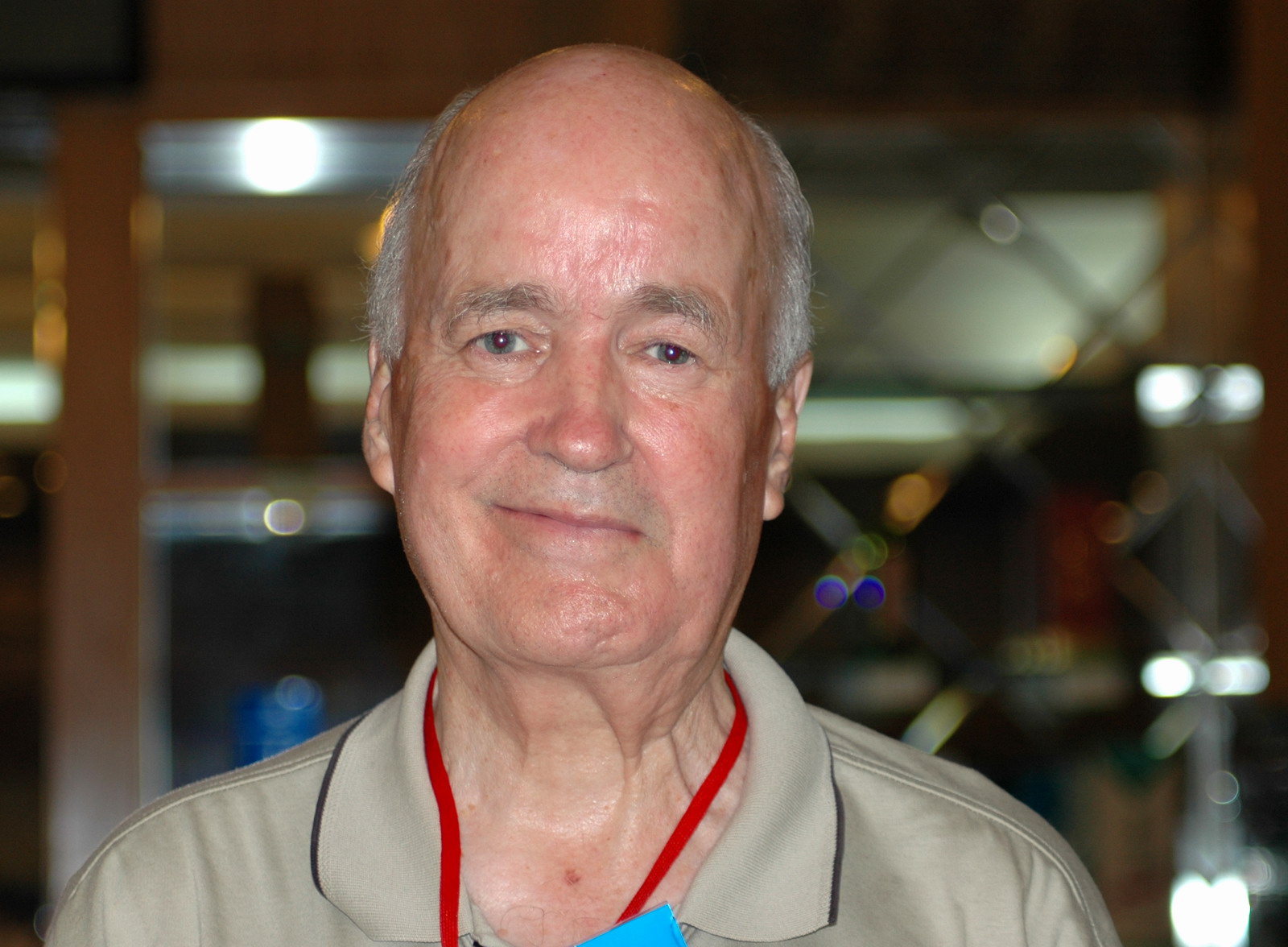
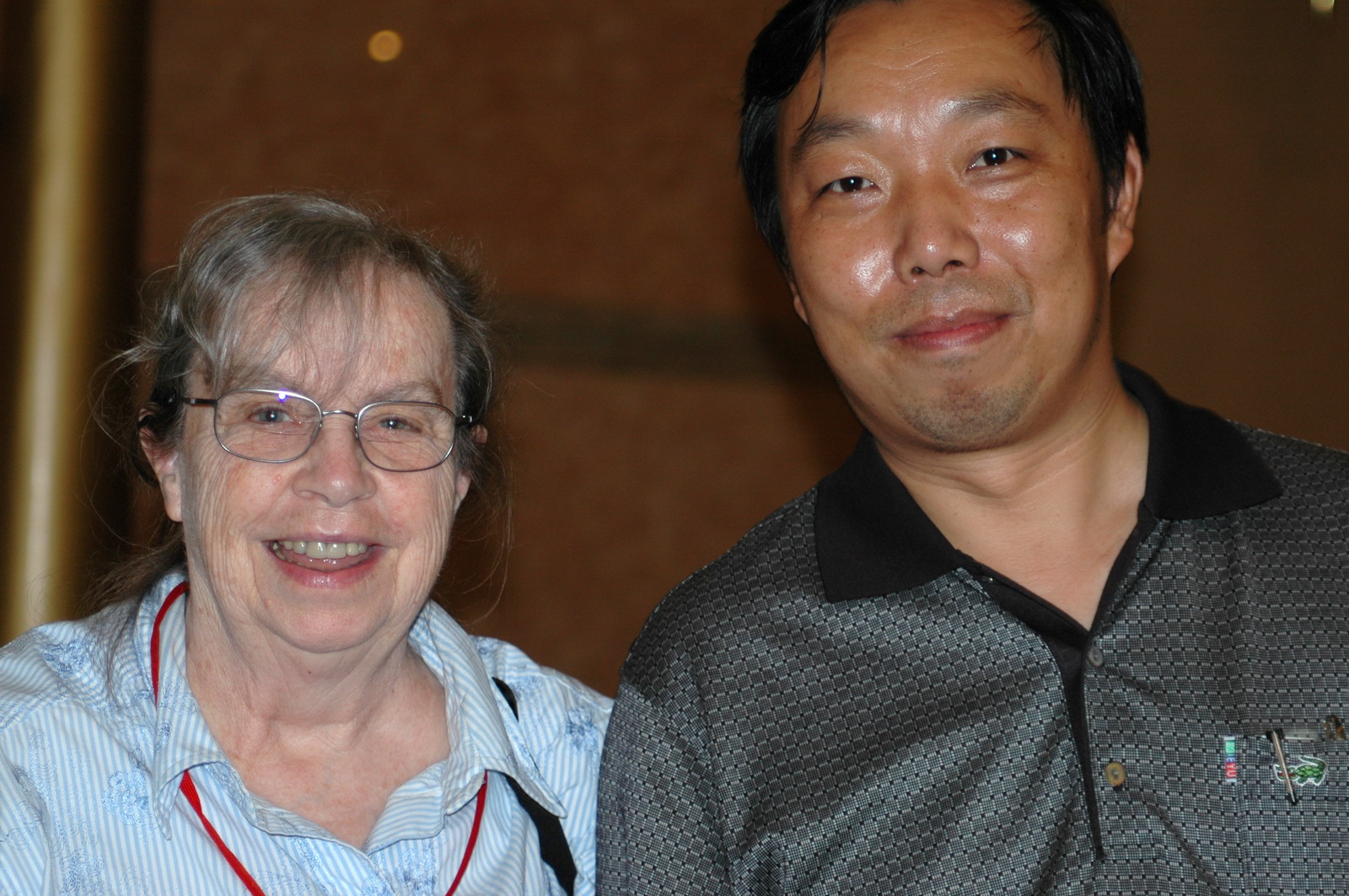
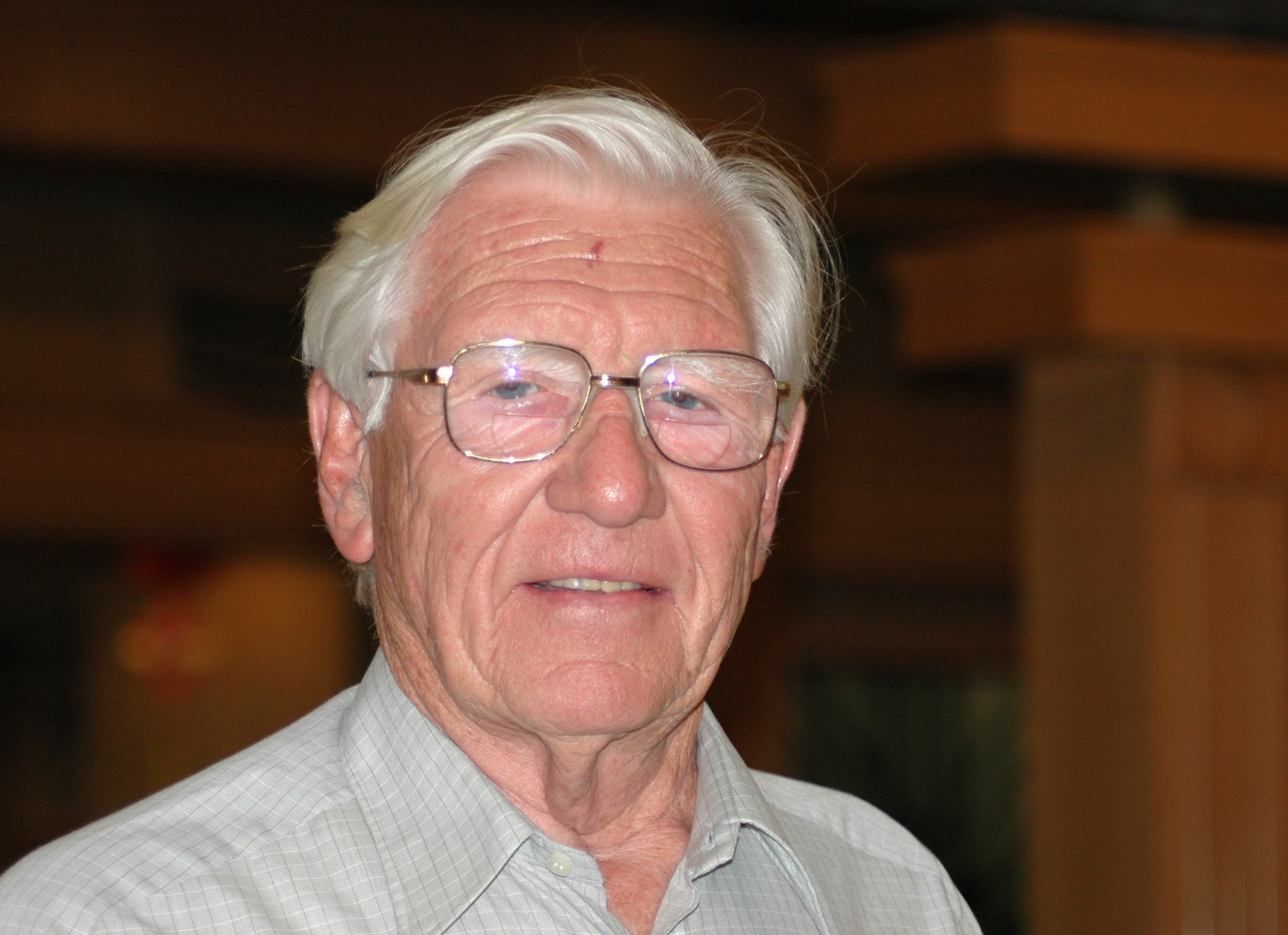
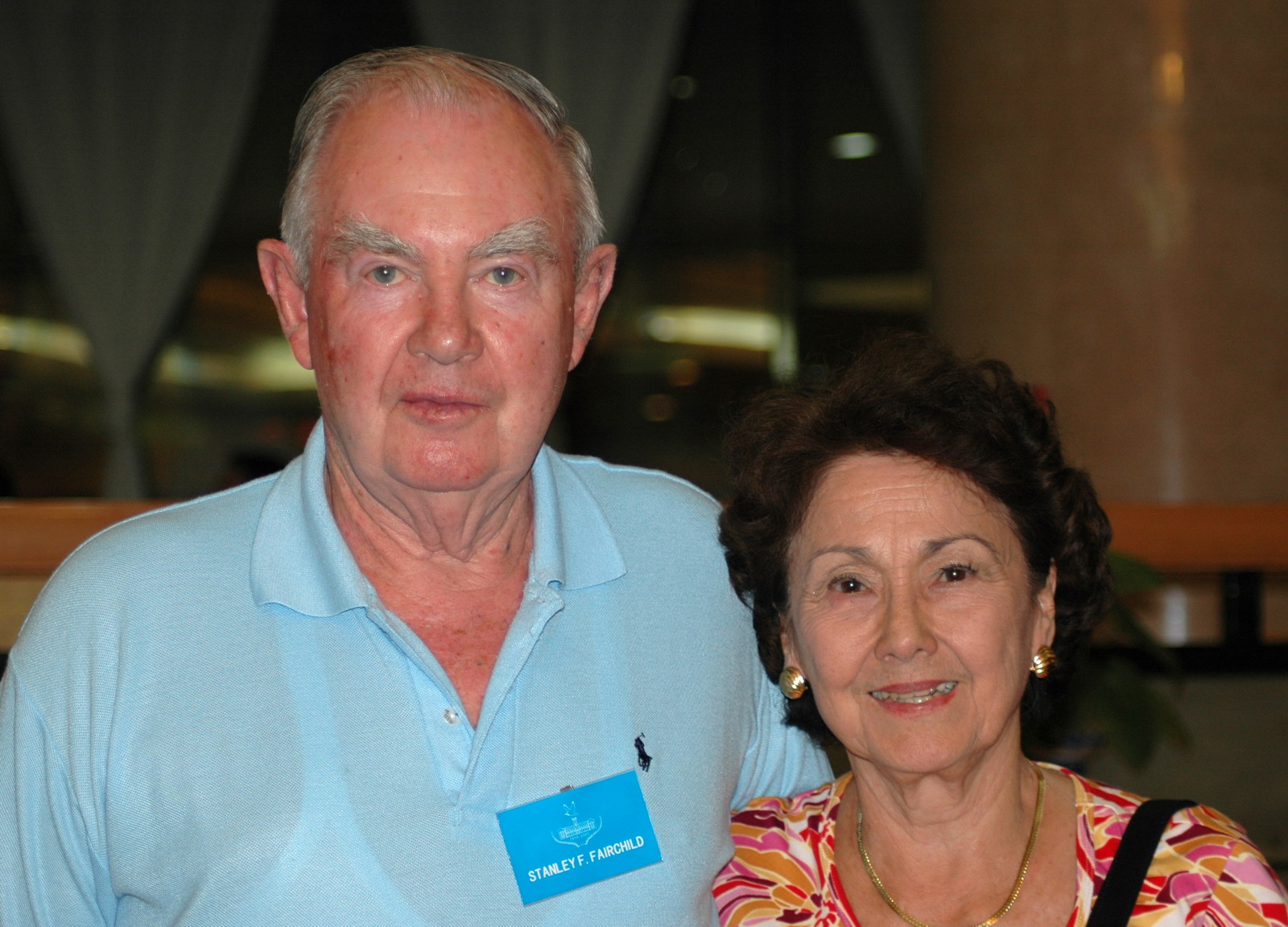
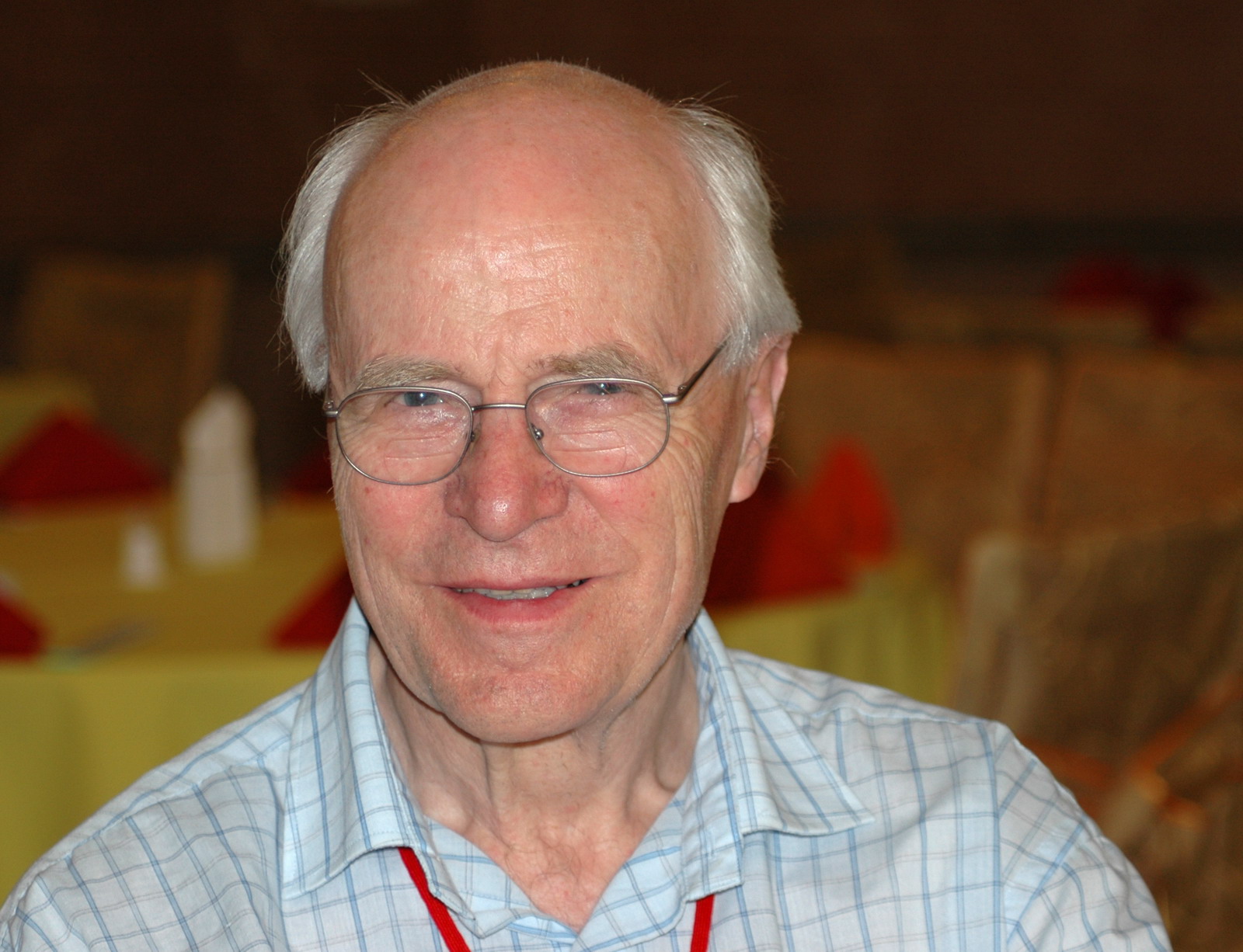
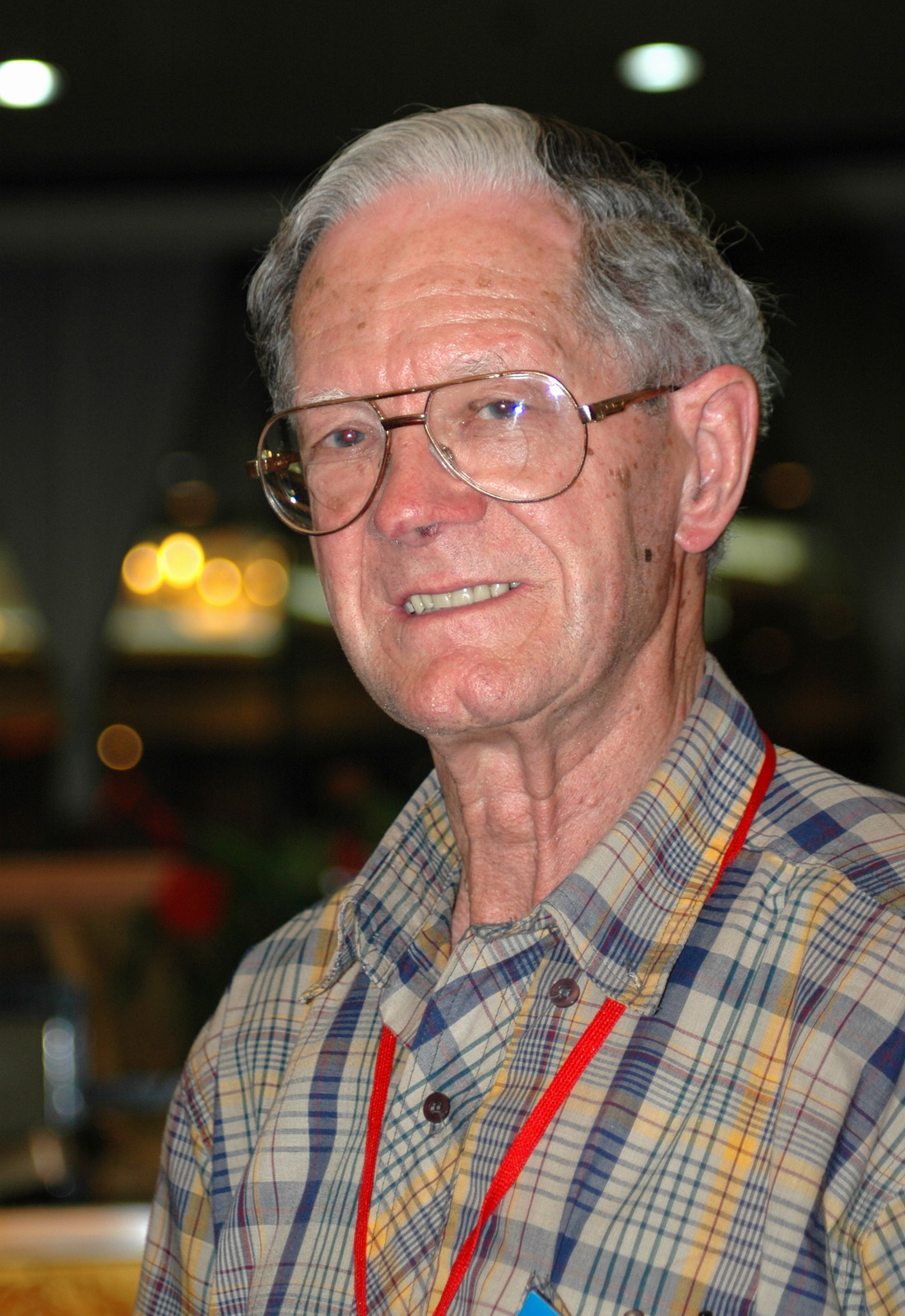
Jane then took some portrait-shots of individuals. These will be sent later for posting in the future.
Stay tuned...






 and [click here]